REVIEW · CUSCO
Rainbow Mountain and Red Valley Hike – 2 Days / 1 Night
Book on Viator →Operated by Salkantay Trekking · Bookable on Viator
4 a.m. comes fast. This Rainbow Mountain and Red Valley trek pairs big-altitude views with a very real sense of the Andes at work, from Ausangate country to Vinicunca’s colored ridges. I love how the route mixes scenery and breathing-room stops instead of one long grind. I also love the way the trip handles the practical stuff well, from camping gear to oxygen and a real guide (one past group raved about guide Marco, and his vibe came through in how the trip flowed). One consideration: the altitude and early starts mean this is best for strong fitness—if you’re the type who gets winded going up stairs, you’ll feel it.
You’ll also want good weather. This hike needs clear skies for the classic Rainbow Mountain payoff, and cloud cover can flatten the magic.
In This Review
- Key highlights you’ll actually care about
- Cusco altitude prep: give your body two days to adjust
- Day 1: Quesiuno, Puka Pass, and camp at Surinecocha
- Day 2: Vinicunca sunrise, then the Red Valley’s two viewpoints
- Price and logistics: why $415 can be fair value here
- What you get beyond photos: guide leadership, food, and camp comfort
- The reality check: difficulty, weather, and what to bring
- Who this trek suits best (and who should think twice)
- Should you book the Rainbow Mountain and Red Valley hike?
- FAQ
- What time does the hike start?
- How long is the Rainbow Mountain and Red Valley hike?
- What’s included in the price?
- Are Rainbow Mountain and Red Valley admission tickets included?
- Is horse assistance available?
- Do I need to be acclimated to altitude?
- Is vegetarian or vegan food available?
Key highlights you’ll actually care about
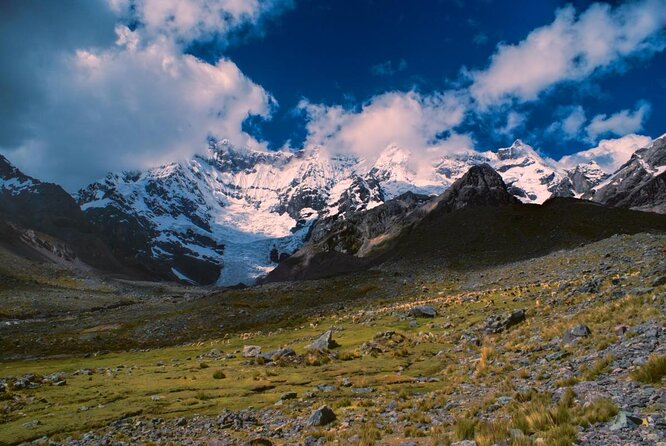
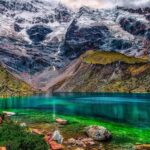
- Ausangate build-up first: Day 1 sets the mood at Puka Pass with views over Pukaqocha lagoon.
- Sunrise window at Vinicunca: You walk in early so you’re among the first at the viewpoint.
- Red Valley’s two observatories: You get two angles on the Mars-like terrain instead of one quick photo stop.
- Camping with real gear: You’re provided tents and sleeping pads/sleeping bags, plus tables and chairs for camp downtime.
- Safety support that isn’t just paperwork: oxygen supply, first-aid kit, and an experienced mountain guide.
Cusco altitude prep: give your body two days to adjust
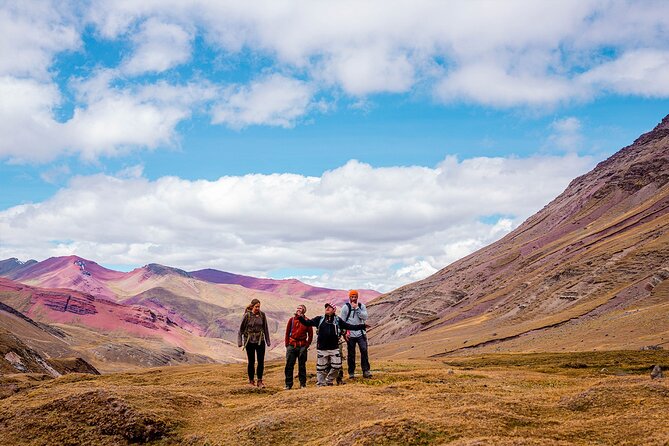
Cusco sits high, and this trek adds more altitude quickly. If you arrive the same day you start hiking, you risk feeling miserable instead of seeing Peru at its best. The best advice here is simple: plan to arrive in Cusco at least two days before your hike so you can adjust.
What I like about this tour’s setup is that it assumes altitude is part of the deal. You start very early, you spend time at high passes, and you get guided pacing. You should still be honest with yourself about fitness. This is a challenging trek, and you’ll get more out of it if you already feel comfortable hiking for hours at a steady effort.
Also: go easy on expectations. Rainbow Mountain is famous, but the real win is how the whole experience hangs together—early sunrise, cold air, changing colors, and wide-open views where you can actually breathe and think.
You can also read our reviews of more evening experiences in Cusco
Day 1: Quesiuno, Puka Pass, and camp at Surinecocha
Day 1 starts with a 4 a.m. pickup and a drive to Quesiuno, the trek start point. You’ll eat a breakfast prepared by the chef and get safety instructions from your guide. Then the walking begins through a green and reddish valley. Early on, you’re not just chasing photos—you’re warming up into the rhythm of altitude trekking.
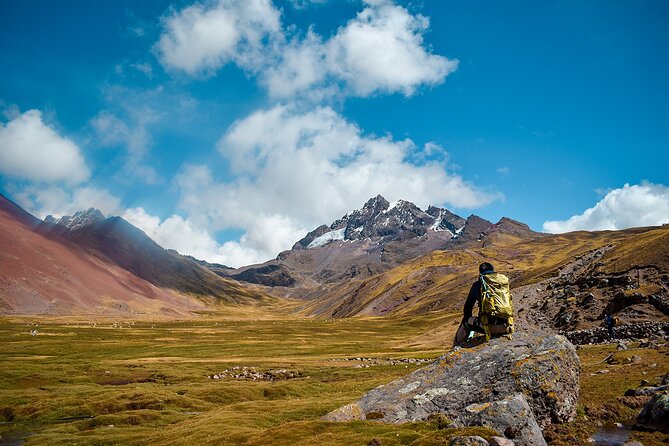
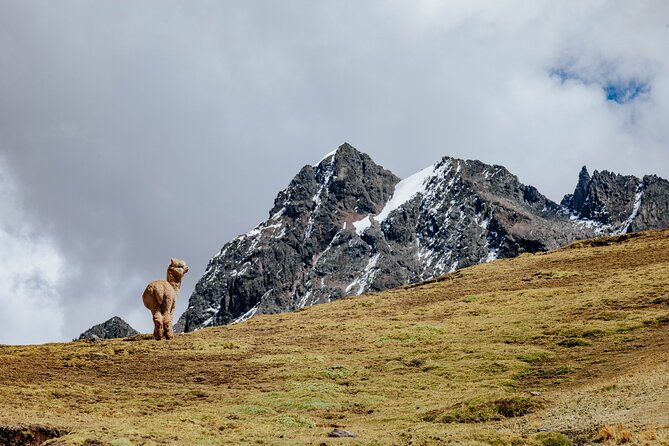
As you move uphill, you’ll pass areas with alpacas, and the valley shifts from greener patches into more dramatic reds. The goal line today is the Puka Pass, where you get your first major payoff: the view of Nevado Ausangate and the Pukaqocha lagoon tucked near its base.
This is one of the reasons I like this route. Day 1 isn’t only “hike until you’re tired.” It has built-in moments where you stop, look, and take in the spiritual pull locals talk about—this region is known for strong “energy,” and the views make it easy to understand why.
From there, you continue toward a lunch spot and then head to the Warmisaya Pass. This section includes up-and-down walking, which can be tiring, but it also gives you glimpses of Rainbow Mountain colors for the first time. That gradual reveal matters. You’re not only going to Vinicunca; you’re feeling your way toward it.
By late day, you reach the camp at Surinecocha. Dinner is included, and the starry sky is a real highlight—especially because you’re far enough from city lights to see the sky clearly. After that, you sleep in a provided tent with sleeping pad and sleeping bag. It’s camping, not a hotel, but it’s set up to keep you functional.
Timing note: Day 1 is about 6 hours of hiking. The early start means the day feels long, but it’s manageable if you keep a steady pace and don’t rush.
Day 2: Vinicunca sunrise, then the Red Valley’s two viewpoints
You’ll wake up early again. In your tent, you’ll get hot coca tea to help you deal with the cold air. Then today’s mission starts: Vinicunca (Rainbow Mountain) plus Red Valley.
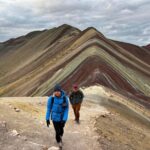
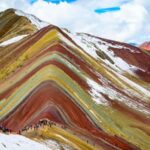
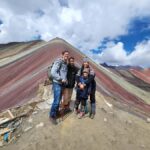
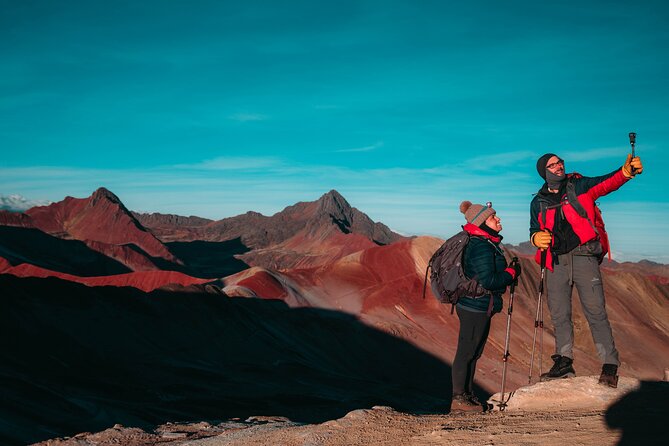
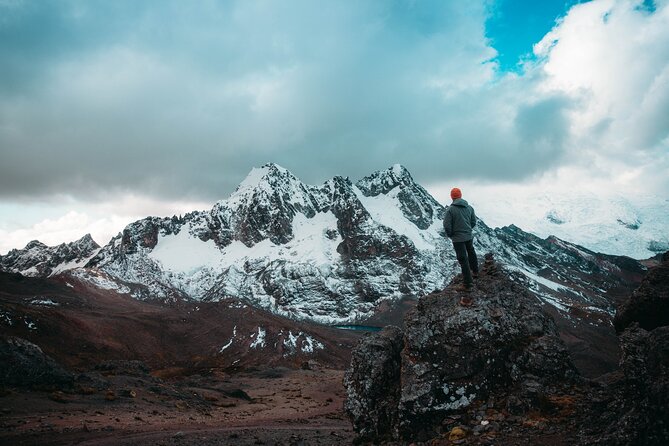
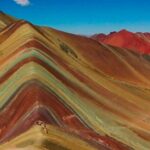
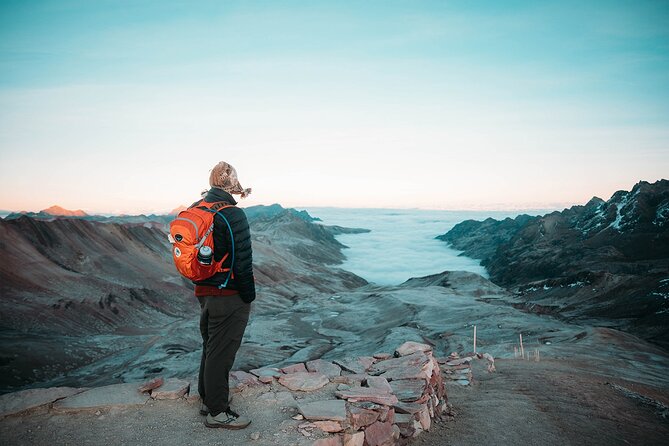
The walk to the Rainbow Mountain viewpoint is about one hour, and the big advantage is timing. You’re aiming to be among the first at the viewpoint, which typically helps you enjoy the view without the crush. When you arrive, you’ll get panoramic views of Ausangate and Rainbow Mountain.
Your guide will explain what you’re seeing—origins of the mountain and why those colors show up. I like these guided moments because they turn a photo stop into a real learning stop. You come away not only with images, but with context.
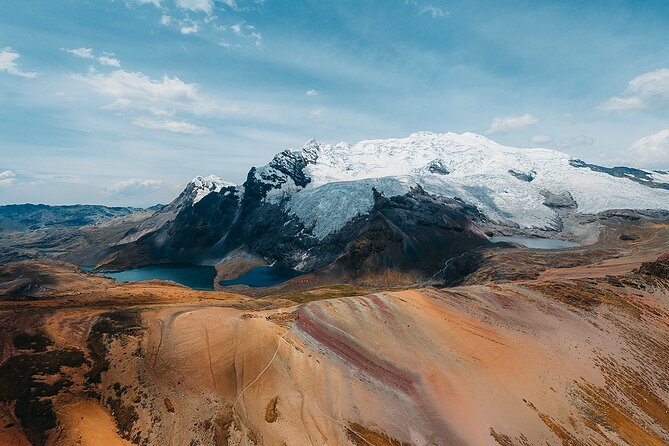
After the first viewpoint, you climb for another hour to the Red Valley observatories. There are two observatories, so you’ll see that otherworldly terrain from different angles. This is where the scenery goes more dramatic—think dry, sculpted, Mars-like tones—plus wide views that help you understand why the area looks the way it does.
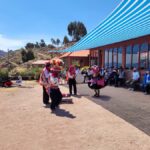
You also meet local communities during the day. That’s a quieter but meaningful part of the hike. You’re not just watching landscapes from afar; you’re moving through lived-in places.
Then it’s downhill to transport and a lunch break midway through Cusco. You’re dropped off at around 4 pm. Day 2 is shorter on paper (about 5 hours), but it still demands attention. Early mornings at altitude can feel harder than expected.
Price and logistics: why $415 can be fair value here
At $415 per person for a 2-day/1-night trip, this isn’t a budget excursion. But when you break it down, the value makes more sense.
You’re paying for:
- Private transport and transfers during the tour
- Camping equipment, including tent, sleeping pad, and sleeping bag
- Entry fees for Rainbow Mountain and Red Valley
- Luggage transport on the hike (included weight: 7 kg)
- Water and snacks
- An experienced mountain guide
- Safety gear support (first aid kit and oxygen supply)
- Hiking poles and a rain poncho
For this kind of high-altitude trek, those items aren’t extras you have to figure out. They’re part of the operation. And the oxygen/first-aid setup is a big deal in the Andes where altitude can be unpredictable for individuals.
The optional items you might add later, like horse assistance on the trail, are not included. Travel insurance also isn’t included, and you should plan for it. This is not the place to gamble with coverage when weather and altitude can throw curveballs.
So the question isn’t just the price. It’s what you don’t have to manage. If you’d rather focus on the hike and the views—not logistics—this is priced in a way that can feel reasonable.
What you get beyond photos: guide leadership, food, and camp comfort
This tour does a few things that make it easier to enjoy instead of just endure.
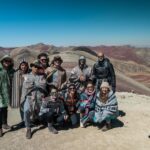
First, the guide work. This is not a “wander on your own” situation. You get safety instructions upfront, a guide who explains what you’re looking at, and real support at altitude. A past group highlighted guide Marco for delivering strong guidance and excellent food.
Speaking of food: breakfast, lunch, and dinner are included (2 breakfasts and 2 lunches, plus dinner). The food matters more than you’d think on cold mornings and high passes. When you’re out of breath, energy and warmth become part of your mood.
Second, camp comfort. You get camping gear plus common camp items like tables and chairs. That might not sound exciting, but it turns camp into a place to reset your body instead of a cramped survival situation. And then you get the sky—clear, star-filled, and bright.
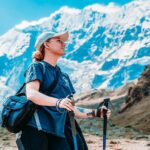
Third, the hiking tools. Hiking poles help with uphill power and downhill control. Rain ponchos help when the weather turns fast. Even if you don’t use everything, having it removes stress.
You can also read our reviews of more hiking tours in Cusco
The reality check: difficulty, weather, and what to bring
Let’s be honest. This hike is challenging. The tour notes a strong physical fitness level is needed, and the altitude requires extra care. If you can hike comfortably at home and keep a steady pace for hours, you’re on the right track. If not, consider a gentler alternative until your fitness catches up.
Weather is another reality check. This experience requires good weather for the classic views. If poor weather cancels it, you’ll be offered a different date or a full refund. That’s good to know.
What to bring is not specified in your details, so I’ll stick to what you can control:
- Wear layers for cold mornings, since you’re up before sunrise both days.
- Bring sun protection for high altitude and strong light.
- Use your own water approach if you prefer, but water and snacks are provided.
- If you have altitude concerns, talk with a clinician before you go.
Also remember: luggage transport is included only up to 7 kg. That means you should pack with weight discipline. Pack what keeps you warm and comfortable, and leave the extra stuff.
Who this trek suits best (and who should think twice)
This fits best if you want a focused, guided high-altitude experience with camping and early sunrise access.
You’ll likely love it if you:
- Enjoy hiking and can handle steep sections with short breaks
- Want both Ausangate country and Vinicunca views in one trip
- Like learning from a guide, not only collecting photos
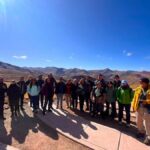
- Prefer small group dynamics (maximum 12 travelers)
You might think twice if you:
- Struggle with altitude or get winded easily
- Don’t like very early starts
- Need a low-effort itinerary
- Rely on optional horse assistance as a main plan (it’s not included)
Children aged 12 and over can join with an adult. Service animals are allowed, as stated.
Should you book the Rainbow Mountain and Red Valley hike?
If your goal is the full package—Rainbow Mountain + Red Valley, two days of hiking, camping gear included, guided explanations, and safety support—this is a strong choice. The price isn’t low, but it covers the heavy lifting: transport, permits, camping kit, oxygen/first aid, and entry fees.
I’d book this if you can handle cold mornings, climb steadily, and plan to arrive in Cusco early for acclimatization. I’d skip it (or pick a gentler trek) if altitude already hits you hard at home, because this route asks for stamina.
One more practical note: this trip is non-refundable and can’t be changed, so make sure your schedule is solid before you commit. If weather is poor and the tour can’t run, you’ll be offered a different date or a full refund.
FAQ
What time does the hike start?
Start time is listed as 4:30 am.
How long is the Rainbow Mountain and Red Valley hike?
It runs for 2 days (about 1 night camping).
What’s included in the price?
The tour includes dinner, both breakfasts and lunches, private transport and transfers, camping equipment (tent, sleeping pad, sleeping bag, tables, and chairs), entry fees for Rainbow Mountain and Red Valley, luggage transport on the hike (up to 7 kg), water and snacks, and an experienced mountain guide. It also includes a first aid kit and oxygen supply, plus hiking poles and a rain poncho.
Are Rainbow Mountain and Red Valley admission tickets included?
Yes. Entry fees are included, and the Rainbow Mountain admission is listed as free for the Day 2 portion.
Is horse assistance available?
Horse assistance is optional, but it is not included in the tour price.
Do I need to be acclimated to altitude?
You should arrive in Cusco at least 2 days before the trek to adjust to the altitude. The hike is also noted as challenging and requires strong physical fitness.
Is vegetarian or vegan food available?
Vegetarian or vegan options are available. You should advise the provider at booking.