REVIEW · CUSCO
Cusco: Walking Tour with a Local Guide
Book on GetYourGuide →Operated by Free Walking Cusco Tour · Bookable on GetYourGuide
Cusco gets personal on foot. This 150-minute guided walk strings together the main sights and the everyday lanes between Plaza de Armas and San Blas, with stories that connect Inca legends to what you see today. I especially like how your guide explains the meaning behind the sites (not just dates) and how you end in San Blas, where Cusco life feels close and real.
The biggest drawback to plan for is simple: there’s a moderate amount of walking, and it’s not wheelchair accessible. If you’re not a fan of uneven cobblestones and uphill strolls, you’ll feel it more than you’d like.
In This Review
- Key highlights I’d build my day around
- Entering Cusco’s Old Town: why 150 minutes is the sweet spot
- Meeting at Calle del Medio: start point that actually makes sense
- Plaza de Armas and Loreto Street: colonial architecture with Inca legend context
- Practical note
- Qoricancha: learning why the Sun mattered in Inca culture
- Inka Palace Cusicancha (now a church): how sacred space changed
- Inka Roca Street: narrow cobblestones and real local life
- A small camera tip
- San Blas neighborhood and Mirador de San Blas: artisan workshops to the viewpoint
- Guide quality: what to expect (and what I’d watch for)
- Pace, comfort, and what to bring for a stone-street walk
- Price and value: is $15 really enough?
- Who should book this tour
- Should you book this Cusco walking tour?
- FAQ
- How long is the Cusco walking tour?
- How much does the tour cost?
- Where is the meeting point?
- What languages are available for the tour?
- Is ticketing handled during the tour?
- What should I bring?
- Is pickup or drop-off included?
- Is the tour wheelchair accessible?
- Is food or drinks included?
Key highlights I’d build my day around
- $15 price point for a guided route that covers multiple major sites in one block of time
- Plaza de Armas + colonial streets explained with Inca legend context, not textbook vibes
- Qoricancha (Temple of the Sun) tied to how the Sun mattered in Inca culture
- San Blas neighborhood walk with artisan workshops and a look at daily life in Cusco
- Finishing at Mirador de San Blas for a calmer end point and a change of scenery
Entering Cusco’s Old Town: why 150 minutes is the sweet spot
This tour is built for orientation. You’re not just checking boxes; you’re learning how Cusco “reads” when you walk it. In about 2.5 hours, you cover the core story arc: sacred Inca space, layered colonial Cusco, and the neighborhood where people still work, sell, and live close to the stone.
The timing matters because Cusco’s center can feel like a maze if you’re alone. With a local guide, the narrow cobblestone streets stop being intimidating. You get a mental map fast, and suddenly the city feels navigable even if you plan to explore more afterward.
I also like that it’s private. A private walking tour tends to mean you can ask questions in real time instead of trying to catch a passing explanation in a larger group.
You can also read our reviews of more walking tours in Cusco
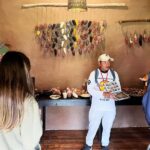

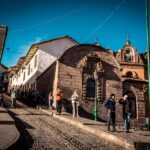
Meeting at Calle del Medio: start point that actually makes sense
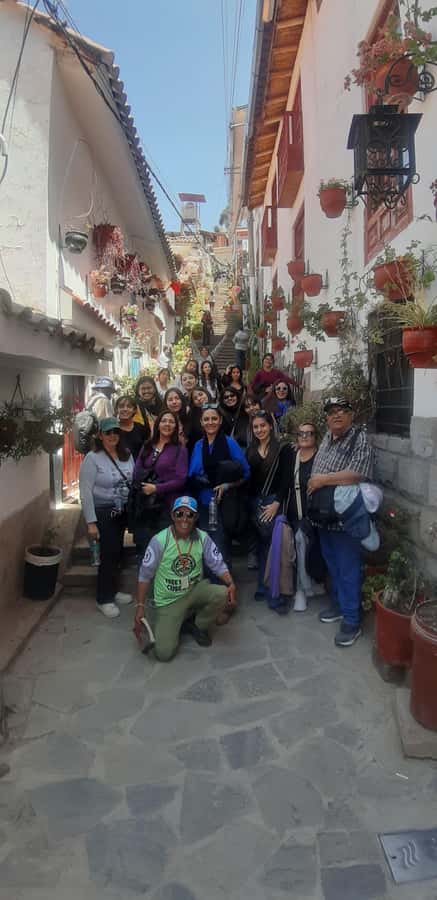
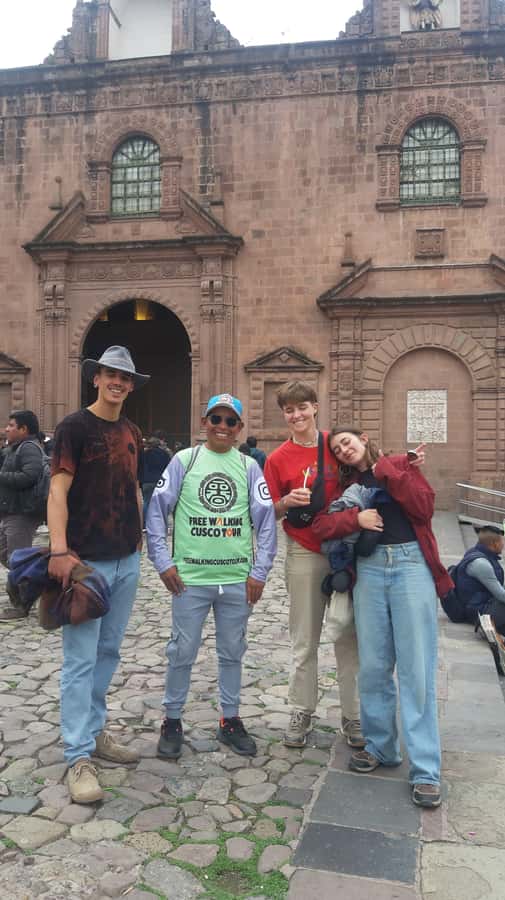
You meet between Calle del Medio and Plaza de Armas. Look for the guide in a green T-shirt. That matters more than people think. Cusco streets can look similar, so a clear meeting landmark keeps your first 10 minutes from turning into a scavenger hunt.
From the start, your guide leads you directly into the city’s “center of gravity.” That’s why this tour feels efficient: you don’t spend time wandering in search of the first big sight.
If you’re the kind of traveler who hates being late, arrive a few minutes early and take a quick look at the plaza edge. It’s an easy way to get grounded before the walk begins.
Plaza de Armas and Loreto Street: colonial architecture with Inca legend context
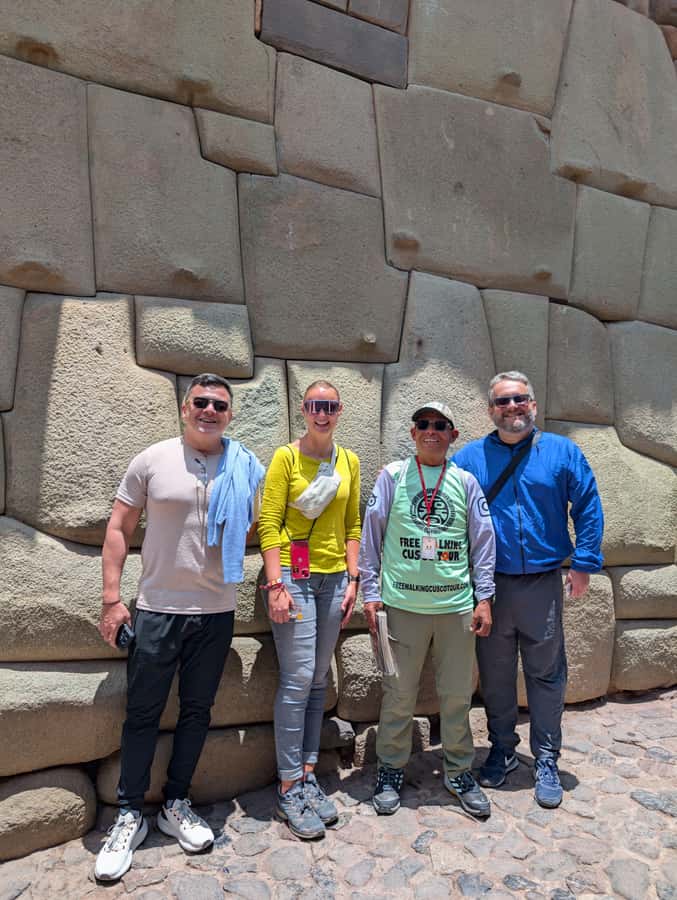
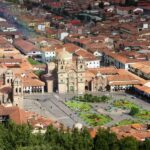
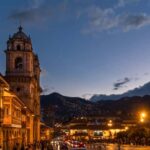
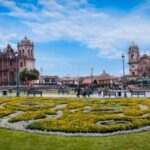
Your walk kicks off at Plaza de Armas, Cusco, where you’ll see how the plaza became a focal point for the city. The guide focuses on the plaza’s history and the colonial buildings around it, then ties in Inca legends so the place doesn’t feel like just another pretty square.
Why I like this stop: it gives you language for what you’ll notice everywhere else. Once you understand the plaza’s role, it’s easier to connect what you see in the streets to the larger story of the city.
From there, you continue to Loreto Street. This is where you start feeling the neighborhood texture: local shops, colonial architecture, and artisan workshops. Instead of only seeing monuments, you see how commerce and craft sit inside the old stone corridors.
Practical note
Loreto Street and the old lanes can be tight. If you’re traveling with a hat and a camera, keep your water handy and be ready for short pauses while the guide explains specific features.
Qoricancha: learning why the Sun mattered in Inca culture
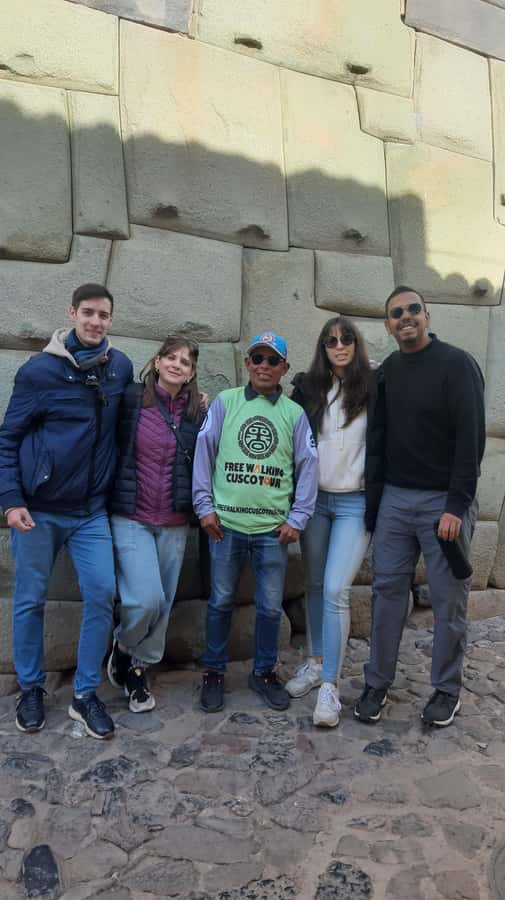
Next up is Qoricancha (Temple of the Sun). This is the moment when the tour shifts from “what happened here” to “why it mattered.” You’ll learn about the importance of the Sun in Inca culture and see Inca architecture integrated into what’s standing today.
This isn’t a stop where you just look and move on. The guide’s explanations help you notice details you might otherwise overlook—especially the way Inca design connects to the sacred purpose of the site.
The payoff is that Qoricancha makes more sense when you’ve been primed by the plaza and the colonial context. You’ll start to see the city as layers rather than separate eras.
Also, the tour includes skip-the-ticket-line, which is a real time-saver for a main attraction. When you only have 150 minutes, losing time to lines is the difference between a relaxed walk and a rushed one.
You can also read our reviews of more guided tours in Cusco

Inka Palace Cusicancha (now a church): how sacred space changed
After Qoricancha, you visit Inka Palace Cusicancha, described as an Inca palace and temple that’s now a church. This stop is short in time but big in meaning.
You’re looking at a site where power, worship, and architecture shifted over time. The guide’s role here is to point out the transformation you’re seeing—so you don’t assume the building is just one straight-line story.
Why this works for you: it adds complexity without confusing the day. You learn what the place was for originally, then you see how it was repurposed, all within walking distance.
Inka Roca Street: narrow cobblestones and real local life
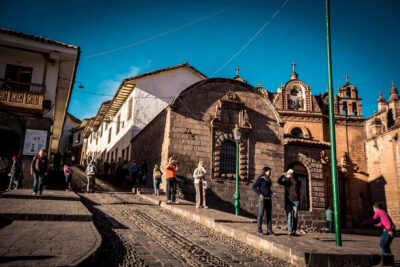
Then you stroll down Inka Roca Street. This is one of those streets that feels almost like a hallway of Cusco history—narrow cobblestones, colonial houses, and the everyday rhythm of people moving through town.
This stop isn’t only aesthetic. It’s practical. It helps you understand what it feels like to live in the historic center: small distances, constant turns, and a street layout that shapes daily life.
It also breaks up the heavier sights. After sacred and monumental stops, you get something more human: the texture of ordinary Cusco.
A small camera tip
You can take photos, but plan on following the rule of no flash photography. It’s the kind of local etiquette detail that keeps things smooth.
San Blas neighborhood and Mirador de San Blas: artisan workshops to the viewpoint
The tour finishes in San Blas, with stops that focus on artisan workshops, colonial churches, and daily life of Cusqueños. This is where the tour earns its “local culture” reputation in a way that goes beyond a generic souvenir pitch.
San Blas tends to feel more like a working neighborhood than a theme park. Even if you’re not shopping, you’ll likely notice craft activity and small storefronts that give Cusco its character at street level.
You wrap up at Mirador de San Blas. A mirador finish is smart because it gives your feet a breather. It’s also a chance to reset your eyes after walking close to buildings and walls.
If you like a day that ends with a view rather than another entrance line or another museum room, this is a nice way to close.
Guide quality: what to expect (and what I’d watch for)
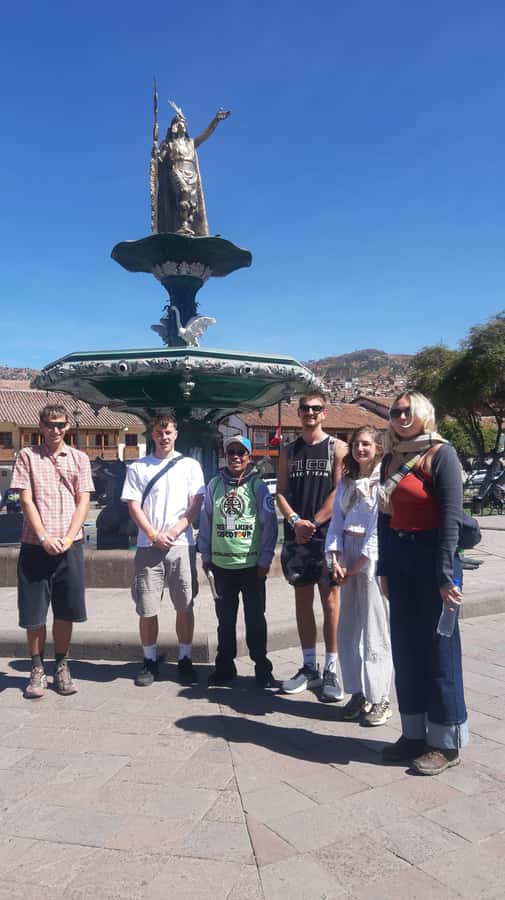
This tour lives or dies by the guide. In the reviews, one guide named Enrique is singled out as excellent, with a pace that felt right and explanations that helped people find sights they wouldn’t have spotted on their own.
That matches what you want from a Cusco walking tour: someone who can point out meaning, explain legends in a way you can repeat later, and adjust pace so you don’t feel rushed at stops.
That said, there is at least one report of no guide showing up. It’s rare, but it’s enough that I’d treat it as a responsible traveler. Keep your booking confirmation accessible, arrive at the meeting point on time, and if you haven’t received a clear confirmation, message ahead of schedule so you’re not stuck improvising in the plaza.
Pace, comfort, and what to bring for a stone-street walk
This walk includes a moderate amount of walking and requires a moderate fitness level. Comfortable shoes are non-negotiable on cobblestones. If you only pack pretty sandals, you’ll regret it before you’re halfway through.
Bring:
- Comfortable shoes
- Hat
- Sunscreen
- Water
Also keep in mind:
- No smoking during the tour
- Flash photography isn’t allowed
- It isn’t wheelchair accessible, and it isn’t suitable for people with mobility impairments
If you’re prone to fatigue, plan for small breaks when your guide pauses for explanations. The route is designed to keep moving, but you’ll still want your body to cooperate.
Price and value: is $15 really enough?
At $15 per person for a 150-minute guided walk, you’re paying for a local who turns visible sights into understandable stories. That’s the value: you’re not just getting access; you’re getting interpretation.
You’re also getting a route that covers multiple major points in one go:
- Plaza de Armas
- Qoricancha
- Inka Palace Cusicancha (church)
- Inka Roca Street
- San Blas and a mirador finish
If you tried to stitch this together yourself, you’d spend time figuring out what to see and why it matters. Even with a good guidebook, it’s hard to match a live explanation that answers your specific questions on the spot.
What’s not included is also important for budgeting: no pickup/drop-off, and food and drinks aren’t included. So you’ll want to eat before or after, and bring water during the walk.
Who should book this tour
I’d say this is a strong choice if you:
- Want an efficient way to get oriented in Cusco’s center
- Like history with a human thread (legends, meaning, and how sites connect)
- Prefer walking with a guide rather than wandering alone
- Want a practical ending at Mirador de San Blas
You might want to skip it if you:
- Need wheelchair access or have significant mobility limits
- Don’t tolerate uneven surfaces for an extended walk
- Prefer private time with zero structure (this is a planned route)
Should you book this Cusco walking tour?
If your goal is to understand Cusco fast, I think this is a smart buy. You get major Inca-Colonial stops like Qoricancha plus a finish in San Blas, all for a modest price that mostly covers expert guidance and routing.
Book it if you want context, not just photos. Skip it if walking is a problem for you, or if you need a fully accessible route.
If you do book, show up at the meeting point on time, wear good shoes, and bring hat and sunscreen. Then let the guide do the heavy lifting—because that’s where the $15 turns into a Cusco day you’ll actually remember.
FAQ
How long is the Cusco walking tour?
The duration is 150 minutes.
How much does the tour cost?
It’s $15 per person.
Where is the meeting point?
You meet between Calle del Medio and Plaza de Armas. Look for the guide wearing a green T-shirt.
What languages are available for the tour?
The live tour guide is available in Spanish and English.
Is ticketing handled during the tour?
Yes, the tour includes skip-the-ticket-line.
What should I bring?
Bring comfortable shoes, a hat, sunscreen, and water.
Is pickup or drop-off included?
No, pick up and drop off are not included.
Is the tour wheelchair accessible?
No, it is not wheelchair accessible and is not suitable for people with mobility impairments.
Is food or drinks included?
Food and drinks are not included.