REVIEW · CUSCO
Complete Sacred Valley Tour (Full Day)
Book on Viator →Operated by Machu Picchu Peru Cusco · Bookable on Viator
Sacred Valley rewards you when time is tight. This full-day tour strings together Chinchero, Moray, Ollantaytambo, and Pisac in one long day, with a small-group feel, comfortable transport, and a real Peruvian lunch in Urubamba.
Two things I love: the group stays small (so you can ask questions without shouting over everyone), and the day includes traditional food with a vegan option rather than leaving you to hunt for lunch on your own. One thing to consider is timing: it starts very early and runs about 13 hours, so you’ll want to build in extra rest the next day.
A big part of what makes the sites click is the guide. In particular, our guide Willy brought the Incas down to human scale with humor and patience, mixing their stories with how that thinking connects to today.
In This Review
- Key highlights at a glance
- Why this Sacred Valley day feels complete
- Morning logistics: early start from Cusco and comfortable travel
- Chinchero: Inca traditions, colonial temple, and crafts with optional wool dyeing
- Moray: terraces designed for irrigation and the rainy-season drainage idea
- Ollantaytambo: stone streets by flowing water and a ceremonial fortress area
- Pisac: artisan market time plus ruins, then back to Cusco
- The Urubamba lunch break: buffet style with a vegan option
- Price and what you really get for $38
- The role of the guide: why Willy’s storytelling changes the sites
- Timing, pacing, and what to watch for on a 13-hour day
- Who this Sacred Valley tour suits best
- Should you book this Complete Sacred Valley Tour?
- FAQ
- How long is the Complete Sacred Valley Tour?
- What time does the tour start?
- How large is the group?
- What’s included in the price?
- Are entrance tickets included for the archaeological sites?
- Do I need a Boleto Turístico?
- Is lunch included, and is there a vegan option?
- Is admission free anywhere on the itinerary?
- What is the cancellation policy?
Key highlights at a glance
- Small-group pacing (max 12 people) that keeps questions and conversation realistic
- Bilingual guide (Spanish and English) for clear explanations at each stop
- Chinchero includes Inca and colonial layers, plus optional wool-dyeing details
- Moray’s agricultural terraces with an explanation of the drainage design
- Urubamba buffet lunch with a vegan option
- Pisac gives you both market time and ruins before heading back to Cusco
Why this Sacred Valley day feels complete
If you’re basing yourself in Cusco, the Sacred Valley can feel like a choose-your-own-adventure. Do you rush from one site to another, or do you slow down and risk missing key stops? This tour solves that by treating the day like a route, not a collection of random stops.
You get a good spread of the valley’s themes: daily-life crafts in Chinchero, large-scale experimental agriculture at Moray, the Inca engineering and urban planning vibe at Ollantaytambo, and finally the blend of shopping, local life, and archaeology at Pisac. It’s the kind of itinerary that helps you build a mental map fast—so the sites connect instead of feeling like separate bus stops.
And the small group matters. On a long day, large groups can turn into a checkout line: walk fast, look fast, move on. Here, you have enough breathing room to actually hear the explanations.
You can also read our reviews of more tours and experiences in Cusco

Morning logistics: early start from Cusco and comfortable travel
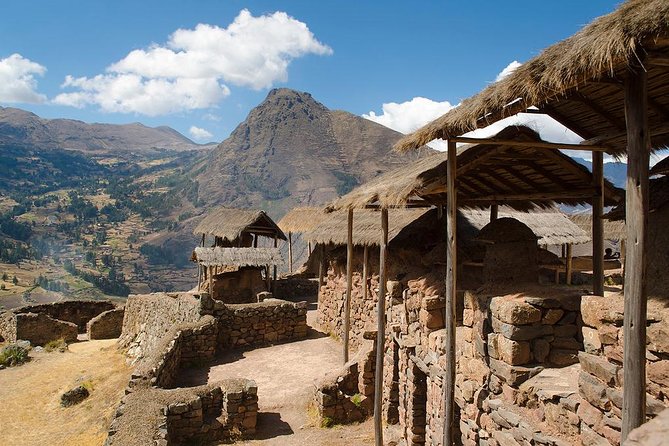
Plan for an early pickup from your hotel in Cusco—around 6:00 a.m.—so you’re on the road before the day gets heavy. The listed start time is 7:00 a.m., so either way, expect that early-Cusco feel: cool air, quick decisions, and a caffeine plan.
Transportation is included, and it’s described as comfortable, all-inclusive. That’s a real value factor in the Sacred Valley. Distances look short on a map, but travel time plus altitude plus traffic can drain you faster than the sights themselves.
What I recommend: bring a light jacket even if you think you won’t need it. Cusco mornings can feel sharp, and you’ll be starting before the sun fully warms things up.
Chinchero: Inca traditions, colonial temple, and crafts with optional wool dyeing
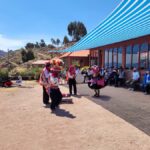
Chinchero is where the Sacred Valley shifts from ruins into culture. You’ll head there about an hour from Cusco, then spend around 1 hour in the village area.
This stop is special because you’re not only seeing an archaeological side. You also get the colonial temple context and the way the village still carries older practices. The tour description calls out adobe homes, narrow cobbled streets, and people in traditional Peruvian dress, and that visual rhythm helps you understand how daily life and heritage overlap here.
One optional detail is the wool process. If you want, you may see a demonstration of how wool is washed and dyed using native plants and minerals. That’s the kind of small, sensory activity that makes souvenir shopping feel less random and more grounded. Instead of buying “a textile,” you’re buying part of a tradition.
Practical note: admission for this stop is not included. So if you’re trying to reduce costs, you’ll want to check how your Boleto Turístico covers Chinchero (more on that in the ticket section).
Moray: terraces designed for irrigation and the rainy-season drainage idea
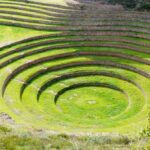
Moray is one of those places that sounds almost too clever to be real. You’ll continue on to Moray, with about 45 minutes at the site.
The big story here is the “why.” The terraces weren’t just decoration. The Incas used them as agricultural experiments and for cultivating seeds. The explanation you’ll get focuses on how the site’s design includes a drainage system at the bottom of the terraces to avoid flooding during the rainy season.
That concept changes how you view the whole site. Instead of staring at tiers and guessing, you understand the terraces as tools—built to manage water and create conditions for growing different crops.
Admission isn’t included at Moray, so again, check your ticket strategy. But even if you pay extra, Moray usually feels worth it because the “what you’re looking at” is explained clearly.
Ollantaytambo: stone streets by flowing water and a ceremonial fortress area
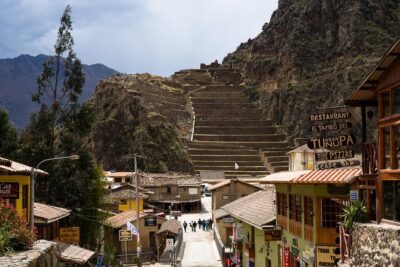
Next comes Ollantaytambo, and this is where the day gets extra cinematic. You’ll arrive for about 1 hour.
Ollantaytambo is described as a classic Incan city with narrow streets adjacent to flowing streams. The gentle sound of moving water is part of why it’s easy to imagine daily life here centuries ago. Even if you’re not thinking in historical terms, you can feel that the town plan was meant to work with water, not fight it.
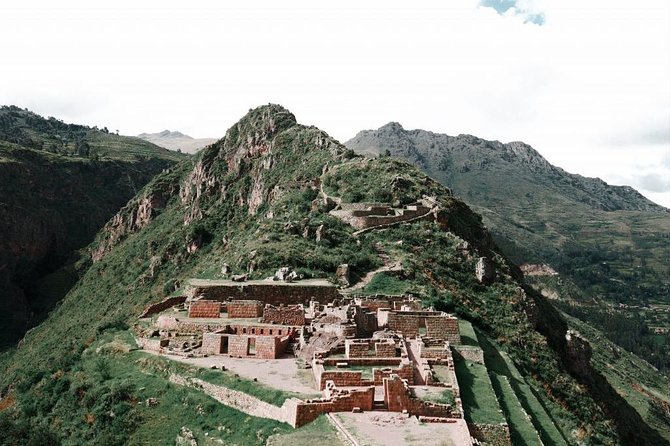
The walk also connects to a ceremonial and defensive story. The upper part includes a ceremonial center used for water worship and a fortress that protected the access point to the lower part of the valley. That combination matters. It’s not just a view stop; it’s a “how a city protected and organized itself” stop.
Good news: admission here is listed as free. That can help you budget if you’re weighing tickets.

Pisac: artisan market time plus ruins, then back to Cusco
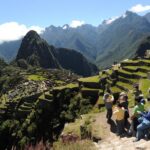
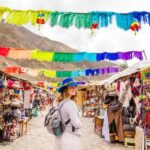
Pisac gives you a more flexible hour. You’ll go to the small village of Pisaq, where you’ll have free time to interact with townsfolk and browse the artisan market. Then you’ll also explore the Pisaq Ruins before returning to Cusco at about 6:30–7:00 p.m.
What makes this stop feel balanced is that it’s not only archaeology. You get the social side: crafts, conversation, and the chance to pick up practical souvenirs. If you’re the type who likes to understand what something is before buying it, you’ll be in the right mindset after Chinchero and Moray.
One thing to keep in mind: Pisac’s “market + ruins” combo means you won’t have endless time. If you want to shop, decide what you’re prioritizing. Textiles? Jewelry? Small crafts? Make the choice early so you don’t end up racing through both.
Admission is listed as free for this portion, which helps the overall value.
The Urubamba lunch break: buffet style with a vegan option
No matter how good a day is, hunger can ruin the mood. This tour builds in a proper meal: a buffet lunch in Urubamba, with a vegan option.
I like this because it’s predictable. Many Sacred Valley day trips make lunch an afterthought or outsource it to whatever you find along the way. Here, you’re given a scheduled pause, which helps you keep energy for the afternoon stops.
Buffet style is also practical for different diets. If you’re vegan, you still get a normal meal without having to hunt around.
Tip for the day: treat lunch like your reset button. After the meal, you’ll still have ruins and viewpoints ahead, so don’t go too heavy on anything that makes you sleepy.
Price and what you really get for $38
At $38 per person, this tour can be a standout value—mainly because the big costs are handled for you. What’s included:
- Transport
- Bilingual tour guide (Spanish and English)
- Buffet lunch in Urubamba (vegan option)
That inclusion is the difference between a “planned day” and an expensive DIY scramble. Hiring transport and coordinating tickets and timing in the Sacred Valley can add up quickly, especially if you’re trying to hit four major stops.
The main thing not included is admissions. The info you’re given says:
- Partial Boleto Turístico: 70 soles per person
- Full sites: 130 soles for 10 days
- Maras salt mines entrance: 10 soles per person
Even though Maras salt mines aren’t part of the listed stop sequence, the fee is still flagged as not included. So assume you might encounter it depending on the exact route on your day. If you’re trying to avoid surprises, ask your guide or check with the operator before you go.
How I’d think about the ticket:
- If you plan to visit several other official sites during your 10-day window, the full 130 soles may be worth it.
- If this is your main day of “big ticket” sites, the partial 70 soles might be the smarter match.
- Either way, factor admissions into your total cost, not just the $38 headline price.
The role of the guide: why Willy’s storytelling changes the sites
One of the most praised parts of this experience is the guide—especially Willy. The standout theme in the feedback is that his explanations felt personal and human, not like a script.
You’ll get bilingual guiding (Spanish and English), but the more important part is how the stories land. The descriptions of his style highlight:
- deep knowledge of the Incas
- humor and patience
- stories that add meaning
- connections between the Incas’ spirituality and how modern people think about science and the world
That matters because Sacred Valley sites can feel abstract if you only see stones and terraces. When the guide explains the “problem the builders were solving” (like Moray’s drainage for rainy seasons), the place stops being scenery and becomes an engineering and cultural lesson you can remember.
If you love history, this kind of guiding turns a tour into a brain-friendly experience.
Timing, pacing, and what to watch for on a 13-hour day
A 13-hour day is not a casual stroll. It’s a full loop with travel time, stops, and walking. That’s why I think the small group size and included transport are more than nice extras—they help manage fatigue.
Here’s how the day will likely feel:
- morning: travel + Chinchero village/temple crafts
- mid-day: Moray terraces
- afternoon: Ollantaytambo walk, then Pisac market + ruins
- evening: return to Cusco around 6:30–7:00 p.m.
If you’re easily tired by long car rides, this might be a slog. If you pack light and keep your energy up, it can feel like a well-run day.
Practical advice: wear comfortable shoes you can walk in for at least an hour at a time, even if each stop is shorter than you’d expect. And keep your expectations realistic—13 hours can cover a lot, but it won’t replace the depth of a multi-day plan.
Who this Sacred Valley tour suits best
This tour is a good match if:
- you want to hit the key Sacred Valley stops in one day
- you like explanations that help you understand the sites, not just look at them
- you’re traveling with limited time and want a guided route that reduces decision-making
- you’d appreciate Urubamba lunch without searching for food during the day
It may be less ideal if:
- you want a slow, unhurried experience at each place
- you hate early starts and long days
- you’re trying to avoid every extra ticket cost (because admissions are not included)
Should you book this Complete Sacred Valley Tour?
Book it if you want an efficient, well-structured Sacred Valley day that includes guided context, comfortable included transport, and a real lunch in Urubamba. The small-group size and strong guide storytelling are the reason this feels complete rather than rushed.
Skip or compare if you’re the type who wants to linger for hours at one site, or if ticket planning is your main headache. In that case, check how many other sites you plan to visit during your stay so your Boleto Turístico strategy matches your schedule.
FAQ
How long is the Complete Sacred Valley Tour?
It runs about 13 hours, with pickup in Cusco very early and a return around 6:30–7:00 p.m.
What time does the tour start?
The listed start time is 7:00 a.m., and the itinerary also mentions hotel pickup around 6:00 a.m. in Cusco.
How large is the group?
The experience highlights a maximum of 12 people, keeping the group small.
What’s included in the price?
Transport is included, along with a bilingual tour guide (Spanish and English) and a buffet lunch in Urubamba with a vegan option.
Are entrance tickets included for the archaeological sites?
No. Entrance tickets are not included for some stops. The tour notes that the Boleto Turístico may apply, and specific entrances like Moray and Chinchero are not included.
Do I need a Boleto Turístico?
The tour indicates the Boleto Turístico is 70 soles for a partial ticket and 130 soles for full sites over 10 days, so you may need it depending on the sites covered.
Is lunch included, and is there a vegan option?
Yes. Lunch is a buffet in Urubamba, and there is a vegan option.
Is admission free anywhere on the itinerary?
Ollantaytambo and the Pisac portion are listed as free in the tour details.
What is the cancellation policy?
Free cancellation is available up to 24 hours in advance for a full refund. If you cancel less than 24 hours before the start time, the amount paid is not refunded.