REVIEW · CUSCO
Complete Sacred Valley Tour Small group Pisac, Maras, Moray & Ollantaytambo
Book on Viator →Operated by Willka travel Cusco · Bookable on Viator
A salt-glitter day and Inca science in one. This Sacred Valley small-group tour (up to 8 people) strings together the big names: Pisac, Moray, Maras, and Ollantaytambo, with air-conditioned private transport and an expert guide who keeps things clear in English or Spanish.
I like that it feels organized without feeling rushed. The pace at each stop is built for you to look, ask questions, and get photos, not just to be herded along. One more thing I really appreciate: you get little reality checks along the way, like where to pause for the best views and how to handle the altitude with breaks when you need them.
The main catch is cost and timing. The big ruins and Moray/Maras are listed as separate cash-only tickets, and lunch lands later in the day (plan ahead with a snack and water).
In This Review
- Key things to know before you go
- A twelve-hour Sacred Valley day with up to 8 people
- Pisac Parque Arqueológico: Inca stone art and terrace engineering
- Pisac market stop: crafts, quick chat, and real-life valley flavor
- Sacred Valley viewpoints: why the Incas loved this area
- Moray’s terraced amphitheaters: crop testing on a massive scale
- Maras salt mines (Salineras): 3,000+ pools that really sparkle
- Ollantaytambo ruins and the Wiracocha rock
- Lunch in Urubamba: buffet basics, late timing, and what to order
- Price and extra costs: does this tour feel like value?
- Guides and drivers: why names like Jimy, Jaime, Juan matter
- Who should book this Sacred Valley route?
- Should you book?
- FAQ
- What does the tour price include?
- What extra tickets will I need to pay?
- Is cash required for the tickets?
- How long is the tour?
- How big is the group?
- Does the tour include lunch?
- What languages will the guide speak?
- Where does the tour start?
- Is there free entry at any stops?
Key things to know before you go
- Small group max 8 means more back-and-forth with your guide, not a lecture with no answers
- Hotel pickup (if selected) plus private AC van keeps the day comfortable in the Cusco-to-valley shuffle
- Pisac ruins + market gives you both stone-carved Inca culture and a chance to interact with locals
- Moray’s terraced “amphitheaters” explain how the Incas tested crop-growing conditions
- Maras salt mines are a grid of 3,000+ pools that look unreal in person
- Lunch in Urubamba is included as a buffet, but it’s typically later than you might expect
A twelve-hour Sacred Valley day with up to 8 people
This is a full day out of Cusco—about 12 hours—focused on the Sacred Valley’s most famous ruins and natural sights. You travel in a private, air-conditioned vehicle, which matters. Cusco altitude plus long drives can drain you fast, so having A/C and a dedicated driver helps you stay steady.
Group size is capped at 8 travelers. That’s the sweet spot for a day like this. You’ll still move as a group, but you’re not stuck waiting behind a crowd. And you’re more likely to hear your guide’s explanations clearly, since they can actually talk to people, not just talk at them.
You’ll also get a professional guide in English/Spanish. In practice, you’ll notice guides use the same facts but in a way that’s easy to follow—like how they connect the Valley’s fertility to the Inca’s farming design.
The tour starts at Plaza Regocijo (F2M9+5X2), Cusco 08002 and ends back at the meeting point. One practical note: some guests have been dropped closer to central Ollantaytambo, which can make the next step toward Aguas Calientes easier. If your schedule depends on it, ask your provider to confirm your exact end location.
You can also read our reviews of more tours and experiences in Cusco.
Pisac Parque Arqueológico: Inca stone art and terrace engineering
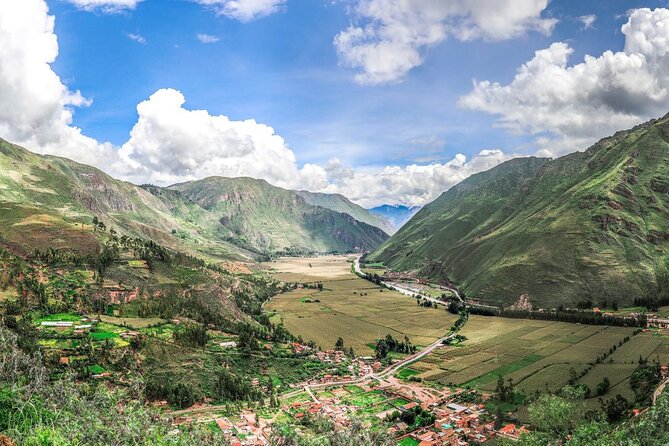
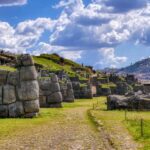
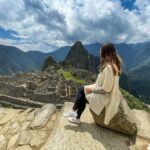
Pisac is where you start seeing the Sacred Valley as more than scenery. At Parque Arqueológico Pisac, you’ll spend about one hour walking among ruins built around Inca ideas of land use, agriculture, and artistry.
Two things make this stop worth your time:
First, the stone details. You’ll notice art etched into the stone—patterns and carving work that feel deliberate, not random decoration. If you like architecture that tells you something about daily life, you’ll enjoy this.
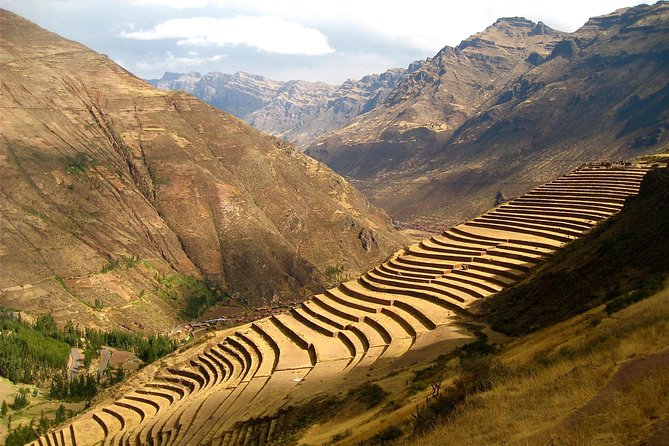
Second, the agricultural terraces. The Inca didn’t just build terraces for show. The point was control: turning hillsides into usable farmland. The guide frames this as part of the Inca way of shaping the environment, and it clicks quickly when you’re standing there.
Ticket note: Pisac ruins list entrance as not included. You’ll be paying separately for the Sacred Valley ticket (cash-only), so budget for that upfront rather than hoping it’s minimal.
Practical tip: Wear shoes with grip. The ruins sit on uneven ground, and one careless step is enough to ruin a photo moment.
Pisac market stop: crafts, quick chat, and real-life valley flavor
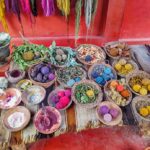
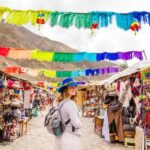
Right after the ruins, you get a 45-minute stop at Pisac Market. This isn’t a long shopping spree, and that’s good. It’s a chance to reset from stone and terraces into everyday life.
You’ll be able to interact with local people and buy crafts. Even if you don’t plan to buy much, it’s still useful. It gives you context for the region beyond the archaeological sites, and it’s one of the few moments where you’re not just observing—you’re meeting people.
One caution: the driver/guides can be strict about time on a day like this. If market time is a priority for you, be clear at the start of the stop so you don’t feel rushed at the end.
Sacred Valley viewpoints: why the Incas loved this area
Between the major sites, you’ll also get a guided run through what makes the Sacred Valley different from the higher Andes. The Valley’s climate supports fertile plains, which is unusual at these altitudes. That matters because it explains why the Incas invested so heavily here.
You’ll hear about how the Incas sculpted mountain flanks using contour terracing and irrigation channels. You don’t need a geology degree to appreciate it. Standing along the route, it becomes obvious that these were survival systems—ways to keep land productive and stable year after year.
Your guide and driver will point out good photo spots. That might sound basic, but it’s actually a quality-of-the-day factor. When you’re on a timeline, “good photo spots” means you won’t waste the only window you have staring at the wrong angle.
Pro move: bring your phone strap or a small sling bag. If you’re constantly pulling out your camera, you’ll feel the day in your shoulders before you feel it in your legs.
Moray’s terraced amphitheaters: crop testing on a massive scale
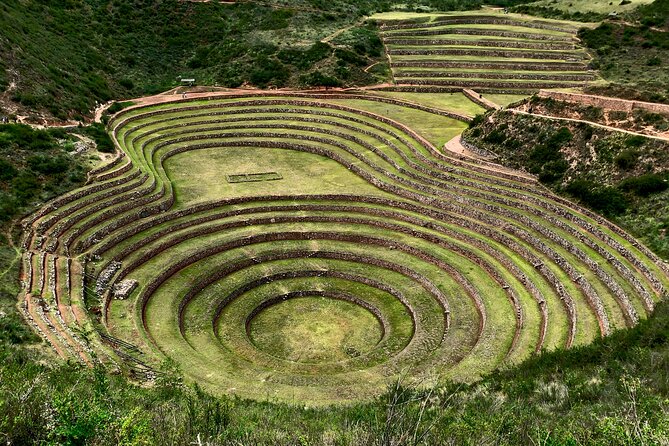
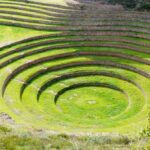
Next up is Moray, with about one hour here. Moray is made of three amphitheater-like terraces, cut deep into a bowl shape. The idea explained on this tour is that Moray likely functioned as an agricultural laboratory—a place to determine optimal growing conditions for crops.
This stop is great if you like the science side of history. The terraces aren’t just pretty. They’re part of an experiment: creating different micro-conditions in one area. The guide’s job here is to help you see why the shape matters, and you’ll probably find yourself looking at the terraces differently than you did at Pisac.
Ticket note: Moray is listed as entrance not included, so plan on the Sacred Valley ticket.
Time tip: Moray can feel a bit open and windy depending on the day. Bring a light layer even if Cusco is bright. The valley can change fast.
Maras salt mines (Salineras): 3,000+ pools that really sparkle
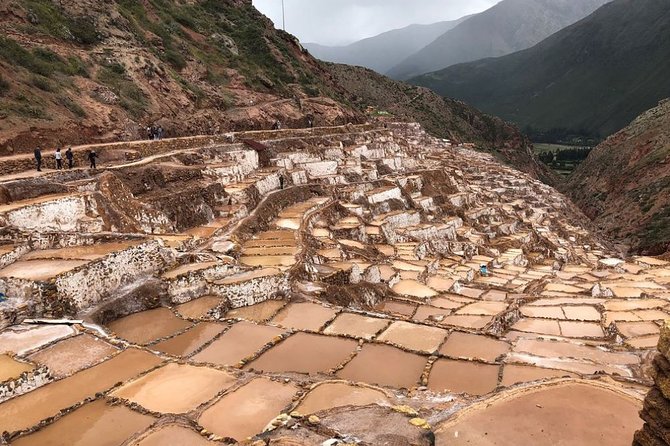
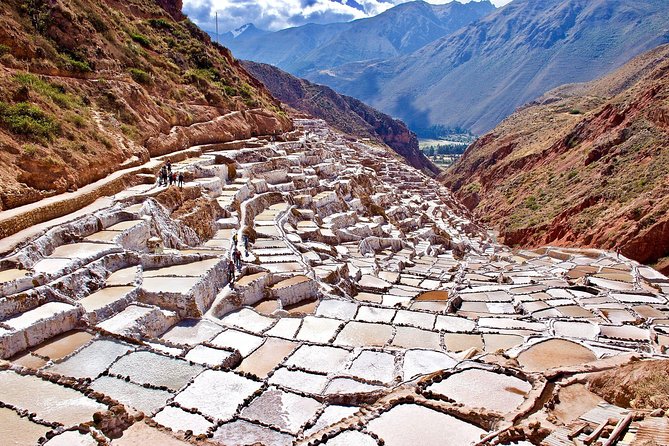
Maras is where your day turns into a photo festival—without you needing to chase it. The Salt Mine of Maras sits just about two miles away from the Moray area.
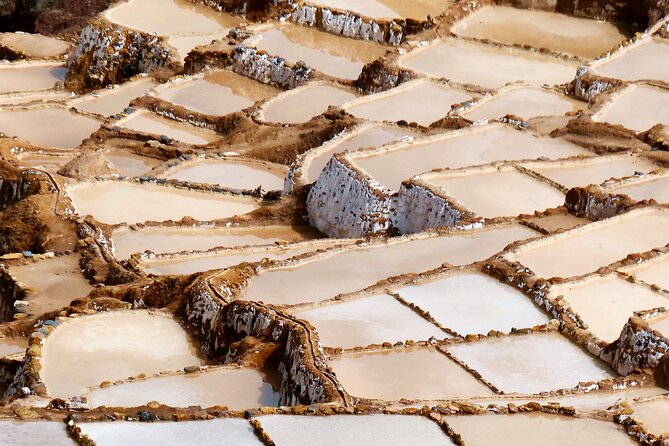
You’ll spend around 45 minutes here. The setting is famous for a reason: over 3,000 salt pools, carved into the mountainside, are filled daily by a small stream. As water evaporates, it leaves behind salt, creating a patchwork effect that looks almost too geometric to be real.
A couple things to notice while you’re there:
- The pattern: you see repeat shapes across the hillside, not one lone pool
- The glint: the salt catches light differently depending on clouds and sun
- The views: you’re surrounded by Andean terrain, and the mines sit in it like a grid on top of the earth
Ticket note: the Maras mines ticket is separate and not included, listed as PEN 20 cash.
Bring cash in small bills. It makes the moment of purchase painless, and you keep moving.
Ollantaytambo ruins and the Wiracocha rock
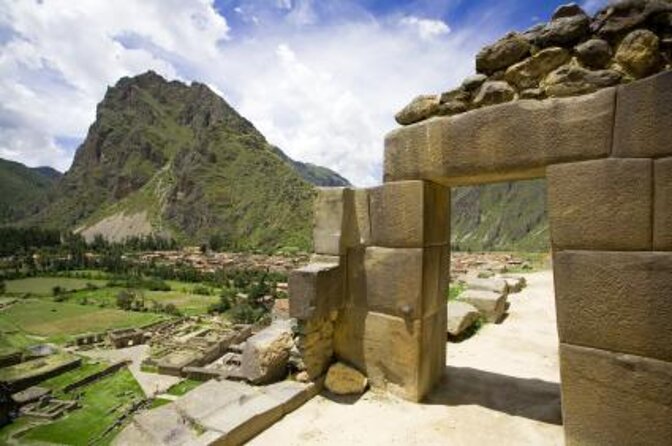
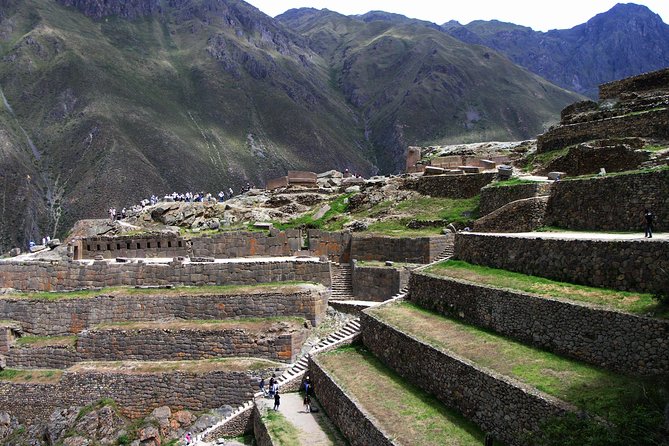
You’ll end with Archaeological Park Ollantaytambo. The time block is about one hour, and the entry is listed as free for this stop.
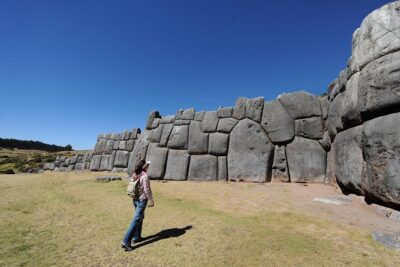
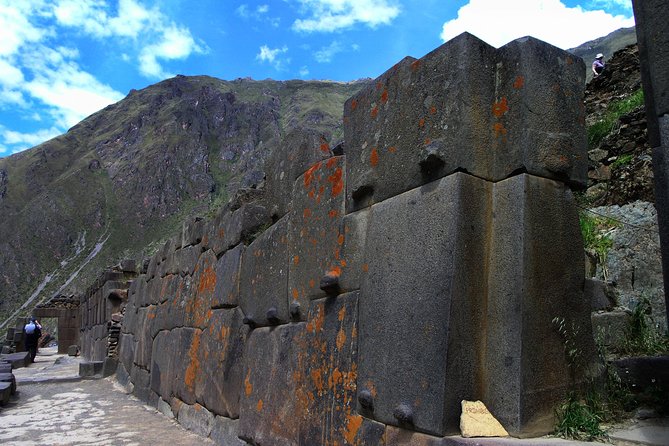
Ollantaytambo highlights Inca architecture from the Incas’ height of power. You’ll also see an impressive rock formation that represents the Inca god Wiracocha. That’s one of those details you’ll remember later, because the site makes the spiritual and political ideas feel connected.
If you’re heading to Aguas Calientes and then Machu Picchu afterward, this final stop can be a smart move. The day ends in Ollantaytambo area in a way that can save you time with trains, but again, confirm your exact drop-off location so you can line up your next plans.
Lunch in Urubamba: buffet basics, late timing, and what to order
Lunch is included: a buffet in Urubamba. It’s a practical addition because this tour is long and spread out—going hungry would be a mistake.
Here’s the honest tradeoff. The buffet is fine, but it can feel like a big hall with food that isn’t labeled and isn’t really protected from flies. If you’re picky, stick to safer basics like rice and pasta-type items, and don’t stress if your plate looks simple.
Also plan around the schedule. Lunch tends to land late—around 2 pm in real-world timing—so I recommend packing a small snack for earlier in the day. Think of it like altitude insurance.
If you’re sensitive to stomach issues, keep lunch light. You’ll still walk around ruins after, and you want energy, not regret.
Price and extra costs: does this tour feel like value?
At $73.47 per person, this tour is usually priced like a mid-range day: you pay for private transport, an English/Spanish guide, and included lunch. For a Sacred Valley route that covers multiple major sites, the “included” portion helps.
But the value equation really depends on the tickets you add on top:
- Sacred Valley ticket: PEN 70 cash only
- Salt mines (Maras) ticket: PEN 20 cash only
Pisac market is listed as free. Ollantaytambo entry is listed as free. That’s helpful because not every stop drains your wallet.
My advice: assume you’ll pay both the Sacred Valley ticket and the salt mines ticket. If you show up with only cards or big bills, you might lose time. The tour day runs on fixed windows, and speed matters.
So yes—this can be good value—but only if you plan for cash and you’re okay with paying separate site fees.
Guides and drivers: why names like Jimy, Jaime, Juan matter
A tour like this lives or dies on the guide. On this day, you’ll see why it’s rated high overall, with a 4.8 average rating from 45 and about 98% recommending it.
Different guides have different rhythms. Some do the story in a way that makes Inca engineering feel logical. Others focus on the science behind crop growth. Names you might be assigned include Jimy, Jaime, and Juan, and the day can feel smoothly multilingual in English and Spanish.
You might also meet a driver like Celestino. A good driver makes the route feel less chaotic. The best ones keep the group on schedule, and they help you get where you need to be without the stress that can come with Cusco roads.
If you want the day to go your way: ask your guide at the beginning to clarify the photo and pacing plan. You’ll get better results because you know what to expect.
Who should book this Sacred Valley route?
I’d point you here if you want a full-day highlights tour without squeezing the day into chaotic group size. This works especially well if:
- You’re short on time in Cusco
- You want multiple sites in one day with private AC transport
- You like practical explanations tied to what you’re standing on
- You’re planning to continue to Ollantaytambo for the next leg toward Machu Picchu
If you prefer a slower, deeper visit—more time per ruin and less transit—this might feel a bit packed. The stops are good, but they are still timed, and you won’t linger for hours.
Should you book?
If you want a strong highlights day with solid logistics, I think this is an easy yes. The small group size (max 8), the included guide time, and the fact that lunch is handled for you make it feel smoother than DIY.
Book it if you’re okay with paying cash for site tickets and you don’t mind that lunch lands later. Bring a snack, keep a light layer handy, and wear shoes made for uneven ground.
Skip it if you hate split-ticket pricing or you want long unhurried wandering. In that case, you might do better with a more flexible, site-by-site plan.
If your main goal is to see the Sacred Valley’s key stops—Pisac, Moray, Maras, and Ollantaytambo—this route gives you a full picture in one day, without making you fight the logistics.
FAQ
What does the tour price include?
The price includes hotel pickup in Cusco if that option is selected, a professional guide (English/Spanish), buffet lunch in Urubamba, and private air-conditioned transportation. It also runs as a small group limited to 8 people.
What extra tickets will I need to pay?
You’ll need to pay entrance tickets not included for the Sacred Valley sites (PEN 70 cash only) and the Salt Mines of Maras (PEN 20 cash only).
Is cash required for the tickets?
Yes. The ticket costs are listed as cash only for the Sacred Valley ticket and the Maras salt mine ticket.
How long is the tour?
It’s listed as approximately 12 hours.
How big is the group?
This is a small group tour with a maximum of 8 travelers.
Does the tour include lunch?
Yes. Lunch is included as a buffet in Urubamba.
What languages will the guide speak?
The tour includes a professional guide in English / Spanish.
Where does the tour start?
It starts at Plaza Regocijo (F2M9+5X2), Cusco 08002, Peru and ends back at the meeting point (some schedules may end in the Ollantaytambo area).
Is there free entry at any stops?
Yes. The Pisac Market stop is listed as free, and the Ollantaytambo archaeological park entry is listed as free for this tour.