REVIEW · CUSCO
Full-Day Sacred Valley Tour from Cusco
Book on Viator →Operated by Peru Jungle Trips · Bookable on Viator
Salt turns sunlight into something you can taste.
This full-day route through the Sacred Valley is built around three Inca-era stops plus two markets/ruins, so you get variety without overplanning. I especially like the Maras Salt Mines (the wells, the sun-dried salt, the local working rhythm) and the Urubamba buffet lunch, which gives you a real break before more stone stairs and hills. The one catch: the day is long, so some sites can feel a bit rushed—especially Pisac.
You’ll also benefit from a small group size (max 20) and guides who explain in clear English and Spanish—names like Jhonnatan, Andy, Warner, and Gustavo pop up in past experiences. That mix of history talk and time on your feet is great for most people, but you should expect a fast pace between stops and plan accordingly.
In This Review
- Key things to know before you go
- A very full-day Sacred Valley route (12–13 hours) that actually feels worth it
- Cusco start at 7:00am and the “route rhythm” between sites
- Chinchero: an Inca site start plus possible textile demos
- Moray’s circular terraces: short stop, lots of questions
- Salinas de Maras: the salt wells where sun does the work
- Urubamba lunch: warmth, a buffet break, and then straight into Ollantaytambo
- Ollantaytambo: long stone stairs, royal-palace vibes, and souvenir chances
- Pisac: market life plus hilltop ruins, but plan for a time crunch
- Guides and group pace: small group, big explanations
- Price and value: what you pay, what you still owe, and why the math can work
- Who should book this Sacred Valley tour (and who might prefer a different plan)
- Should you book? My honest recommendation
- FAQ
- How long is the Sacred Valley full-day tour?
- When does the tour start and what time does it end?
- Where do I meet the group in Cusco?
- Is lunch included?
- What entrance fees are not included?
- Is the Tourist Ticket required?
- Which sites do we visit in what order?
- Is the tour suitable for people with limited mobility?
- How big is the group?
- What should I do if I’m traveling with valuables?
Key things to know before you go
- Maras Salt Mines entry costs extra (20 PEN) but the payoff is the real working salt flats
- A buffet lunch in Urubamba breaks up the drive and helps you last the full day
- Ticket planning matters because a 70 soles Tourist Ticket covers multiple major sites
- Pisac is the stop most likely to feel short if you want slow browsing
- Shopping stops are part of the route, so decide in advance how you’ll handle them
- Max 20 people keeps the day more manageable than big buses
A very full-day Sacred Valley route (12–13 hours) that actually feels worth it
This tour is the practical way to see the Sacred Valley without building your own schedule. It strings together Chinchero, Moray, Maras, Urubamba, Ollantaytambo, and Pisac into one day—so you trade some slow wandering for a big, concentrated hit of places.
If you’re short on time in Cusco, this format makes sense. Most of the “headline” Sacred Valley sites are far enough apart that you’d spend half a day just negotiating transport. Here, you roll from one location to the next with the driving handled, and you get a set structure you can follow.
One thing to keep in mind: 12 to 13 hours is long, even if you pace yourself. You’ll be on and off the bus multiple times, and the visits are measured in minutes—not hours. If you like to linger, plan a follow-up day trip for the site(s) that grab you most.
You can also read our reviews of more tours and experiences in Cusco

Cusco start at 7:00am and the “route rhythm” between sites
Pickup is at 6:40am near the Plaza Mayor de Cusco (by the Inca statue). The tour officially leaves around 7:00am, then you’re moving through the valley until you return around 7:00pm.
That schedule matters because your energy is the real “currency” on this trip. Start early, hydrate, and avoid heavy breakfast right before pickup—Cusco altitude plus a long day can make your stomach extra sensitive. The good news is that Urubamba lunch comes mid-day and helps reset you before the afternoon sites.
Group size is capped at 20, which typically makes it easier for the guide to keep everyone together and for you to ask questions without feeling lost in a crowd.
Chinchero: an Inca site start plus possible textile demos
Chinchero is your first archaeology stop, scheduled for about 1 hour 30 minutes, and the admission ticket for this stop is listed as free.
The archaeological visit gives you a clean opening to the Inca presence in the region. Stone terraces and layouts help you understand how these sites were meant to be used, not just photographed.
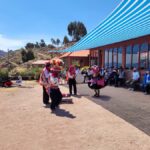
A detail worth knowing: past experiences with guides have included time where you can see local women explaining alpaca textiles. That’s not guaranteed for every group, but it’s the kind of cultural add-on that can make Chinchero more than a quick ruins stop.
Practical tip: if textiles interest you, keep your eyes open during the Chinchero portion of the day and don’t wait until you see a shopping area to ask questions. This is one of the more meaningful “culture meets craft” moments.
Moray’s circular terraces: short stop, lots of questions
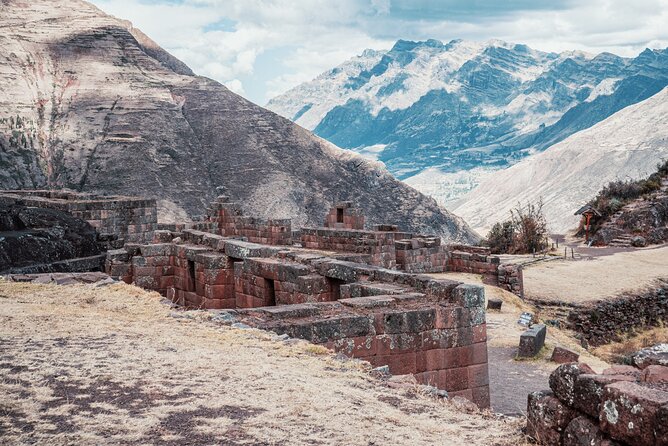
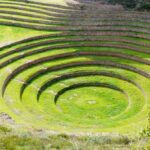
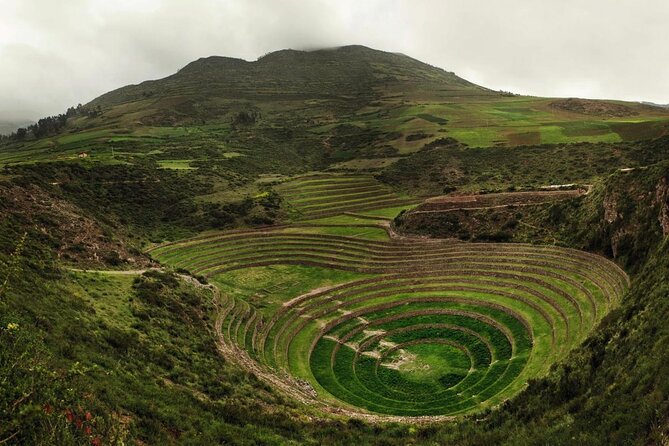
Moray is next, with about 30 minutes on the site. This is one place where your time window is tight, but the visuals are strong: circular agricultural terraces that look almost engineered for experiments.
Some historians interpret Moray’s structures as part of the Incas’ plant-growing experiments in warmer climates. Whether you buy the theory or just enjoy the layout, it gives you an angle beyond “ruins as ruins.” It’s agriculture-as-technology, and that’s a nice change of pace.
Cost note: Moray’s admission is not included, so you’ll want the Tourist Ticket (or budget separately) for this and other featured ruins.
Salinas de Maras: the salt wells where sun does the work
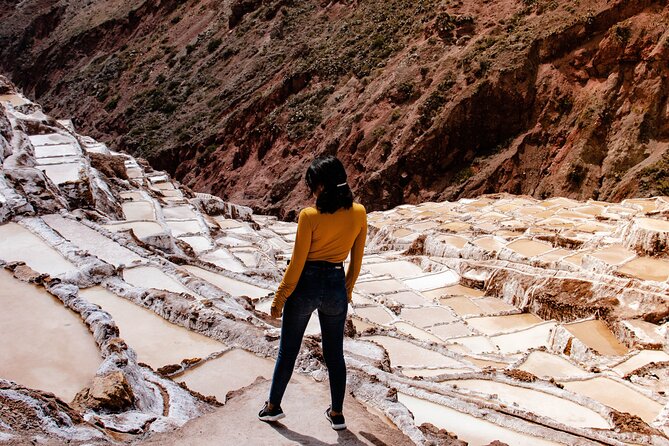
Salinas de Maras is the emotional highlight for a lot of people, mainly because it’s not just history—it’s still an active local industry.
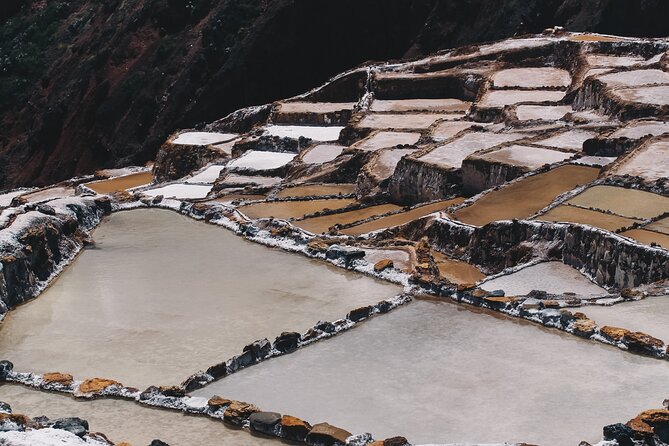
You’ll have about 30 minutes here, and this stop requires an admission fee of 20 PEN per person. The wells are arranged in dozens of square plots filled with mineral-rich underground water. Sunlight evaporates the water, leaving salt behind. Local workers gather it and sell it at local markets.
Why it hits: you can see the full process in a small area. It feels hands-on even if you’re only observing. And the contrast—stone, water channels, and pale salt—makes it easy to take photos without needing a perfect viewpoint.
Practical advice:
- Wear shoes with good grip. The ground near working areas can be uneven.
- If you care about photos, arrive ready to move. The 30 minutes goes fast.
Urubamba lunch: warmth, a buffet break, and then straight into Ollantaytambo
After the salt mines, you drive to Urubamba, the lower part of the Sacred Valley that’s typically a bit warmer. That temperature shift matters because it makes the afternoon feel less punishing.
Lunch is a buffet included in the price. It’s also strategically placed: you get food before Ollantaytambo, so you can keep energy up without paying for a full meal on the go.
After lunch, you head to Ollantaytambo’s archaeological complex, with a chunk of time built in. A lot of people love this part because you’re not just eating and then rushing—lunch resets the day.
Buffet reality check: this isn’t a fancy restaurant tasting menu. It’s practical and meant to keep you moving. If you’re picky, choose simple items you recognize and eat early in the lunch window.
Ollantaytambo: long stone stairs, royal-palace vibes, and souvenir chances
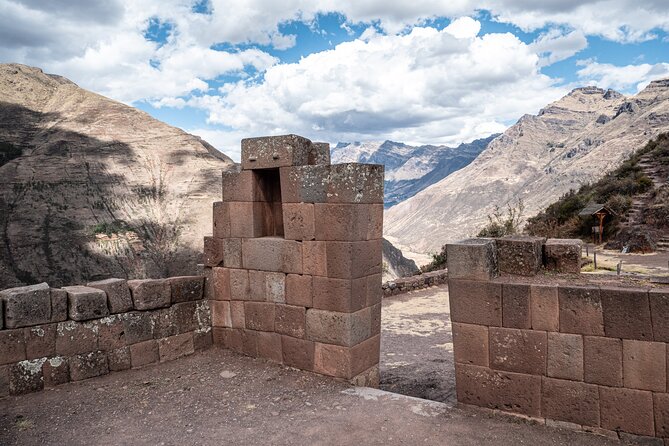
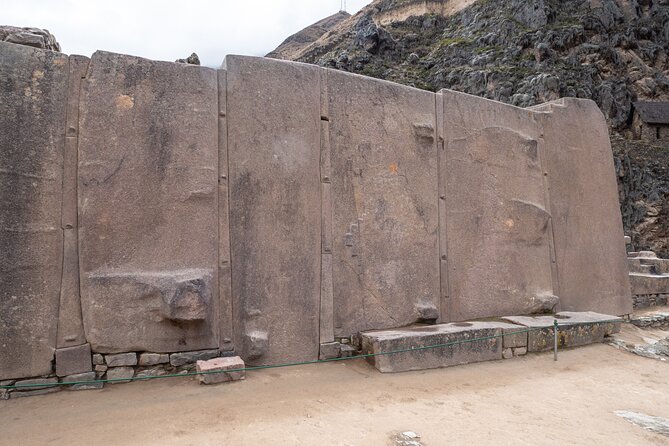
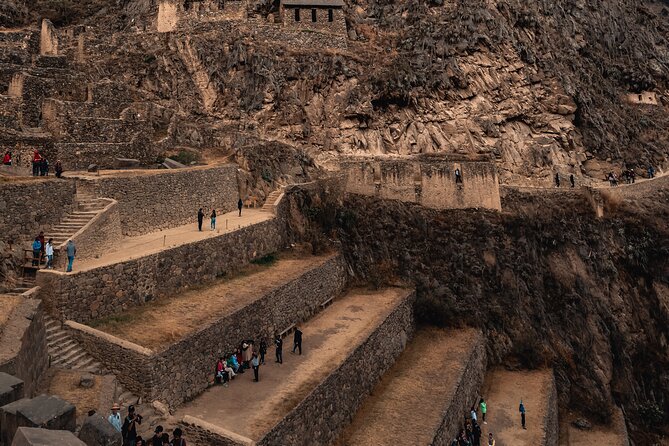
Ollantaytambo is the “stairs and power” stop. You’ll spend about 1 hour here, with admission listed as free for the archaeological visit.
The most famous feature is the long stone stairs leading up to the main area of the complex. It’s a physical climb that also helps you understand the layout: you go from lower activity zones to higher, more central structures, which feels very much like how authority was designed into space.
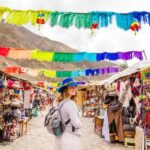
You’ll also visit Ollantaytambo town, where shopping and souvenirs are part of the experience. This is one of those places where you can browse without feeling pressured to buy immediately—unless you’re tired, in which case everything starts to feel like a sales pitch.
Pisac: market life plus hilltop ruins, but plan for a time crunch
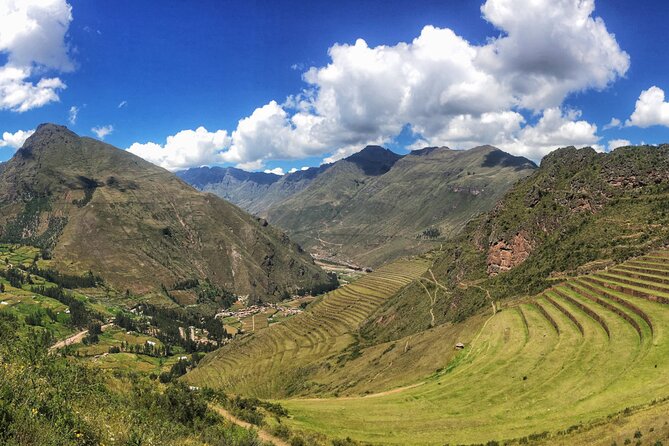
Pisac is scheduled for a longer block on paper—about 1 hour 30 minutes including both the town and the archaeological complex. Admission is marked as free for the included site areas, but remember: the Tourist Ticket is needed for key ruins stops listed on the program.
Pisac gives you two different experiences in one:
- The town and market, along the Urubamba River area, where you can shop for souvenirs and taste local food.
- The archaeological complex on a nearby hilltop, with multiple stone buildings that are associated with Inca nobility.
Here’s the trade-off: people who want to slow down for both market browsing and careful ruin exploring can feel the time pinch. The ruins take focus, and the market can be tempting. With this itinerary format, you usually end up doing a “best-of both” instead of a deep, unhurried visit.
If you know Pisac is your must-see, keep it in the front of your mind before booking. If you’re okay with a whirlwind version, it works well.
Guides and group pace: small group, big explanations
This tour is set up for a group max of 20, which makes a difference. In smaller groups, the guide can steer you through the right areas and answer questions without losing everyone to wandering.
Names that have shown up in past guide experiences include Jhonnatan, Andy, Ande, Lenny, Warner, Gustavo, and Jonathan. What matters isn’t the name—it’s the role. Guides typically explain the ruins in ways that connect layout to purpose, and they often work in more than one language, so the group isn’t stuck waiting for translations.
Also, the day’s “pace management” is part of why this tour can be so satisfying for beginners. You’re not figuring out transportation, and you’re not trying to guess which side path is worth your time.
The caution: a few reviews have noted the day includes stops designed for shopping. If you don’t like that rhythm, it helps to decide upfront how you’ll handle it. Browse for a short time, ask questions if you want, and then move on. Don’t let fatigue turn shopping into a missed opportunity elsewhere.
Price and value: what you pay, what you still owe, and why the math can work
The tour price is $40 per person, and it includes:
- Transportation to the attractions
- Buffet lunch in Urubamba
What’s not included:
- Tips and personal expenses
- Admission fees for some of the major stops
Two extra costs are clearly listed:
- Salinas de Maras: 20 PEN per person
- Tourist Ticket: 70 soles per person, needed for Chinchero, Moray, Ollantaytambo, and Pisac
So the real value question becomes: is the included transport plus lunch worth the additional ticket fees? For most people, yes—because you avoid private driving and you still get access to several top sites in one long day. You’re basically buying convenience and structure.
This can be a great deal if you’re:
- Visiting Cusco with limited time
- Not confident driving between Sacred Valley stops
- Happy with a full-day whirlwind format
It’s less ideal if:
- You already plan to visit a single site slowly and don’t need the rest
- You hate shopping stops and prefer pure ruins time only
Who should book this Sacred Valley tour (and who might prefer a different plan)
This works best for you if:
- You want a big “first pass” through the Sacred Valley
- You’d rather spend money on guided transport than on figuring out buses and schedules
- You enjoy both markets and archaeology, and you’re okay with some short windows
You might consider a different plan if:
- You want deep time in one location and don’t like rushing
- You’re very sensitive to shopping-focused detours
- You’re hoping to cover everything at a relaxed speed without feeling the day’s length
One more practical note: the program asks for moderate physical fitness. That usually means you can handle walking on uneven ground and climbing stairs at sites like Ollantaytambo. Bring comfortable shoes and keep an eye on how you’re feeling at altitude.
Should you book? My honest recommendation
If this is your first Sacred Valley day and you want the highlights packed together, I’d say yes, book it. The combination of Maras Salt Mines, Moray’s terraces, and the two major ruins/market stops gives you variety that’s hard to replicate in one self-planned day.
Just go in with clear expectations:
- It’s a long day.
- Pisac can feel short if you love markets or want to linger in the ruins.
- Budget for the 70 soles Tourist Ticket and 20 PEN for Salinas de Maras.
- There will be shopping time, so decide what you’ll do with it.
If you do that, you’ll get a full, efficient Sacred Valley snapshot without the stress.
FAQ
How long is the Sacred Valley full-day tour?
It runs about 12 to 13 hours.
When does the tour start and what time does it end?
Pickup is around 6:40am, with departure at 7:00am. You’ll return to Cusco around 7:00pm.
Where do I meet the group in Cusco?
The start is near the Inca statue at Plaza Mayor de, Cusco. The end point is Calle Plateros, close to the main square.
Is lunch included?
Yes. A buffet lunch in Urubamba is included.
What entrance fees are not included?
Salinas de Maras entrance is 20 PEN per person. Other sites require the Tourist Ticket (70 soles per person).
Is the Tourist Ticket required?
Yes. A 70 soles Tourist Ticket is needed to visit Chinchero, Moray, Ollantaytambo, and Pisac.
Which sites do we visit in what order?
The order is Chinchero, Moray, Salinas de Maras, Urubamba, Ollantaytambo, and then Pisac.
Is the tour suitable for people with limited mobility?
The tour notes a moderate physical fitness level. You’ll be walking at ruins and stairs, including at Ollantaytambo.
How big is the group?
The maximum group size is 20 travelers.
What should I do if I’m traveling with valuables?
The tour doesn’t specify security details, so use normal common sense for personal items. Souvenirs and tips are not included.