REVIEW · CUSCO
Cusco City Tour with Sacsayhuaman & Inca Sites – Small Group
Book on Viator →Operated by TreXperience · Bookable on Viator
Cusco can feel like a maze. This small-group tour gives you a clear path through the city and top Inca sites, without wasting time hunting down details. I like that it starts right where Cusco history crowds together at Plaza de Armas, and it keeps moving so you see both Inca and Spanish layers in a tight window.
What I like even more is the in-order site combo: Coricancha, Sacsayhuaman, Q’Enqo, Puka Pucara, and Tambomachay, with included entry for most stops. One possible drawback: it is a 4–5 hour day with moderate walking and stairs, so if you’re short on stamina (or still adjusting to altitude), plan for a slower pace.
In This Review
- Key points worth knowing before you go
- Cusco in one afternoon: what this tour gets right
- Starting at Plaza de Armas and getting your bearings fast
- Coricancha: the Inca temple under the Santo Domingo convent
- Sacsayhuaman: the fortress that still dominates the view
- Q’Enqo: a rock-cut ceremonial center with hidden purpose
- Puka Pucara: the red fortress and its strategic role
- Tambomachay: Inca Bath vibes, plus water engineering you can still see
- Group size, timing, and how to pace yourself at altitude
- What the $98 price really covers (and where you’ll spend extra)
- Guide quality matters more than you think
- Who should book this Cusco city tour
- Should you book this Cusco City Tour with Sacsayhuaman & Inca Sites?
- FAQ
- How long is the Cusco City Tour with Sacsayhuaman and Inca sites?
- Where does the tour start and end?
- What time does it start?
- Is hotel pickup and drop-off included?
- What attractions are included in the ticket price?
- Is the Cathedral entrance included?
- Are meals included?
- How big is the group?
- Is this tour suitable for people with limited mobility?
Key points worth knowing before you go
- Max 16 travelers means you’re not stuck listening from the back the whole time.
- Coricancha entry is included, so you get inside one of the most dramatic Inca-to-Spanish history overlaps.
- Partial tourist ticket Circuit I is included, covering Sacsayhuaman, Q’Enqo, Puka Pucara, and Tambomachay.
- A real route, not random stops: you see Cusco’s big ceremonial and strategic Inca sites in a logical flow.
- Vehicle transfers save your energy, especially between Cusco proper and Sacsayhuaman.
Cusco in one afternoon: what this tour gets right
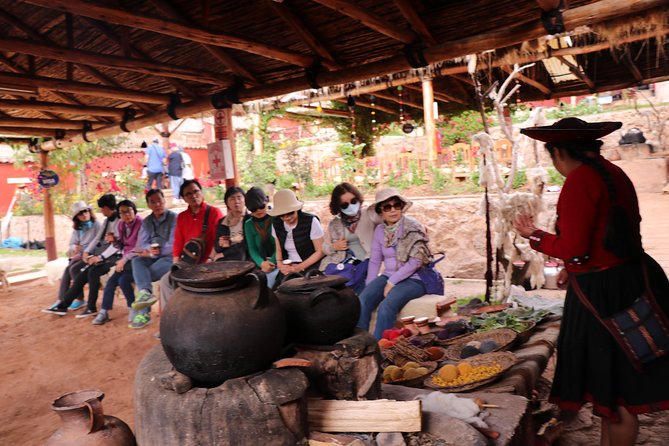
If you only have a half-day in Cusco, this is the kind of tour that makes the time count. You start in the historic center and finish at the same meeting point, so you’re not stuck arranging your own transport or figuring out tickets city-by-city.
The tour is designed around two things you’ll feel immediately in Cusco: first, the Inca city plan is still visible under Spanish streets. Second, the big Inca sites outside the center aren’t far, but you need a route that keeps the day from turning into transit time.
Your group stays small—up to 16—so your guide can actually answer questions as they come up. I especially like that this is built to help you connect dots: why Sacsayhuaman mattered, how Coricancha was used, and how the “minor” sites like Puka Pucara fit into the capital’s bigger system.
You can also read our reviews of more city tours in Cusco
Starting at Plaza de Armas and getting your bearings fast
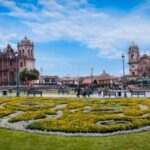
You begin at 1:00 pm in the heart of Cusco at Plaza de Armas. This matters more than it sounds. It’s not just a pretty landmark; it’s where colonial Cusco built its center, while the Inca ceremonial gravity of the area still echoes through the urban layout.
From the square you’ll walk to the 12 Angled Stone—the famous block fitted into an ancient Inca wall. Then you continue along Loreto Street, known for being one of the better examples of Inca urban design, with stone walls still standing on both sides.
Why this stop works: it trains your eye early. After you see these details up close, the later Inca masonry at Sacsayhuaman (and the “Inca under Spanish” story at Coricancha) makes more sense. And because the Plaza de Armas area is free to enter, you’re not burning time on ticket lines.
Practical note: the walk here is short, but it’s still in the historic center—so bring comfortable shoes. Cusco sidewalks can be uneven, and your ankles will be grateful later at the sites.
Coricancha: the Inca temple under the Santo Domingo convent
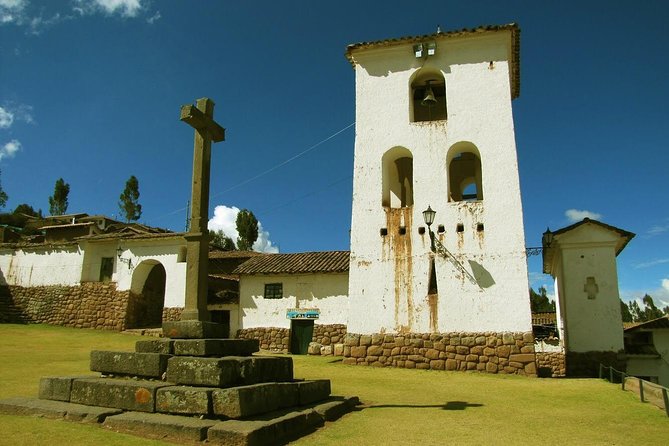
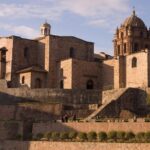
Next you head to Coricancha, once the most important temple in the Inca Empire, dedicated to the Sun. The big story at Coricancha is the physical layering: Spanish builders placed the Santo Domingo convent directly on top of Inca foundations.
You’ll see a clear comparison between the highly precise Inca stonework below and the colonial architecture above. It’s one of those places where your brain keeps trying to figure out how something this exact could have been made without modern tools—and then the Spanish construction story arrives right after.
The included time here is set up to let you slow down. You’ll also learn how Coricancha was covered in gold in Inca times and used for ceremonies, astronomy, and worship. That’s not just trivia; it changes how you look at the site. You stop thinking of it as a ruin and start thinking of it as a functioning ritual machine.
Tip for photos: shoot from a couple of angles to catch where the old and new meet. That junction is the point.
Sacsayhuaman: the fortress that still dominates the view
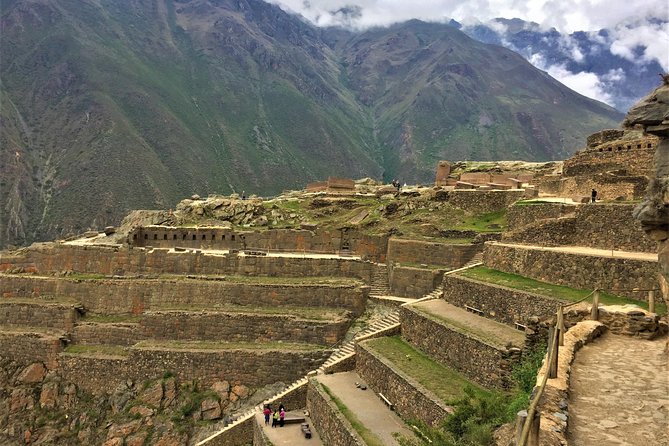
After Coricancha, you go by vehicle to Sacsayhuaman, one of the most impressive Inca sites overlooking Cusco. This is the stop that most people picture when they think Inca engineering.
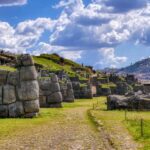
Here you’ll walk through a fortress with giant zigzag stone walls. The stones are fitted so tightly that you can’t slide a piece of paper between them. That detail is worth holding onto while you’re walking, because it explains the scale of the site: this isn’t just a wall. It’s a massive, intentional structure built to last—and built to intimidate.
Your guide will connect the site to real cultural life, not only battles. You’ll hear stories about Inca ceremonies and how Sacsayhuaman still plays a role in the Inti Raymi festival. You’ll also get some of the best panoramic views of Cusco and the surrounding mountains.
What can slow you down here: the walking is on-site, and the ground can be uneven. If you’re dealing with altitude, take your time and use your guide’s pace as your benchmark.
Q’Enqo: a rock-cut ceremonial center with hidden purpose
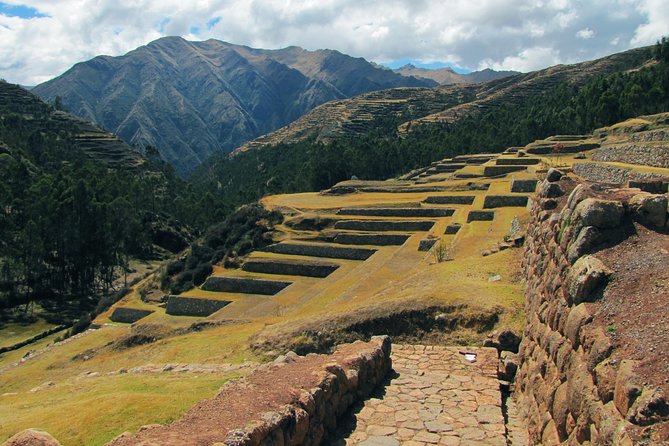
From Sacsayhuaman you continue to Complejo Arqueológico Q’ënqo (Qenqo). This one feels different right away because it’s carved almost entirely from rock, not built outward like a fortress.
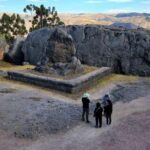
Inside, you’ll see winding passages, carved channels, and hidden altars. Your guide will share different theories about its use, plus the spiritual meaning of the place. The name Q’ënqo means zigzag in Quechua, and you’ll understand why once you’re there.
I like this stop because it adds variety to the Inca story. If Sacsayhuaman feels military and architectural, Q’ënqo feels ritual and symbolic. You’re seeing the empire as a system of beliefs, not just stone.
Practical tip: some parts may feel tight or visually busy. Wear something comfortable and keep your phone handy for wide shots when you step into open areas.
Puka Pucara: the red fortress and its strategic role
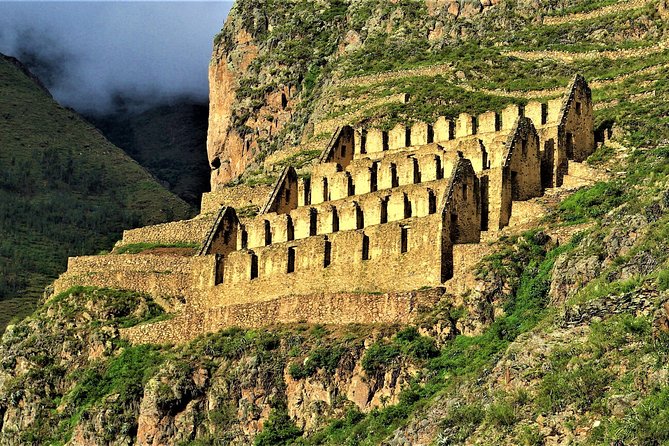
Next is Puka Pucara, meaning Red Fortress in Quechua. This is a smaller site than Sacsayhuaman, but it’s a useful one if you want to understand how Cusco worked as a capital.
This location likely served as a military checkpoint and resting place on the road connecting Cusco with the Sacred Valley and the jungle. From its terraces and stone walls you get open views that help you imagine movement—Inca messengers, travelers, and messages traveling through a network.
Your guide will point out guard posts, walls, and rooms so you can visualize how a place this size still mattered. It’s easy to skip “secondary” sites on a big day. Don’t. Puka Pucara helps explain how control and communication worked around the capital.
Tambomachay: Inca Bath vibes, plus water engineering you can still see
The final Inca stop is Tambomachay, known for its clear water fountains and elegant stonework—often nicknamed the Inca Baths. The tour framing here is calm and nature-focused, with a strong emphasis on water.
You’ll see aqueducts and canals that still carry water after hundreds of years. That endurance is the whole point: the Incas didn’t only build for ceremonies. They built infrastructure that kept functioning.
If you need a breather after the more dramatic fortress walk at Sacsayhuaman, Tambomachay is a good reset. You’ll have time for photos, fresh air, and a slower pace before heading back to Cusco.
Photography tip: water looks best when the light hits the channels. If the sun is harsh, stand just off to the side of a fountain so you get reflections without blowing out the highlights.
Group size, timing, and how to pace yourself at altitude
This tour runs about 4 to 5 hours, with departures in the afternoon (the tour you’re looking at starts at 1:00 pm) and morning options also offered. Since you’re covering multiple sites, transfers matter—and this one uses a vehicle to keep the day reasonable.
The itinerary is built with short, focused on-site visits—about 30 minutes at each stop. That structure works well for most people because it keeps energy from draining too early. Still, in Cusco you should treat your pace as your own. If you feel winded, pause and sip water. Altitude fatigue can creep up even when the walk is modest.
What to bring:
- Sunscreen and a hat (Cusco sun can be sharp even when it’s cool)
- Water and a light snack if you get hungry (meals are not included)
- Comfortable, closed-toe shoes with grip
- A light layer for wind at higher spots like Sacsayhuaman area
What the $98 price really covers (and where you’ll spend extra)
At $98 per person, this tour isn’t trying to be the cheapest option. The value comes from what’s included: hotel pick up and drop off in the Cusco Historic Center, a professional guide, and paid access for major sites.
Here’s the key split:
- Included entrances: Coricancha, plus a partial tourist ticket covering Sacsayhuaman, Q’Enqo, Puka Pucara, and Tambomachay.
- Not included: Cathedral entrance and visit, plus meals and snacks.
So you’re paying for a lot of time-saving and ticket coverage. If you tried to DIY this route, you’d spend extra on transport, figuring out the right ticket circuit, and waiting around at each site. For many first-timers, that’s the real reason tours like this feel worth it.
One more value angle: the guide helps you understand what you’re looking at. Sites like Q’ënqo and Puka Pucara can look similar if you’re only seeing stones. A good guide makes the differences stick.
Guide quality matters more than you think
The tour promises a professional guide, and the feedback on this provider consistently points to guides who bring energy and clarity. In the reviews you shared, names like Katia and Jennifer show up tied to a standout style: friendly, engaging, and able to answer questions without rushing. Other guides like Frank, Roger, and Leo are described as helpful and story-driven, while Victor is praised for keeping things safe and on time behind the wheel.
For you, that translates into a simple expectation: if your guide is solid, you won’t just see a list of places. You’ll understand why each site exists in the larger Inca system, and you’ll know what details are worth noticing while you walk.
Who should book this Cusco city tour
This tour is a great fit if:
- You want the big Cusco highlights without navigating ticket rules and transport on your own
- You like a structured route with short stops and enough guidance to keep the story coherent
- You prefer small-group pacing (max 16) so questions are practical, not annoying
It might be less ideal if:
- You want a relaxed day with lots of free time at only one or two sites
- You’re not comfortable with moderate walking and uneven ground
- You’re hoping the Cathedral visit is included (it isn’t)
Should you book this Cusco City Tour with Sacsayhuaman & Inca Sites?
Yes—if you want a well-planned “Inca + Spanish layers” day that hits the major sites around Cusco without turning into a logistics puzzle. The included entries for Coricancha and Circuit I sites are a big part of the value, and the afternoon timing (plus morning options in general) makes it easy to fit around other Cusco plans.
Before you book, do one simple check: make sure your energy matches a 4–5 hour outing with several short walks. If you’re arriving in Cusco and still adjusting, consider whether you want this early in your trip or after you’ve had a day to settle in.
If you can handle that, you’re set up for a smart introduction to Cusco—where you’ll see how Inca planning still shows through, even after centuries of Spanish construction.
FAQ
How long is the Cusco City Tour with Sacsayhuaman and Inca sites?
It runs about 4 to 5 hours.
Where does the tour start and end?
It starts at Plaza de Armas in Cusco and ends back at the same meeting point.
What time does it start?
The start time for this tour is 1:00 pm.
Is hotel pickup and drop-off included?
Yes. Pickup and drop-off are included for hotels in the Cusco Historic Center.
What attractions are included in the ticket price?
Coricancha entrance is included, along with a partial tourist ticket for Circuit I covering Sacsayhuaman, Q’Enqo, Puca Pucara, and Tambomachay.
Is the Cathedral entrance included?
No. The Cathedral entrance and visit are not included.
Are meals included?
No. Meals and snacks are not included.
How big is the group?
The group is limited to a maximum of 16 travelers.
Is this tour suitable for people with limited mobility?
The tour lists a need for moderate physical fitness level, so it’s best if you’re comfortable with walking and uneven terrain at multiple stops.