REVIEW · CUSCO
In Cusco: Saqsaywaman, Qenqo, Pukapukara, Tambomachay.
Book on GetYourGuide →Operated by MACHU PICCHU JUNGLE · Bookable on GetYourGuide
Cusco can feel like a maze until you see where the Incas built their power. This tour does that job fast, stitching together Inca sacred sites around town with real context on how worship and engineering worked. I especially like the focus on Qoricancha and the chance to compare the big stonework at Sacsayhuaman with the more ritual, carved spaces at Qenqo and beyond. One possible drawback: you’ll spend real time on the shopping/free-time stops, so if you hate time pressure, go with eyes open.
The good part is the structure: you start at Qoricancha if your departure includes it, then move out to the outskirts for four more complexes—Saqsaywaman, Qenqo, Puka Pukara, and Tambomachay—before returning to the Plaza Regocijo area. Depending on your group, the full tour runs about 5 hours with Qoricancha or 4 hours without it, so it’s a practical add-on even if your schedule is tight.
Pace and language can vary by group and guide. The tour is offered with a bilingual guide (English and Spanish), and that’s a plus for comprehension, but one note to consider is that the shopping segment can eat into time that you might want to spend staring at stones instead of browsing.
In This Review
- Quick take: what makes this Cusco Inca circuit work
- Price and value: what you’re really paying for
- Meeting point reality: where you start and how groups differ
- Starting with Qoricancha: how to see the Temple of the Sun correctly
- The transfer time: bus rides you can use (or suffer through)
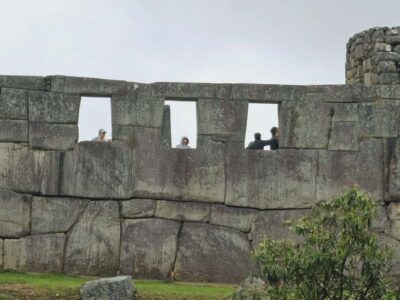
- Saqsaywaman: the fortress where stone size tells the story
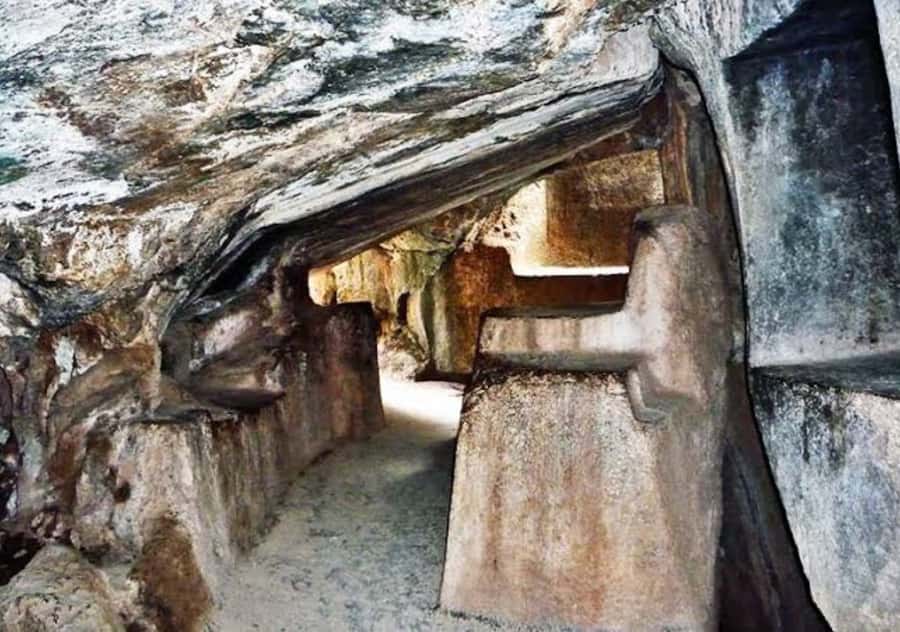
- Qenqo: a carved site that feels more ritual than defensive
- Puka Pukara: the stop where names and meaning start mattering
- Tambomachay: the famous Inca shower and the idea of water
- The free-time and shopping stop: worth it, or a time sink?
- Timing, pace, and how long you really have at each site
- Guide quality: what to look for and what language to expect
- Tickets and what to bring so your day doesn’t get derailed
- Who this tour suits best
- Should you book? My practical take
- FAQ
- What times does the tour end?
- Is the Qoricancha entrance ticket included?
- Do I need the Cusco Tourist Ticket?
- Where do I meet the tour, and where is pickup on Sundays?
- What languages is the guide?
- What should I bring?
Quick take: what makes this Cusco Inca circuit work
- Qoricancha (Temple of the Sun): the tour starts with the spiritual center tied to the Inti worship idea.
- Saqsaywaman’s scale: huge cut-stone blocks that make the Inca build quality hit harder than photos.
- Inti Raymi context: you’ll hear how Sacsayhuaman connects to the Festival of the Sun timing around the winter solstice.
- Three different styles of sites: Qenqo, Puka Pukara, and Tambomachay each feel different, not repetitive.
- Real free time: a llama-and-alpaca stop plus local-product shopping before you’re sent back toward Plaza Regocijo.
- Bilingual guiding: English and Spanish support, though the time split can be uneven.
Price and value: what you’re really paying for
At $15 per person, this is one of the more budget-friendly ways to see several major Inca sites in a single day. That price typically matters most for two things: you get round-trip tourist transportation and a professional guide who covers the meaning of each stop, not just the view.
Entrance costs are separate. The tour lists:
- Qoricancha entrance ticket: S/ 20.00 soles per person
- Cusco Tourist Ticket: S/ 70.00 soles per person (and S/ 40.00 soles for nationals)
The tour provider says they can help you buy tickets if you haven’t already, so if you’re unsure what you need, plan to bring cash and ask during the tour. If you already have the right tickets, the $15 feels like you’re mostly paying for transport + guidance—exactly where your money tends to go on good value tours.
You can also read our reviews of more tours and experiences in Cusco.
Meeting point reality: where you start and how groups differ
You’ll meet at Machu Picchu Jungle Trek, Office 104, at Asociación de artesanos souvenir, San Andres 218. Their hours are listed as 8:00 a.m. to 9:30 p.m., which is helpful if you need to confirm details on the day you go.
On Sundays, pickup is at Plaza de Armas Cusco, near the Inca fountain in the center. If you show up at the office on Sunday and your group is assigned for the square, you’ll lose time—so double-check the day.
Also pay attention to the departure option, because it changes whether you visit Qoricancha:
- Morning with Qoricancha: leaves at 9:00 a.m., ends around 1:30 p.m. to 2:00 p.m.
- Morning without Qoricancha: leaves at 10:00 a.m., ends around 1:30 p.m. to 2:00 p.m.
- Afternoon with Qoricancha: leaves at 1:00 p.m., ends around 6:00 p.m. to 6:30 p.m.
- Afternoon without Qoricancha: leaves at 2:00 p.m., ends around 6:00 p.m. to 6:30 p.m.
One extra heads-up: the tour info notes that the Qoricancha temple is not visited on the 9:50 a.m. and 1:50 p.m. groups. So if you care a lot about starting with Qoricancha, choose carefully.
Starting with Qoricancha: how to see the Temple of the Sun correctly
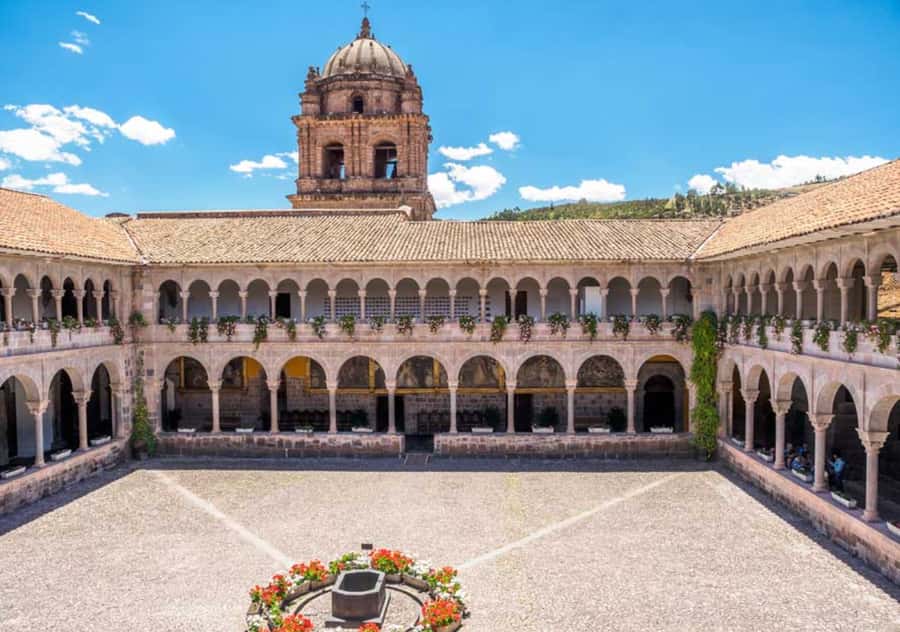
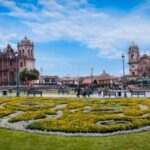
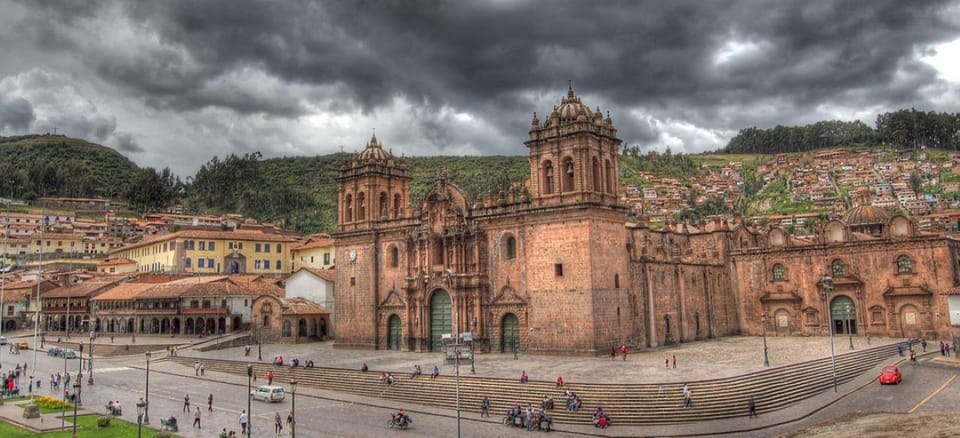
Qoricancha is the big one on this circuit—Cusco’s most important Inca temple, tied to the Sun God idea, Inti. The meaning matters here. This isn’t just a pretty ruin. It’s a reminder that Inca “sacred architecture” was built to work with belief and astronomy, not only for ceremonies.
When your group includes it, the tour gives you:
- Guided visit
- Free time (about 40 minutes)
That free time is important because Qoricancha can be visually intense. You’ll want a slow moment to look at details after the guide explains the story. If you’re in a group that skips Qoricancha, the rest of the tour still covers major sites, but you’ll miss that opening context that helps the other locations click.
Practical note: the Qoricancha entrance ticket is not included in the base price. If you forget to plan for it, you can waste time. Bring cash since the provider can help you buy tickets.
The transfer time: bus rides you can use (or suffer through)
Between stops, you’ll ride in a coach/bus. The timing is part of how this tour stays within a half-day or evening window. For example, there’s a coach segment after Qoricancha, then short transfers between the outer complexes.
In Cusco’s altitude and bus schedules, that ride time can matter more than you expect. If you get lightheaded easily, use the bus minutes to sip water and catch your breath. If you want photos, be ready to step out quickly—some of the stops include both photo opportunities and walking.
Also, don’t pack yourself with a large bag. The tour lists no luggage or large bags in the rules, so plan on a daypack-sized setup you can handle during walking segments.
Saqsaywaman: the fortress where stone size tells the story
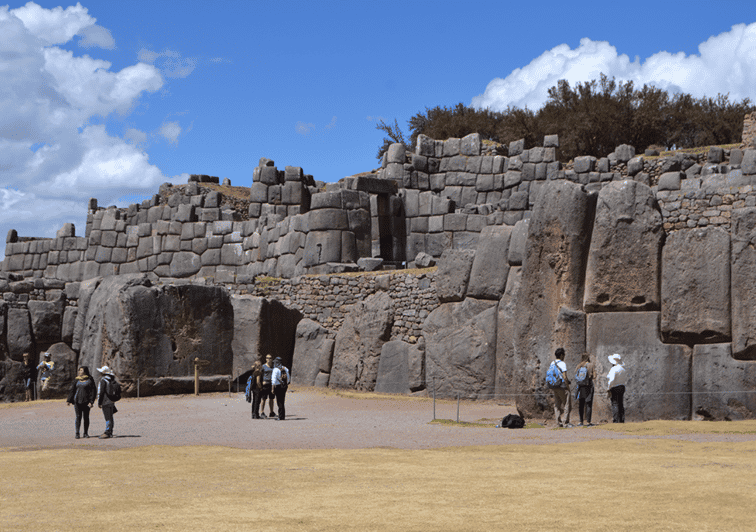
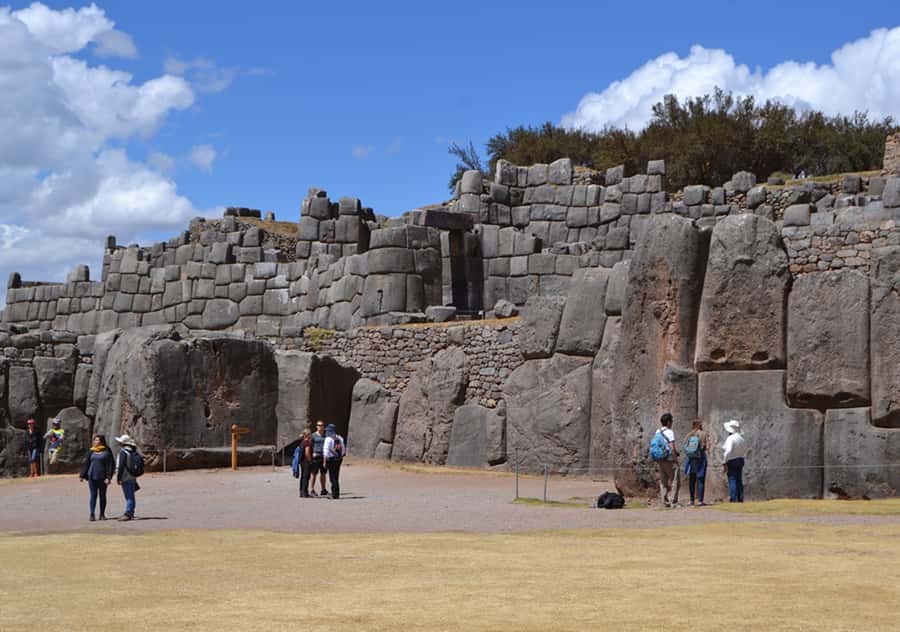
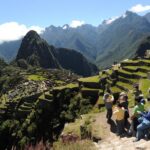
Next up is Saqsaywaman Fortress (often spelled Sacsayhuaman). This stop is famous for enormous carved stone blocks, and the reason it hits is simple: your brain can’t fully appreciate scale until you stand there.
What you get here:
- Photo stop
- Guided tour
- Free time
- Sightseeing
- Walk (about 40 minutes)
The guide is also part of why this stop works. The tour explicitly connects Saqsaywaman to the celebration of Inti Raymi on the winter solstice—the Festival of the Sun, often discussed as one of Peru’s best-known festivals. You might not experience the festival itself during your visit, but hearing how this place fits the seasonal “calendar” makes the stonework feel less random.
If you like photography, this is one of the better sites on the list because the geometry reads well from multiple angles. If you hate crowds or you’re sensitive to time pressure, aim to get your best shots early during the guided portion and then use free time to linger.
Qenqo: a carved site that feels more ritual than defensive
Then you move to Q’enco (Qenqo) Archaeological Complex. This one tends to feel different from Saqsaywaman. Instead of focusing on defensive force, it reads as a ceremonial/ritual space, with carved features that encourage you to think about how people moved and gathered.
The tour format at Qenqo is:
- Photo stop
- Guided visit
- Free time
- Sightseeing
- Walk (about 40 minutes)
The value here is comparison. With just this one tour, you’re not only ticking boxes. You’re seeing how Inca architecture changes purpose site to site. Even if you’re not fluent in the guide’s explanation style, the physical differences give you something to anchor on.
Tip: wear shoes you trust. Cusco’s sidewalks and pathways can be uneven, and you’ll be walking during these segments.
Puka Pukara: the stop where names and meaning start mattering
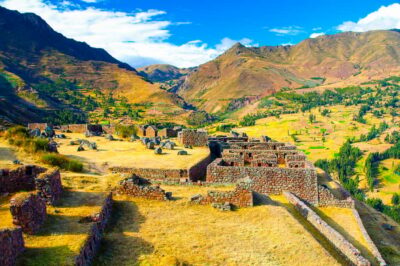
Next is Puka Pukara Archaeological Complex. The tour includes:
- Photo stop
- Guided tour
- Free time
- Sightseeing
- Walk (about 35 minutes)
Puka Pukara is one of those places where your understanding grows once you’ve already heard the basics at Qoricancha and Saqsaywaman. By the time you arrive, you’re more likely to notice that these sites aren’t designed only as stand-alone attractions. They belong to a system of power, worship, and community movement.
If you’re the type who likes to know what you’re looking at, Qenqo and Puka Pukara are where that starts to pay off. If you’re the type who just wants the photos, you can still enjoy them—but you’ll get more satisfaction if you listen during the guide portion.
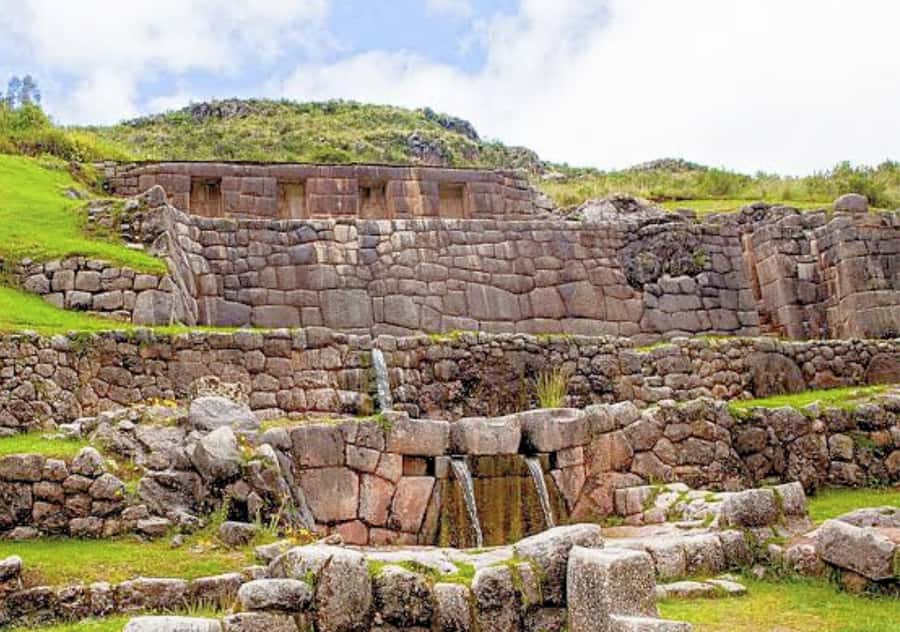
Tambomachay: the famous Inca shower and the idea of water
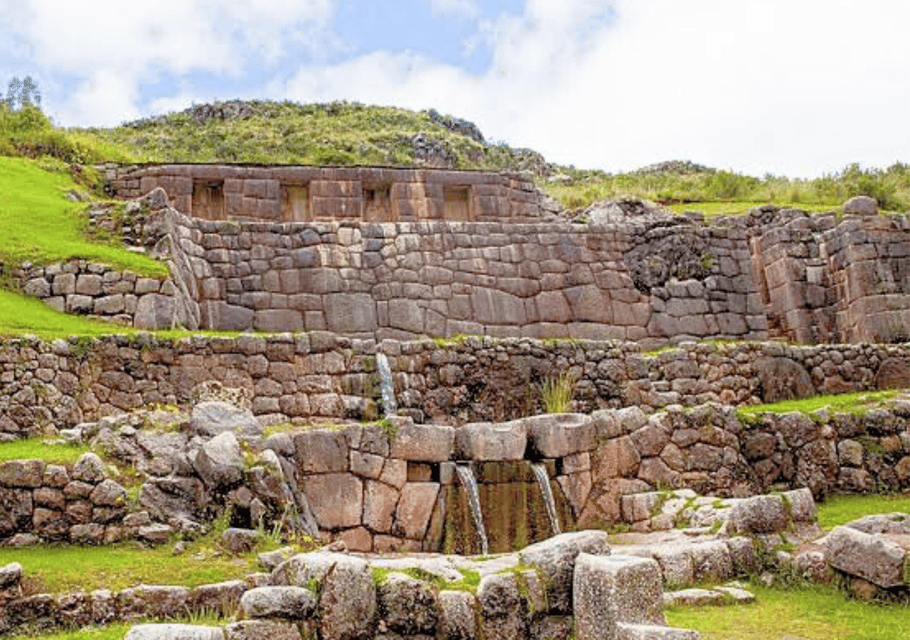
The final archaeological complex is Tambomachay, described as the famous Inca shower. It comes with:
- Photo stop
- Guided visit
- Free time
- Sightseeing
- Walk (about 40 minutes)
Water features often help you understand how the Incas thought. Even when your guide doesn’t go deep into every detail, the presence of water management elements tends to make the site feel practical and symbolic at the same time. This stop is a good way to end the “outer circle” before you get sent back into town.
At Tambomachay, try not to rush your free time. The best photos usually need a quiet moment when the light hits right and you can step back far enough to take in the whole feature.
The free-time and shopping stop: worth it, or a time sink?
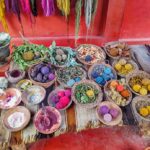
Before finishing, the tour stops at a special place with free time and a chance to see the famous Peruvian llamas and alpacas, plus some shopping of local products.
Here’s the honest balance. This segment can be fun if you want a souvenir moment and you like seeing animals up close. But if you’re on the clock, it can feel like a trade-off. Some past tour feedback included complaints about too much time spent at shopping and pressure around the important site visits. So if your priority is maximum time at the archaeology, plan your expectations: the day is not archaeology-only.
A helpful strategy: when the shopping area opens, do a quick scan first. Grab what you want quickly, then spend your remaining free time looking at the animals instead of lingering over every stall.
Timing, pace, and how long you really have at each site
The tour’s total duration is listed as 330 minutes (about 5.5 hours), though it also states:
- 5 hours with Qoricancha
- 4 hours without Qoricancha
In practice, that “difference” shows up in your schedule and how long you have before you end the day. The itinerary timing also suggests a standard flow:
- Qoricancha guided + free time (about 40 minutes when included)
- Saqsaywaman walk/free time (about 40 minutes)
- Qenqo walk/free time (about 40 minutes)
- Puka Pukara walk/free time (about 35 minutes)
- Tambomachay walk/free time (about 40 minutes)
Then you return to Plaza Regocijo as the finish point.
So you’re not getting a full deep-site experience at each location. You’re getting the key ideas plus enough time to look and take photos. That makes this tour ideal when you want context and orientation over sheer hours of wandering.
If you’re traveling with kids or anyone who gets tired quickly, it’s also worth noting that the stops are timed and the transport segments help keep the day organized.
Guide quality: what to look for and what language to expect
The tour includes a professional guide in English and Spanish. That sounds straightforward, and it usually helps a lot when you’re trying to understand more than the basics.
But the schedule and translation style can affect how much English you hear, and whether the guide spends extra time explaining during the moments that matter. One piece of feedback highlighted that Spanish dominated and that explanations felt too general at first, with the guide also spending time at vendor stops. Another positive note said the guide was nice, knowledgeable, and made an effort to translate when there were limited English/French speakers.
So what do you do with that info? When you show up, take 30 seconds to see how the guide talks and how they handle questions. If you’re getting what you need early on, you’ll likely feel good about the rest of the day. If the explanation style isn’t your favorite, lean into the on-site cues: stonework scale at Saqsaywaman, carved features at Qenqo, and the water/flow theme at Tambomachay.
Tickets and what to bring so your day doesn’t get derailed
This tour asks you to bring the essentials:
- Passport or ID card
- Sunglasses
- Sun hat
- Sunscreen
- Water
- Student card (in case it matters for pricing)
- Personal medication
Rules also spell out what’s not allowed. No smoking, no alcohol and drugs, no littering, and no weapons or sharp objects. There’s also a ban on luggage or large bags, plus restrictions against baby carriages.
If you’re sensitive to altitude, water is not optional. Keep sipping. Cusco sun is strong, even when the sky looks calm. Hat + sunscreen saves your face and keeps the day enjoyable.
Who this tour suits best
This is a great fit for you if:
- You want a high-impact overview of Inca Cusco without planning multiple separate tickets and transport arrangements.
- You like guided context—especially around solar worship ideas and what Inti Raymi connects to.
- You’re comfortable with a structured schedule and short-ish free times.
It’s a tougher fit if:
- You absolutely hate shopping stops or vendor time.
- You want long, quiet time at ruins and don’t do well with time limits.
- You expect ultra-detailed explanations at every stop with no generalization.
Should you book? My practical take
Book it if your goal is smart value: several of the most important Inca sites near Cusco in one organized day, with bilingual guidance and transport included. At $15, the math usually works—especially if you’re new to the area and want a map of meaning (Qoricancha) plus proof of engineering (Saqsaywaman) plus ritual variety (Qenqo, Puka Pukara, Tambomachay).
Think twice if you’re very sensitive to time pressure or you want the day to be archaeology-only. The tour includes free time and shopping, and some past experiences criticized that portion as eating into time. If you book, go with a plan: prioritize photos early at each major complex, then treat the shopping stop as an optional bonus rather than a core part of the day.
FAQ
What times does the tour end?
Morning departures end around 1:30 p.m. to 2:00 p.m. Afternoon departures end between 6:00 p.m. and 6:30 p.m.
Is the Qoricancha entrance ticket included?
No. The Qoricancha ticket is listed as S/ 20.00 soles per person, and it’s not included in the base price.
Do I need the Cusco Tourist Ticket?
The Cusco Tourist Ticket is listed as S/ 70.00 soles per person, or S/ 40.00 soles for national visitors. The tour says it can help you buy tickets if you don’t have them, and you should bring cash.
Where do I meet the tour, and where is pickup on Sundays?
Meet at Machu Picchu Jungle Trek, Office 104 (Asociación de artesanos souvenir, San Andres 218). On Sundays, pickup is at Plaza de Armas Cusco near the Inca fountain.
What languages is the guide?
The guide provides live interpretation in English and Spanish.
What should I bring?
Bring a passport or ID card, sunglasses, sun hat, sunscreen, water, and your student card if applicable. Also bring personal medication if needed.