REVIEW · CUSCO
Sacred Valley of the Incas Tour with Moray & the Salt Mines
Book on Viator →Operated by Machu Picchu Tours · Bookable on Viator
A Sacred Valley tour hits hard when it’s guided and well-paced, and this one earns its place with a small-group vibe and a licensed bilingual guide who turns ruins into everyday life. You’ll see the big names (Pisac and Ollantaytambo) plus the two standout science-meets-tradition stops: Moray’s circular terraces and the salt mines at Maras. The one drawback to plan for is simple: it’s a long day with many stops, so you need to be okay with moving on before you’ve lingered too long, and you may also encounter time in market-style shop stops.
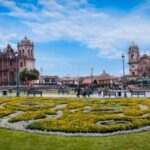
The day starts early—hotel pickup around 7:00 am from Cusco—and runs roughly 9 hours total. A buffet lunch is included in Urubamba, then you finish by returning to Cusco with drop-off near Plaza Regocijo, a short walk from Plaza de Armas.
In This Review
- Quick hits to know before you go
- A 7:00 am start that keeps your Sacred Valley day efficient
- Pisac hilltop views and the Taray river-glint photo stop
- Urubamba buffet lunch: a smart break before the afternoon ruins
- Ollantaytambo’s town planning and the Machu Picchu gateway
- Moray circular terraces: an agricultural temperature experiment
- Bring cash for Moray entry
- Maras salt mines: solar evaporation that still works
- Chinchero textiles and Inca farming terraces with a church overlay
- Price and time: value if you want a guided highlight reel
- Guides can make or break the day
- Who should book this Sacred Valley day (and who should choose slower)
- Should you book it?
- FAQ
- What time does the tour pick up in Cusco?
- How long is the Sacred Valley tour?
- What’s included in the price?
- Are entrance fees included?
- How big is the group?
- Where does the tour drop you off in Cusco?
- What is the cancellation policy?
Quick hits to know before you go
- Small group (up to 9): easier questions, faster help, and less wandering.
- Licensed bilingual guide: you get context, not just directions and photos.
- Taray viewpoint + Pisac: a scenic valley introduction before you climb into the hilltop ruins.
- Moray + Maras: the most “how did they think of that?” parts of the day.
- Urubamba buffet lunch included: a real sit-down break before the afternoon sites.
- Finish in Cusco near Plaza Regocijo: convenient for dropping bags and continuing your day.
A 7:00 am start that keeps your Sacred Valley day efficient
I like tours that respect your time at altitude and don’t waste daylight. This one starts with pickup at 7:00 am in Cusco and uses private transport to move between sites without the hassle of lining up for buses. That matters in the Sacred Valley because travel time can eat your “seeing” time fast.
The schedule also ends back near Plaza Regocijo in Cusco, just off Plaza de Armas. That’s a good landing spot if you want to grab dinner nearby without taking another round of transit later. The tour runs about 9 hours, so you’re getting a lot of ground covered, but it stays designed as a single-day highlight circuit rather than a slow, deep study.
You can also read our reviews of more tours and experiences in Cusco.
Pisac hilltop views and the Taray river-glint photo stop
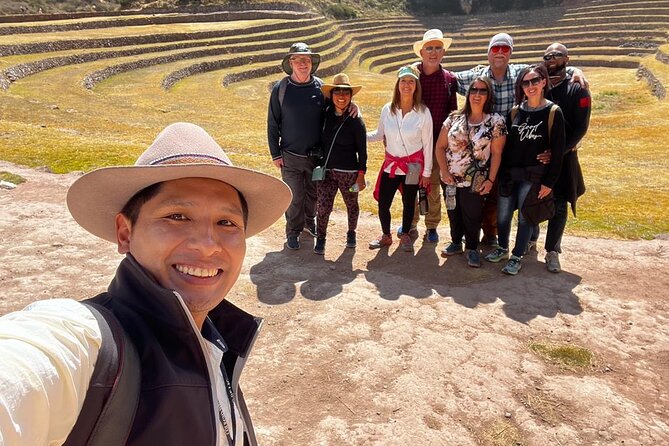
Pisac is where the Sacred Valley scenery goes full postcard, and the route sets you up for it. Before you climb into Pisac, you make a quick stop at a viewpoint in Taray. From up there, you can see the Urubamba River threading through villages below. It’s the kind of view that helps you understand what you’re looking at later: people lived and farmed here because the valley gave them water and workable terrain.
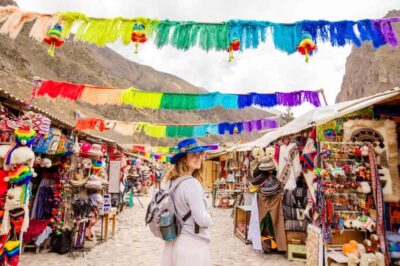
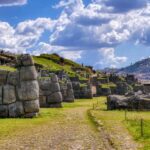
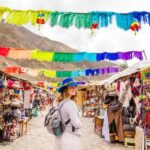
Then you drive up to Pisac’s main entrance for a guided visit of the hilltop complex. Pisac is famous for its Inca structures overlooking the town, and the guide’s job is to connect those stones to function—how sites like this fit into governance, agriculture, and daily control of the valley. After the ruins, you head down toward the main plaza area. On weekends, the narrow cobblestone streets can fill with local craft sellers, so you may find yourself walking through an active local market scene rather than a dead tourist corridor.
Practical note: Pisac is a climb. Even if you’re not “hiking” it hard, expect steps and uneven ground. Bring water and wear shoes with grip.
Urubamba buffet lunch: a smart break before the afternoon ruins
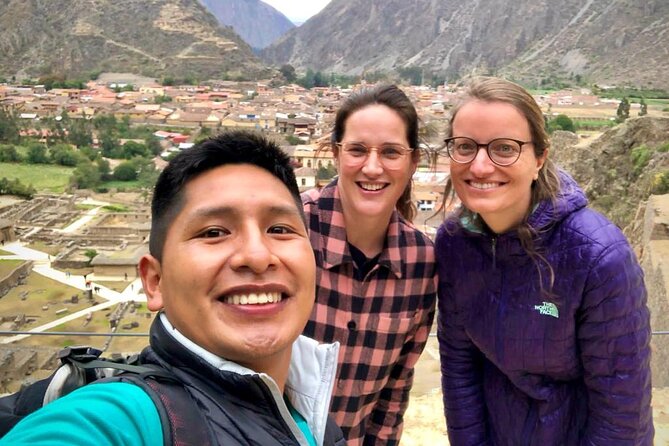
Urubamba is the lowest part of the Sacred Valley, and it works perfectly as a breather between sites. After Pisac, you drive over and stop for a buffet lunch. This is one of the key value points of the tour: lunch is included, so you’re not hunting down food at random times between monuments.
In a day like this, that matters more than it sounds. You’ll likely spend the morning focusing on viewpoints and stones, then the afternoon shifts to deeper technical Inca ideas—Moray’s terraces and the working salt farms at Maras. Eating at the middle point helps you keep your energy steady instead of running on tour-snack mode.
If you’re picky about food or need dietary options, the data here only says buffet lunch, so I’d plan based on what you normally tolerate at buffet-style restaurants. Keep it simple and go for something filling.
Ollantaytambo’s town planning and the Machu Picchu gateway
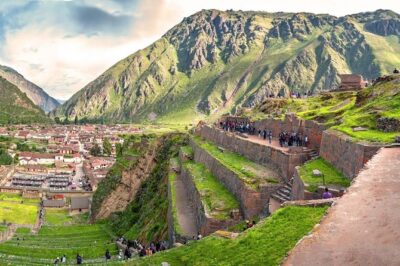
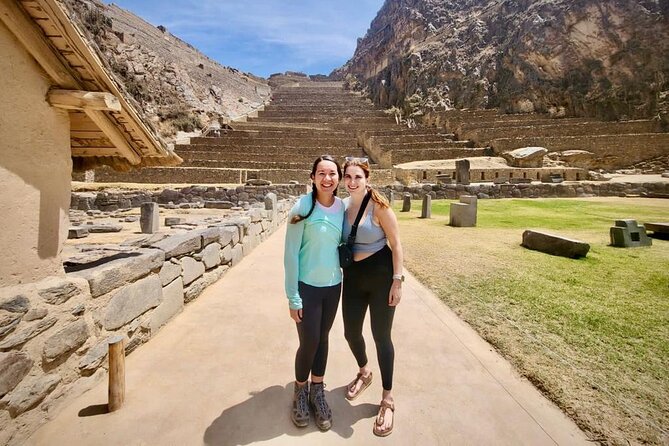
After lunch, the tour heads to Ollantaytambo. This stop is more than a ruin stop. Ollantaytambo is tied directly to the way the Inca empire organized real life—how towns were laid out, how movement through the settlement worked, and how the settlement sits between dramatic Inca remains.
What I like about Ollantaytambo in a one-day itinerary is that it’s still a village. You don’t just look at ruins from a distance; you experience a living town shaped by older Inca urban thinking. The description also notes its prominence during the Inca empire and that it’s one of the oldest continuously inhabited Inca towns.
You’ll also learn why Ollantaytambo shows up in modern travel plans. It’s the place where you board the train to Machu Picchu and the Inca Trail. Even if you’re not taking the train that day, that context makes the town feel like a real bridge between eras, not a standalone museum stop.
Give yourself permission not to rush here. Ollantaytambo is the kind of site where even short time can feel satisfying if the guide keeps it practical: what you’re seeing, what it was used for, and why the town plan still matters.
Moray circular terraces: an agricultural temperature experiment
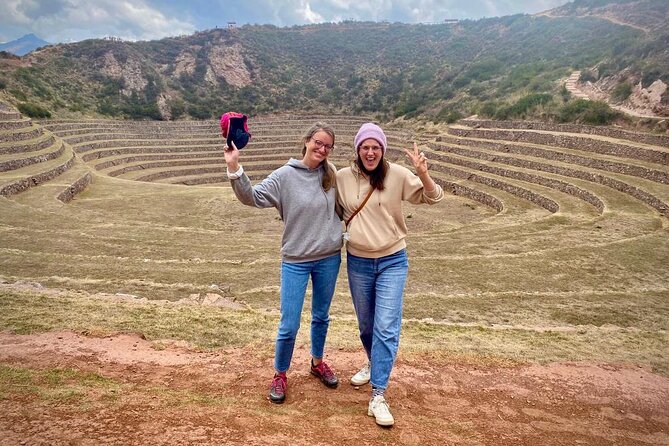
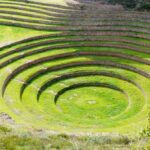
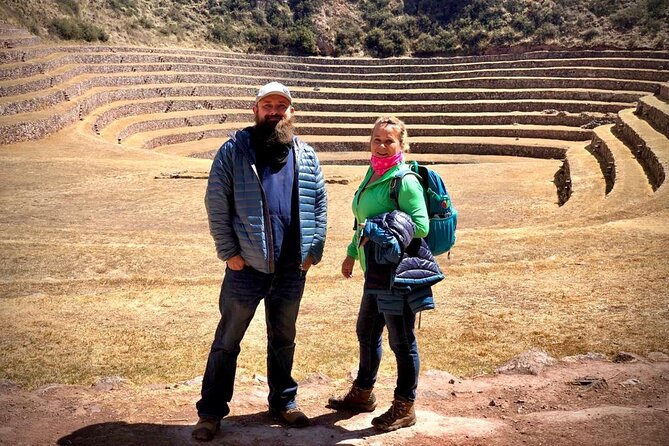
Moray is one of those Sacred Valley stops that makes you go quiet for a moment. You’re not just looking at stone circles; you’re looking at an agricultural laboratory concept. The terraces are built in circular formations, and each level has a different temperature. The guide frames it as an Inca way to test which growing conditions worked best, so they could match crops to microclimates.
This is the stop where the guide’s explanations do a lot of heavy lifting. Moray can feel abstract if you’re only taking photos, but it clicks when someone explains the logic: different levels, different conditions, and a deliberate attempt to figure out how to grow what you want reliably. For me, that’s what turns Moray from a quick stop into a memorable one.
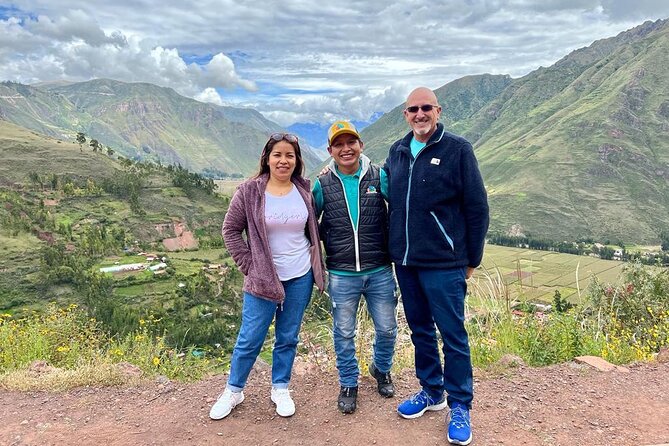
Timing is tight, like the rest of the day, so don’t expect deep exploration. Focus on understanding the terraces and asking questions. If you’re traveling with a guide like Julio—praised for being patient and willing to answer questions—you’ll likely get more out of the site than you would on your own.
Bring cash for Moray entry
Moray’s admission is listed as not included. Plan on paying the site fee on the spot and keep small bills or coins handy. This tour’s overall structure assumes you can handle entry tickets as you go.
Maras salt mines: solar evaporation that still works
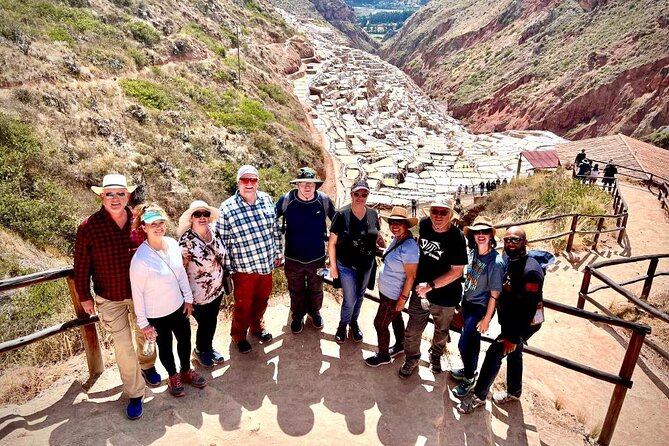
Maras is where the day turns from “ancient engineering” to “ancient practice that still runs.” The salt mines are described as a tradition passed down through generations, with locals using the Solar Evaporation salt farming method. You’ll see the mining areas laid out in many small pools, and you’ll get an explanation from a local expert on how the process works.
This is a stop that often photographs well, but the real value is the working aspect. Instead of ruins that are only memory, you’re seeing an activity tied to livelihoods. The guide’s framing helps you notice details you might otherwise skip: how the pools are arranged and why solar evaporation matters here.
Maras is also specifically called out as requiring an admission fee (listed as 10 Soles / PEN10.00). If you want to spend time walking and looking closely, it helps to have that money ready so you’re not slowed down by payment at the entrance.
Chinchero textiles and Inca farming terraces with a church overlay
Chinchero often gets overlooked because it’s not as famous as Pisac or Ollantaytambo. That’s exactly why I like including it in a packed day. It adds a different angle on the Sacred Valley: textiles, farming, and how Inca power echoes into later religious buildings.
Chinchero is known for Andean textile work, and the village also has a whitewashed church connected to Incan heritage. The tour description notes it was once a royal palace of Emperor Pachacutec. It also points out that Chinchero has particularly fertile soil and that Pachacutec led the building of many farming terraces. Those terraces and water channels are presented as proof of Inca engineering—practical infrastructure meant to guide water where crops needed it.
If Moray is the “science experiment” site, Chinchero is the “how people actually grew food here” site. Even with limited time, it’s a strong finish because it feels calm and local compared with the bigger tourist magnets.
Price and time: value if you want a guided highlight reel
This tour runs $99 per person for a day that includes roundtrip transport, a licensed bilingual guide, and a buffet lunch in Urubamba. Entrance fees are not included, with archaeological site entry listed around USD 20 (70 Soles per person), and Maras specifically noted at PEN10.00. That means the all-in cost for adults will be a bit higher than the headline price once you add tickets.
So is it worth it? If you want the Sacred Valley’s main points in one day with explanation, yes. A guided circuit helps you connect the dots—especially at Moray, where the terraces are easier to understand when someone spells out the temperature-by-level idea. The small group size (up to 9) is also part of the value. You’re more likely to get direct answers instead of waiting for the guide to cover the whole bus.
But be honest with yourself about the trade-off: the day is full, and you’ll likely feel “on the move.” One piece of feedback tied to this kind of itinerary is that some stops function like local shop stops (silver, alpaca clothing, and snacks). If your main goal is ruins-only time, it’s smart to go in expecting a few non-ruins moments. You can still enjoy them—just treat them like cultural stops, not the core event.
Guides can make or break the day
This is one of those tours where the guide shapes your experience. The tour information says you’ll have a licensed bilingual local guide, and that line is more important than it sounds.
From prior experiences with this exact tour format, guides like Julio have been praised for kindness, patience, and answering questions without rushing. Another guide mentioned in connection with this day—Adolfo—was praised for energy and for making the experience feel fantastic. Even Luis, the driver, has been noted as attentive and safety-focused.
You can’t guarantee a specific guide every time, but the point is worth taking seriously: in the Sacred Valley, explanations turn “pretty stones” into “I get why this was built here.” Ask questions early in the day and keep asking. The guide is the multiplier.
Who should book this Sacred Valley day (and who should choose slower)
I’d book this if:
- You want Moray and Maras without arranging transport and entry logistics on your own.
- You like a guided highlight reel and don’t need hours at each site.
- You value the included buffet lunch and the convenience of roundtrip transport.
I’d think twice if:
- You’re the kind of person who wants lots of quiet time in one place and hates feeling rushed.
- You strongly prefer ruins over market-style shop stops, since the day can include time for those kinds of stops.
If you’re doing a multi-day Cusco/Machu Picchu trip, this tour fits well as a one-day Sacred Valley “map.” It gives you enough context to enjoy later independent exploration, or to understand what you’re seeing if you’re headed to Machu Picchu by train.
Should you book it?
If your goal is to see the Sacred Valley’s top variety—hilltop ruins, an active village town, a terraced “agricultural lab,” and the still-working salt mines—this is a solid choice. The small group, the licensed bilingual guidance, and the included Urubamba buffet lunch are the core reasons it feels like value rather than just another long day in a van.
Just go in with eyes open: it’s structured as a packed day. Bring comfortable shoes, expect limited time at each stop, and be ready for a couple of shopping-oriented moments along the way. If that trade-off works for you, you’ll leave with a better understanding of how Incas designed both land and daily life.
FAQ
What time does the tour pick up in Cusco?
Pickup starts around 7:00 am from Plaza Regocijo (Cusco).
How long is the Sacred Valley tour?
It runs approximately 9 hours.
What’s included in the price?
Roundtrip transport, a bi-lingual local tour guide, and a buffet lunch in Urubamba are included.
Are entrance fees included?
No. Entrance tickets to archaeological sites are not included (listed as about USD 20 / 70 Soles per person), and Maras has a separate fee (PEN10.00 per person). Moray is also listed as not included for admission.
How big is the group?
This tour has a maximum of 9 travelers.
Where does the tour drop you off in Cusco?
You’re dropped off near Plaza Regocijo, about a block from Plaza de Armas.
What is the cancellation policy?
You can cancel for free up to 24 hours in advance for a full refund.
—
If you want, tell me your travel dates and whether you’re more into ruins, local culture, or scenery. I can help you decide if this day format matches your style.