REVIEW · CUSCO
Cusco: Tandem Paragliding in The Sacred Valley of The Incas
Book on GetYourGuide →Operated by Flying expedition · Bookable on GetYourGuide
Cerro Sacro turns Cusco into a flying day. From a takeoff on a steep, well-known launch point, you’ll glide above the Sacred Valley with a specialized instructor in a tandem setup, plus you get a flight video to relive it later. The whole experience is built for first-timers: clear instructions, licensed gear, and a short time in the air that feels like a big reward.
I especially like the calm, hands-on coaching I’ve heard guides give, from safety basics to takeoff procedure, so you’re not just tossed off a hill and told to hope. And I really like that you get a video of your flight, which is perfect for sharing and makes the memories stick.
One thing to consider: the schedule depends on conditions. You may wait for the right winds, and if weather gets unstable the pilot can cancel or switch to another mountain for safety, with possible extra transport costs afterward.
In This Review
- Key things to know before you fly
- Why Cerro Sacro works so well for first-time paragliding
- The day’s flow: pickup, briefings, and harness time
- The flight itself: what you’ll feel in the air
- Views, photos, and the Sacred Valley feel after you land
- Price and value: is $120 worth it?
- Who this is best for (and who should skip it)
- Booking checklist: what to bring and how to be comfortable
- Should you book tandem paragliding over the Sacred Valley?
- FAQ
- How long is the whole experience?
- How long is the paragliding flight?
- Where do you get picked up?
- What is included in the price?
- Is the flight video included?
- What languages are offered by the instructor?
- What should I bring?
- Are there weight limits?
- Can children fly?
- What happens if weather conditions are unstable?
Key things to know before you fly
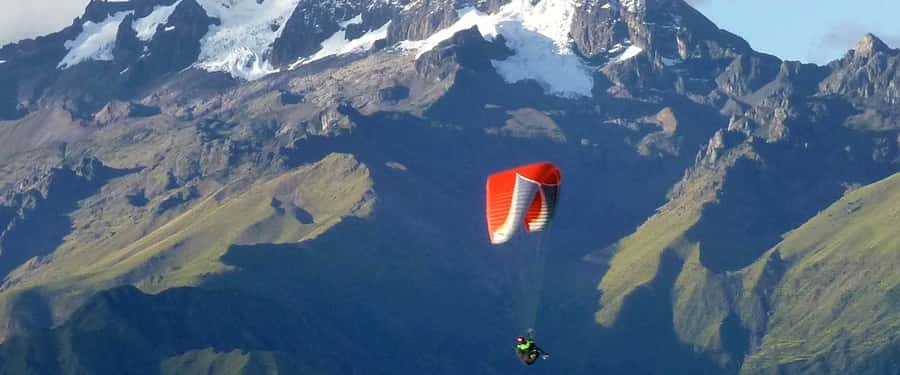
- Cerro Sacro launch: Take off at about 3,880 meters (12,730 feet) in the Sacred Valley area, with a steep slope and a drop designed for controlled soaring.
- Tandem setup only: You fly with a professional instructor using safety-approved harness and helmet gear.
- Short flight, big payoff: Expect roughly 10–15 minutes of air time, sometimes more depending on wind and thermals.
- Small group size: Limited to 6 participants, which keeps the day feeling less chaotic.
- Cold can surprise you: It gets chilly up on the mountain, so dress warmer than you think.
- Weather changes plans: High winds, turbulence, or rain can mean waiting or even cancellation for safety.
Why Cerro Sacro works so well for first-time paragliding
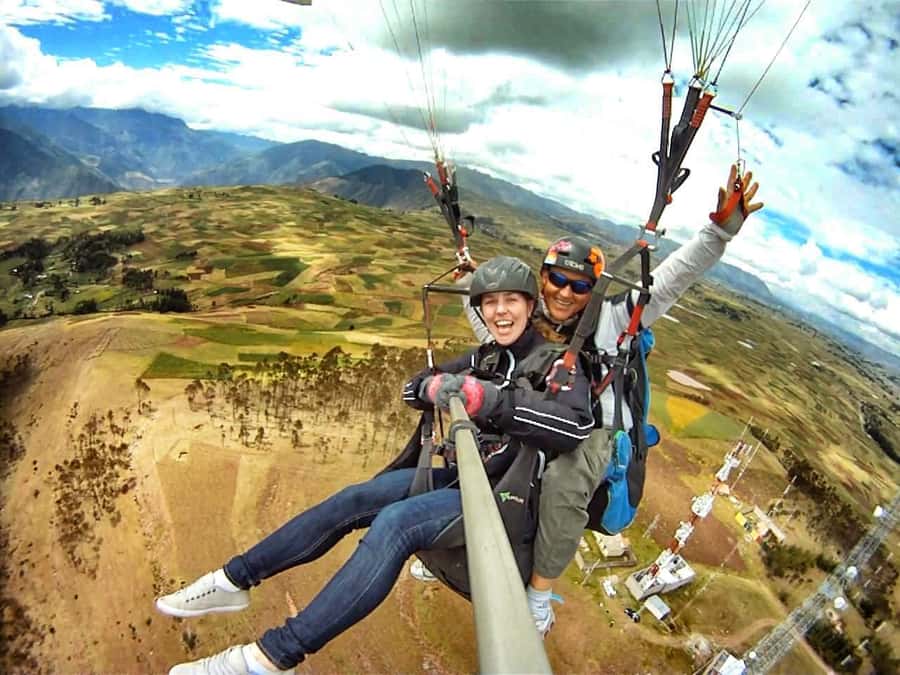
This is one of those locations where the math (slope, drop, and control) supports the thrill. The flight site at Cerro Sacro sits in the northeast area of Cusco and is at a height of 3,880 meters (12,730 feet). The mountain’s topography includes a steep slope (70 degrees or more) and a vertical drop of about 600 meters (1,969 feet)—the kind of terrain that supports a clean start and then a glide.
The other reason I’d consider this site: it’s described as one of the safer options for its type of paragliding terrain. That matters for you, because tandem flying isn’t just about excitement. It’s about predictable handling, good launch conditions, and a pilot who can work with the air instead of fighting it.
And yes, you’re doing this over the Sacred Valley, which means your view isn’t just open sky. You’ll be looking down on valley routes, hills, settlements, and the big Inca-era sense of place. Even if you’re not an “I travel for views” person, you’ll still feel the scale.
You can also read our reviews of more tours and experiences in Cusco.

The day’s flow: pickup, briefings, and harness time
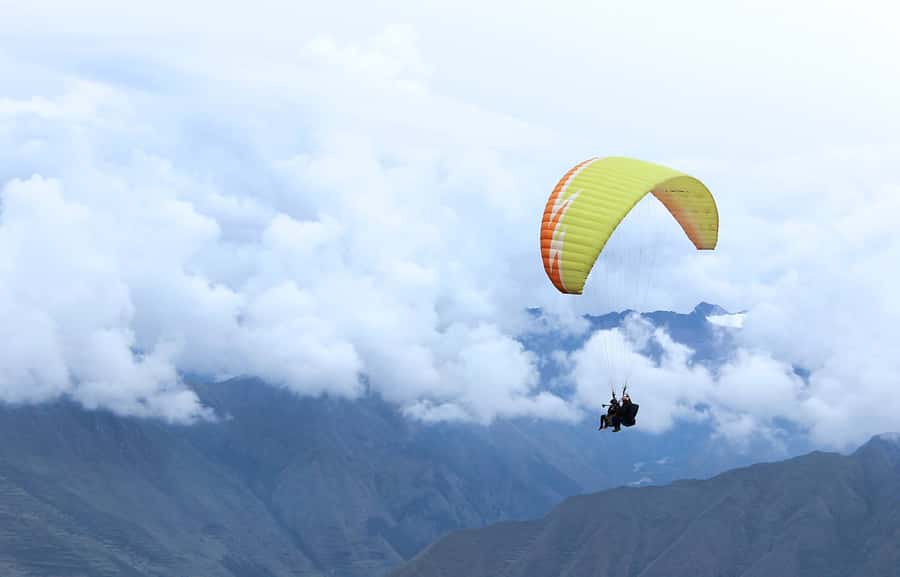
Your day usually starts with hotel pickup from either Cusco’s Historic Center or from Sacred Valley hotels, depending on the option you select. The activity also offers pickup from specific towns in the Sacred Valley (like Ollantaytambo, Yucay, and Urubamba). If a vehicle can’t reach your exact street—common with narrow lanes—you’ll be guided to the closest meeting point.
Once you arrive at the flight area, the team gives you safety instructions before anything airborne. This isn’t a vague pep talk. You’ll get a harness and helmet, and your instructor explains the takeoff procedure and what to expect during the first moments in the air. If you’re nervous, this is where the value really shows: tandem paragliding is easier when you know what’s happening, step by step.
Timing can include a wait. Sometimes you’ll wait for stable conditions, because the pilot can choose to wait for the right moment. In other words, this is not a “show up, fling, done” thing. The goal is to fly when conditions are safe enough to make the flight smooth.
Dress for the height. Even people who think they packed enough warmth often get caught by the cold once you’re up at the launch area. Bring a jacket and gloves, plus a hat and sunscreen. You’ll likely be in cooler air, and sun exposure is still real once you’re higher.
The flight itself: what you’ll feel in the air
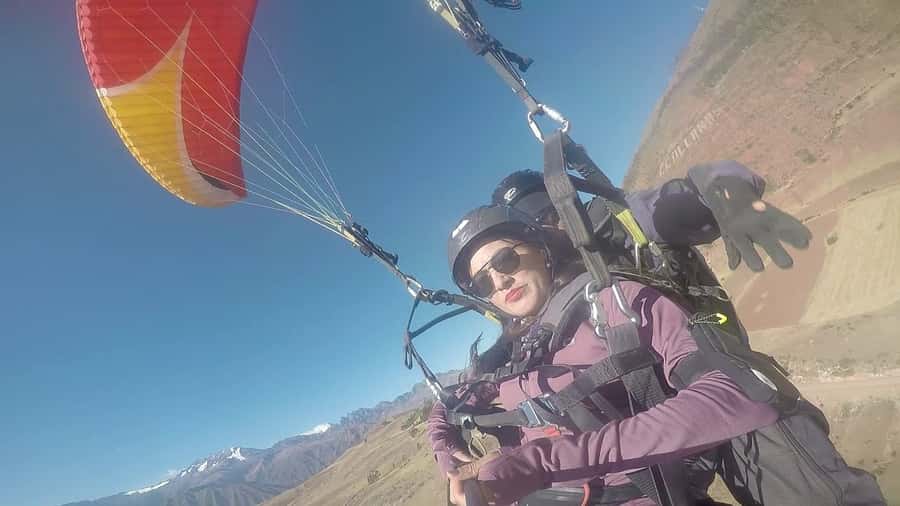
Your takeoff area is Cerro Sacro, and the flight is typically 15–20 minutes, with the experience listing generally around 10–15 minutes (and sometimes longer depending on wind). Either way, it’s a short window of time that feels like a highlight reel—especially because it starts with a controlled tandem setup.
What you should mentally prepare for: the experience can include some rollercoaster sensations. One first-timer noted the amount of forces you can feel during maneuvering, and that the ride can be more dynamic than expected for a newcomer. That doesn’t mean it’s unsafe. It just means your body will notice the changes in speed and direction as the pilot adjusts.
Also, pay attention to how the pilot talks you through it. In many cases, the instructor’s job isn’t only flying. It’s translating the air—what it’s doing, what they’re aiming for (like catching the best conditions), and how you’ll land.
Landing is part of the excitement too. You might do a spiral landing and end with a softer touch down—one rider described landing on their butt in a way that sounded more funny than scary. So if you’re picturing a gentle runway touchdown, adjust that expectation: paragliding landings have their own style.
Views, photos, and the Sacred Valley feel after you land
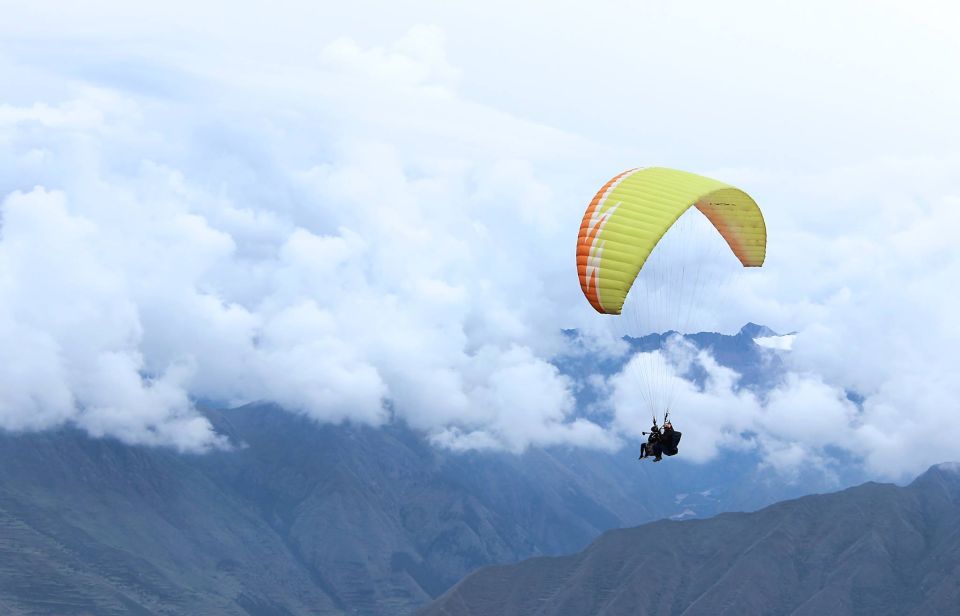
Your flight includes a video from your flight. That’s a big deal for value, because the best part of paragliding is hard to fully capture on your own phone at the moment. The included video gives you a chance to share what you actually saw rather than only what you managed to film while squinting at the sky.
And the pilot isn’t just focused on airborne time. Several guides have been described as friendly and enthusiastic, with passengers feeling reassured before takeoff. Some instructors also use the ride and drive time to share ideas about what you’re looking at—sometimes connecting it to local culture and nature you pass along the way.
There are also small add-ons you might get on the day, depending on the pilot and conditions. I’ve seen accounts of post-flight stops like trying local chicha in a nearby village or visiting a weaving community demo, and even quick photo opportunities with animals (like llamas, alpacas, and guinea pigs) on the way back. These aren’t described as guaranteed across every departure, but they show the kind of day this can turn into when your guide builds in local color.
After the flight, you’ll return to Cusco or back to the Sacred Valley area for drop-off, based on the option you chose. That keeps the day from turning into a full travel marathon.
Price and value: is $120 worth it?
At $120 per person for a 6–7 hour day, the price only makes sense if you treat it like a guided, equipment-supported activity—not just a “thing to do for fun.”
Here’s what you’re paying for, based on what’s included:
- Hotel pickup and drop-off (Cusco Historic Center or Sacred Valley hotels/areas)
- A licensed safety harness and helmet
- Safety equipment and a professional instructor
- A tandem paragliding flight lasting 10–15 minutes (sometimes longer with wind)
- Safety instructions
- A video from your flight
When you compare that to self-guided tours that cost similar money but don’t include gear, instruction, and recorded media, the value becomes clearer. The included video alone is the kind of add-on that many activities charge extra for.
What’s not included is also important: food and drinks. Plan on grabbing something before or after. If you start your day hungry, it can be annoying when the activity stretches to 6–7 hours due to weather waits.

Who this is best for (and who should skip it)
This experience is a good fit for you if:
- You’re a first-timer who wants tandem instruction, not solo flying.
- You care about safety briefing and step-by-step takeoff guidance.
- You want photos and a video without needing to fly a camera at the same time.
You might also enjoy it even more than you expect if you like learning small details during the day. Several guides have been described as passionate about paragliding and comfortable sharing what’s happening in the air and around the valley.
Now, the hard limits:
- Not suitable for people with mobility impairments
- Not suitable for people over 200 lbs (91 kg)
- Not suitable for people under 88 lbs (40 kg)
- For children: only children over 40 kg (88 lbs) can fly, and permission is required from parents or a guardian
If you’re close to the edge on weight, don’t guess—double-check. Tandem flying relies on how the harness and flight plan are set, and the operator lists these limits for a reason.
Booking checklist: what to bring and how to be comfortable
Pack like you’re going to a chilly mountaintop morning with sun overhead. Specifically, bring:
- Hat
- Sunscreen
- Jacket
- Gloves
And plan for waits. Even when things run smoothly, you may wait for stable weather. A jacket and gloves matter because you can feel cold while waiting even before the flight.
If you’re sensitive to motion or the idea of g-forces makes you uneasy, treat the pre-flight briefing as your calming tool. Ask questions, listen to the takeoff instructions, and remember: the pilot controls the flight, you just ride along in tandem.
Should you book tandem paragliding over the Sacred Valley?
If you want a high-impact Cusco experience that feels safe, guided, and genuinely memorable, I think you should strongly consider booking this. The combination of professional tandem instruction, licensed gear, small group size, and an included flight video makes it hard to replace with another activity at the same price point.
That said, go in with realistic expectations. This is weather-aware. You may wait for the best conditions, and in unstable conditions the pilot can cancel or switch to another mountain, with possible transport costs on you afterward. If you’re okay with that slight uncertainty—and you dress for cold—you’ll likely find this one of the best use of a day in the region.
FAQ
How long is the whole experience?
The total duration is listed as 6–7 hours.
How long is the paragliding flight?
The flight is listed as lasting 10–15 minutes, and it could be more depending on wind conditions.
Where do you get picked up?
Pickup is included from Cusco Historic Center hotels or Sacred Valley hotels (options vary). Pickup is also offered in areas such as Ollantaytambo, Yucay, and Urubamba, with a closest meeting point used if vehicle access is impossible due to narrow streets.
What is included in the price?
It includes hotel pickup and drop-off, a paragliding flight, a professional instructor, safety instructions, licensed safety equipment (harness and helmet), and a video from your flight.
Is the flight video included?
Yes. A video from your flight is included.
What languages are offered by the instructor?
The instructor can guide in English and Spanish.
What should I bring?
Bring a hat, sunscreen, jacket, and gloves.
Are there weight limits?
Yes. Passengers must be between 88 lbs (40 kg) and 200 lbs (91 kg).
Can children fly?
Only children weighing over 40 kg (88 lbs) may fly, with the parent or guardian’s permission.
What happens if weather conditions are unstable?
If conditions become unsafe (like high winds, turbulence, or rain), the pilot may wait or cancel for safety. You’ll be notified, and if the flight is canceled, transport costs may need to be paid by passengers. The pilot may also switch to another mountain if Cerro Sacro conditions aren’t suitable.