REVIEW · CUSCO
Sam’s Zip Line in Sacred Valley
Book on Viator →Operated by Sam's Zipline - Cusco · Bookable on Viator
Fly like an Andean bird above the Sacred Valley. Sam’s Zipline in the Sacred Valley of the Incas is a hands-on way to experience Racchi’s viewpoints, with Petzl-certified safety gear and a ride that takes you hill to hill.
I love that you practice your balance with fun obstacles before you launch, then glide across the Sacred Valley from high above. One catch: you’ll want to plan for your own drinks, since no water or snacks are included.
In This Review
- Quick hits before you clip in
- Racchi viewpoints and pickup in Cusco’s Sacred Valley orbit
- Safety that’s explained before you go
- The cables, obstacles, and the Tibetan bridge moment
- Ask about the Superman-style run
- Photos of you flying: what you get and how to use it
- Mercado de Artesanías stop: quick browsing, good timing
- Chinchero archaeological stop: add context to the views
- Price and value: what you’re really paying for
- Who this zip line fits best
- What to wear and bring (simple, practical)
- Should you book Sam’s Zipline in Sacred Valley?
- FAQ
- Where does the zip line happen?
- How long is the zip line experience?
- How much does it cost?
- What is included in the price?
- Are bottled water or drinks included?
- How many zip lines are there?
- Is the equipment certified and is it considered safe?
- How big are the groups?
- What days and hours does it run?
- Can I cancel for a full refund?
Quick hits before you clip in
- 4 zip lines plus a Tibetan bridge: the mix keeps it from feeling repetitive.
- Certified safety setup: facilities validated by Civil Defense; equipment certified by Petzl.
- Balance practice first: a few obstacles help you get comfortable with the harness and movements.
- Item storage, in peace: you can secure personal belongings while you fly.
- At least 3 in-air photos: you come away with proof you really did it.
Racchi viewpoints and pickup in Cusco’s Sacred Valley orbit
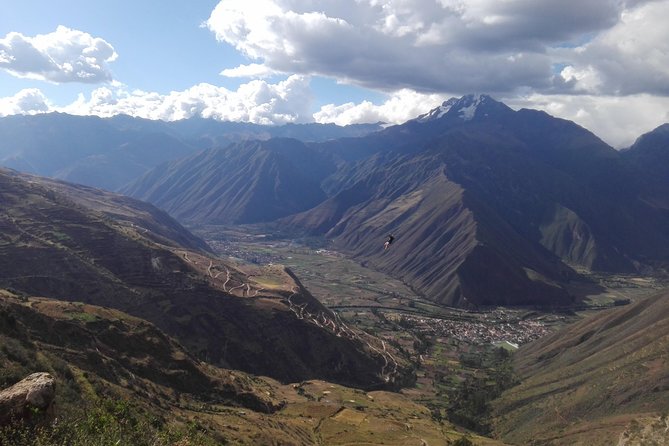
This is a Cusco-area activity built around the Racchi viewpoint, where the Sacred Valley opens up between ridgelines. You’re not just looking at mountains—you’re moving through them. The operator runs it with private transportation, so you’re not stuck waiting around with a crowd on the edge of town.
The ride happens during daytime hours (Monday through Sunday, 9:00 AM to 4:00 PM), and the company keeps group size capped at 12 travelers. I like small groups because it usually means more attention during the safety briefing and smoother pacing between launches.
One practical note: the start point is given as Corongo Ancash area, but you’ll receive confirmation at booking that clarifies the exact meeting/pickup location. That matters in Cusco, where meeting points can feel like a maze if you arrive late. If you’re trying to line this up with other plans, give yourself buffer time for the drive.
You can also read our reviews of more tours and experiences in Cusco.

Safety that’s explained before you go
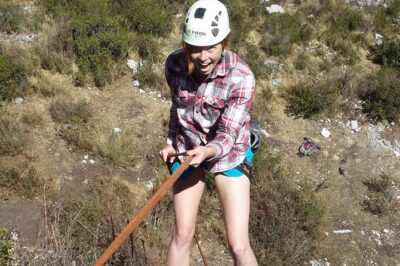
If you’re even slightly nervous about heights, the way this tour handles safety is the big reason to feel good about booking. You’ll be fitted with a harness, helmet, and gloves, and you’ll get a safety briefing designed to get you ready before you clip in.
The safety story isn’t just talk. The facilities are validated by Civil Defense, and the gear is certified by Petzl. There’s also mention of a health agreement for unforeseen events. That doesn’t mean “nothing can happen,” but it does signal that the operation is set up with professional standards in mind.
From the experience details and the way the guides work with different ages, I’d expect clear step-by-step instructions and patient coaching. People doing this range from kids (including families with children around primary school age) to adults in their 60s and early 70s. That variety is usually a sign the team knows how to manage comfort levels, not just speed.
The cables, obstacles, and the Tibetan bridge moment
The main event is flying: four zip lines plus a suspension-style Tibetan bridge. That sounds like a simple checklist, but the pacing is what makes it fun. Each cable gives you a different stretch and different body angles, so you don’t spend the entire hour doing the same “reach and release” motion.
Before you fly, you’ll practice your balance by working through a few fun obstacles. I like this approach because it turns anxiety into something physical and manageable. You’re learning how your body moves while wearing the harness—before the view gets so good you forget how to breathe.
Between cables, you’ll be moving from platform to platform. Expect a bit of climbing and repositioning. In the provided experience notes, the toughest part for some people wasn’t the flying—it was the transition work and the reduced air that comes from being higher up. That doesn’t mean it’s hard, but it does mean you should be comfortable walking uphill and using your legs for short climbs.
Ask about the Superman-style run
One of the most memorable details that shows up in the experience info is the Superman-style upside-down zip line suggestion. It’s not described as the only option, so I’d treat it like a “try it if conditions allow” moment. If you like a little extra thrill, this is the one to ask about during the briefing. If you don’t, you can still enjoy the full circuit.
Photos of you flying: what you get and how to use it
You don’t leave empty-handed. The activity includes pictures—at least three in-air photos of you during the zip line experience.
Here’s how to make that count:
- Listen carefully to where you’ll be filmed, because the best photos depend on body position during the glide.
- Keep your hands and posture the way they brief you. You’ll get clearer shots when you follow the coaching.
- Use the storage time wisely. The program includes safe storage for personal items, so you can focus on flying instead of worrying about phones or keys in your pockets.
Even if you’re not a selfie person, these photos are worth it because they capture the moment you’re actually suspended over the valley. Many activities in Peru show you ruins and viewpoints; this one gives you motion.

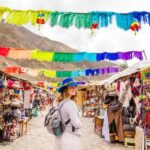
Mercado de Artesanías stop: quick browsing, good timing
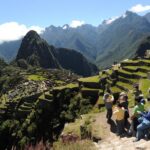
The day includes a stop at Mercado de Artesanías. Think of it as a practical add-on: a chance to browse local crafts without turning the zip line day into an all-day shopping detour.
What I like about a quick market stop is pacing. You get a cultural flavor, then you’re back on the move for the main event. The drawback is obvious: it’s short. If you’re hoping to bargain for a specific piece or compare lots of similar textiles, you may not have enough time to do a deep search. Plan for a browse-and-sniff session, not a full market marathon.
If textiles are your focus, go in ready to look closely at quality and finishing. The Sacred Valley area is known for textile work, and you’ll see plenty of it around Chinchero and nearby communities.
Chinchero archaeological stop: add context to the views
Another included stop is Complejo Arqueológico Chinchero. This is the kind of pause that helps you connect the zip line perspective to the human history of the Sacred Valley.
Why it’s a good match for this tour: your zip line flight is all about elevation and sight lines. The archaeological stop brings you back down to scale—walking among structures and imagining how people used this region long before there were cable lines and Tibetan bridges.
A fair consideration: archaeological stops can add walking time, and some people who are excited about zipping may feel like they’d rather go straight to the platform. If you like a balanced day—views plus context—this is a win. If you want pure adrenaline with minimal pauses, you’ll still enjoy it, but keep your pace expectations realistic.
Price and value: what you’re really paying for
At $61.54 per person, this isn’t just “paying for a zip line.” You’re paying for:
- harness, helmet, and gloves
- private transportation
- safety systems and certified equipment
- secure storage for your personal items
- and at least three in-air photos
You also get a full circuit that includes four cable runs and the Tibetan bridge, rather than just a single short go. For many visitors, the biggest value isn’t the cost—it’s the convenience. Private transport reduces friction, and photos reduce the hassle of trying to capture motion while you’re flying.
One more value point: the operator caps groups at 12. Smaller groups can mean you spend less time waiting and more time actually doing the activity.
I’d book this if you want a day where you leave with both a rush and something you can show others (the photos), without turning your schedule into chaos.
Who this zip line fits best
This is one of those activities that works across a wide range of comfort levels and ages. The experience information includes families with kids (including children around 6 and 8), solo flyers, and older adults in their 60s and 70s.
You’ll likely be a good fit if:
- you want a thrill with structured safety
- you’re okay with short climbing transitions between platforms
- you enjoy big views and want to see the Sacred Valley from above
- you appreciate guided coaching (the guides are described as friendly and professional, with strong energy)
If you hate heights, that doesn’t automatically disqualify you, but you should take the safety briefing seriously and communicate your comfort level early. If you have medical conditions or concerns, you’ll want to ask questions in advance.
What to wear and bring (simple, practical)
The tour supplies harnesses, helmets, and gloves. That means your job is mostly about comfort and readiness.
Bring:
- a plan for hydration, since no bottled water or drinks are included
- something secure for your personal items if you have valuables that you don’t want to carry
Wear:
- clothing that lets you move easily while climbing short distances and shifting positions
- sun and weather flexibility, because the Sacred Valley can swing in conditions during the day
One more small tip: keep your expectations clear. This is about flight. If you treat it like a casual walk, you might underestimate how active the transitions are between lines.
Should you book Sam’s Zipline in Sacred Valley?
If you want a high-impact Sacred Valley experience that doesn’t require climbing mountains or committing to a full day of hiking, I think this is an easy yes. The mix of four zip lines, a Tibetan bridge, balance practice, and certified safety makes it feel like a serious operation, not a “wing it” adventure. Add in private transport and at least three in-air photos, and it becomes a lot of value for the time you spend.
I’d book it especially if:
- you’re traveling with family and want a guided thrill that can work for kids
- you’re a first-time zip liner who wants clear safety coaching
- you want a memorable “from above” view of the Sacred Valley without complicated logistics
If your top priority is quiet sightseeing with minimal activity, you may find the climbing transitions and harness time less appealing. But if you’re there for adventure and scenery, this is a strong fit.
FAQ
Where does the zip line happen?
It runs at the Racchi viewpoint in the Sacred Valley of the Incas near Cusco.
How long is the zip line experience?
The activity is about 1 hour (approx.).
How much does it cost?
It costs $61.54 per person.
What is included in the price?
You get harness, helmet, and gloves, private transportation, secure storage for personal items, and at least three pictures of you in the air.
Are bottled water or drinks included?
No. Bottled water and any type of drink or food are not included.
How many zip lines are there?
You fly on 4 cables plus a Tibetan bridge (suspension).
Is the equipment certified and is it considered safe?
The facilities are validated by Civil Defense, and the equipment is certified by Petzl. There is also a health agreement for unforeseen events.
How big are the groups?
The maximum group size is 12 travelers.
What days and hours does it run?
It runs Monday through Sunday from 9:00 AM to 4:00 PM.
Can I cancel for a full refund?
Yes. You can cancel up to 24 hours in advance for a full refund.