REVIEW · SACRED VALLEY
Machu Picchu Private Archaeological and Historical Guided Tour
Book on Viator →Operated by IncaGo Expeditions · Bookable on Viator
Machu Picchu feels personal with a guide. You’ll get a private walkthrough of the Historic Sanctuary on a route matched to your entrance ticket, plus help creating those classic postcard photos at the top viewpoint.
I especially like two things. First, the guides focus on photo timing and group framing; Eric even waited while fog rolled in so you could still catch a good view. Second, the explanations are practical and story-based, so you’re not just looking at stones—you’re understanding why key spots matter, from the farming terraces to the Intiwatana sundial and the Temple of the Condor.
One consideration: the guide fee is only part of your cost. Bus tickets to Machu Picchu and the Machu Picchu entry ticket are extra, and you’ll be walking uphill for about 15 minutes plus plenty of moving around the citadel circuit.
In This Review
- Key highlights worth planning for
- Why a private guide helps at Machu Picchu’s busiest corners
- Meeting up in Aguas Calientes: hotel or train station pickup
- The postcard viewpoint walk: photos, fog, and timing
- From farms to the Condor Temple: what you’ll see on the circuit
- Huayna Picchu at a glance: big mountain views from Machu Picchu
- Price and ticket math: bus and entry costs you must plan for
- Should you book this Machu Picchu private guided tour?
- FAQ
- How long is the Machu Picchu private guided tour?
- Where does the tour start, and is pickup included?
- Are the Machu Picchu entry tickets included in the price?
- Are bus tickets to Machu Picchu included?
- Will the route be the same for everyone?
- Is this a private tour?
- Is service animal access allowed?
- What physical fitness level is needed?
- What is the cancellation policy?
Key highlights worth planning for
- Private attention: Your group is the only group on the tour, so questions and pacing stay in your control
- Postcard viewpoint first: A 15-minute uphill walk to the best lookout for famous photos
- Full circuit coverage: You’ll cover the main Machu Picchu circuit areas tied to your ticket type
- Pickup that simplifies logistics: Start with hotel pickup or train-station reception in Aguas Calientes
- Weather-smart patience: Guides can slow down when conditions (like fog) affect visibility
Why a private guide helps at Machu Picchu’s busiest corners
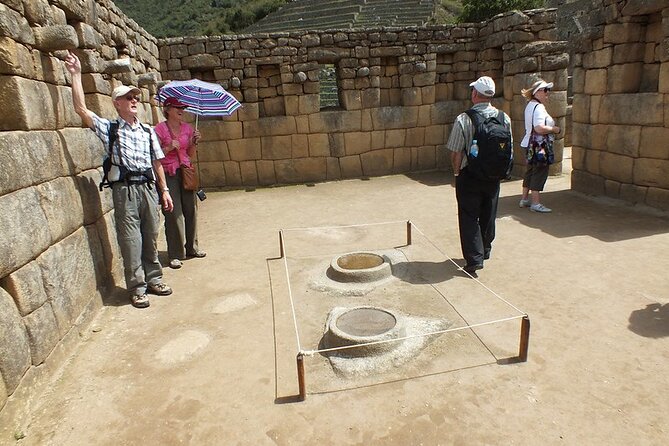
Machu Picchu can turn into a mad dash fast. Ticket times are strict, crowds are real, and it’s easy to feel like you’re just moving from one landmark to the next. A private guide changes that rhythm. You still follow the circuit, but the day feels controlled instead of rushed.
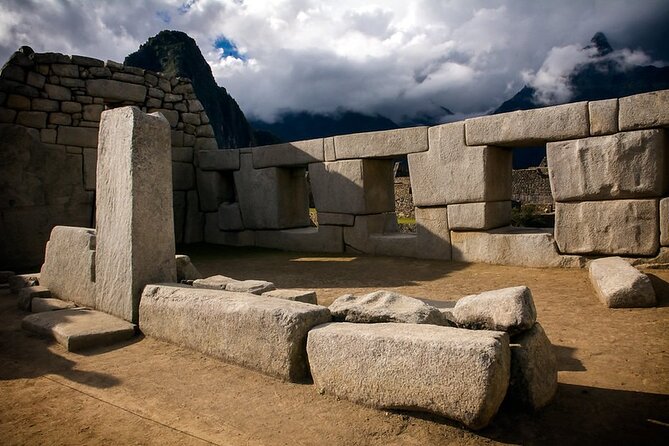
On this tour, the guide has time to orient you before you start walking the main areas. That orientation matters because Machu Picchu reads differently once you know what you’re seeing: terraces and farming zones, key religious or ceremonial areas, and signature architecture points like the Temple of the Three Windows. When a guide ties those pieces together, the site stops feeling like a checklist.
It also helps that photo support is built into the experience. A good guide knows where the “icon” views are, how to position people, and when to shift so your background isn’t filled with other groups. In the real world, that’s the difference between a frustrating photo and a keeper you’ll show friends later.
You can also read our reviews of more guided tours in Sacred Valley
Meeting up in Aguas Calientes: hotel or train station pickup
This tour starts in Aguas Calientes (the town below Machu Picchu). If you’re using the train, you’ll get a reception at the train station to begin the tour. If you’re already in town, you’ll usually start with pickup from your hotel.
That pickup detail sounds simple, but it’s a big deal on summit-day logistics. Machu Picchu is not the place you want to improvise meeting points, especially if you’re dealing with altitude, fog, or timing pressure. With a private setup, you also avoid the awkward wait-for-your-group feeling that can happen on larger group tours.
You’ll want to plan for the practical side too: even though this is a private tour, you still have the timing constraints of Machu Picchu access. Your guide helps you stay aligned with your visit flow once you arrive at the site.
One more note: the tour is described as a private activity where only your group participates. That usually means you’re not rotating in and out, and it also means questions stay focused on your team rather than competing with dozens of other voices.
The postcard viewpoint walk: photos, fog, and timing
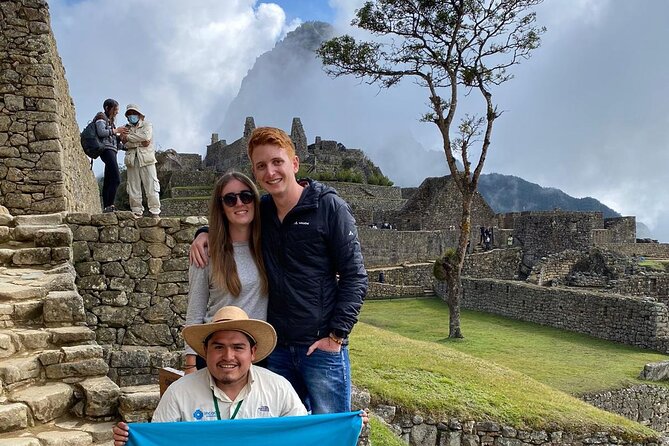
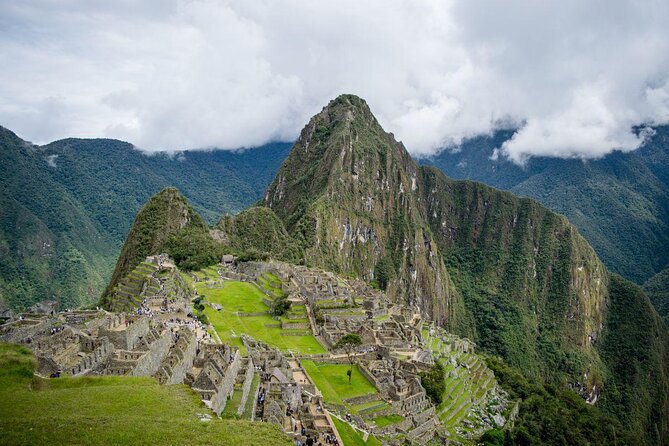
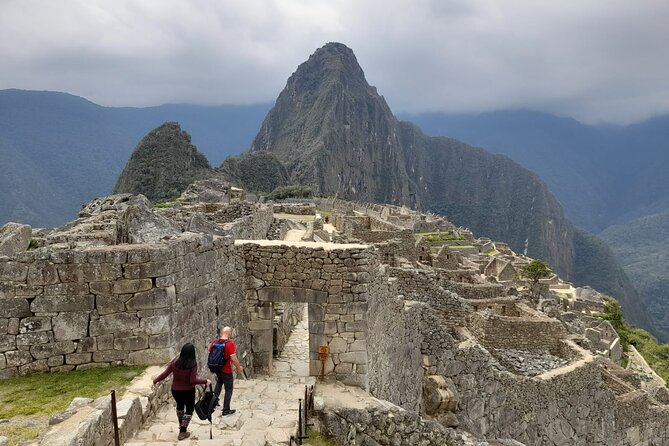
Right after you reach Machu Picchu, the guide’s plan starts with the highest lookout for those classic view photos. The itinerary calls for a roughly 15-minute uphill walk to get to a top vantage point.
This is one of the smartest parts of booking a guide, because timing is everything. If the weather is clear, you’ll be ready to capture the big views at the moment they look best. If fog comes in, the best move is to wait with a purpose, not panic and run ahead.
That’s exactly what you can expect from some of the guides. Eric, for example, is noted for staying upbeat and waiting until fog cleared enough for a great photo moment. That kind of patience matters. Machu Picchu views can change quickly, and you don’t want to spend your best photo time staring at a wall of cloud.
After the viewpoint, you’ll move into the guided explanation phase. The tour includes old discovery photos and a guided walkthrough that connects the site’s layout to the story of the Inca world. It’s not just, “Look at this.” It’s, “Here’s what it was used for, and why it’s placed where it is.”
From farms to the Condor Temple: what you’ll see on the circuit
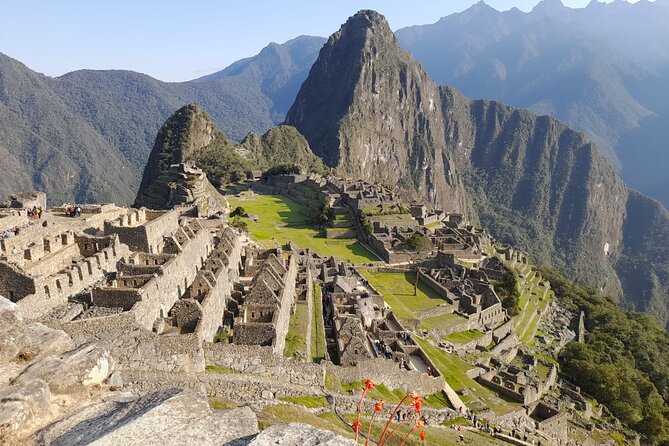
Your guided time inside the Historic Sanctuary is about 3 hours or so, depending on your ticket entrance type and the exact circuit you’re allowed to follow. The itinerary frames it as exploring the citadel corner to corner, with specific stops that show up repeatedly in this tour format.
Here’s what you should expect to cover during your walk:
- Farming area of Machu Picchu: This is where you start seeing the site as something functional, not only ceremonial
- Main temples and altars: Key religious spaces that anchor much of the site’s meaning
- The emperor’s house: A major household structure you’ll tour with context from your guide
- Intiwatana sundial: A standout marker tied to how the Incas related astronomy and time
- Royal mausoleum: A solemn space that helps explain royal and sacred connections
- Temple of the Three Windows: One of the best-known architectural features of Machu Picchu
- Festival plazas: Areas that help you imagine gatherings and processions
- Sacred rock: Another focal point used to understand symbolism and placement
- Temple of the Condor: A strong visual landmark that your guide connects to Inca cosmology
A key point for your planning: the itinerary says the tour covers the complete circuit based on your entrance ticket type. In plain terms, if you bought an entrance option that allows Circuit 2 or Circuit 3 style coverage, the guide will match your route to what you’re permitted to see.
This matters for value. Without a guide, you might hit the big icons but miss the logic of how the spaces connect. With a guide, the walk becomes a coherent story: farming supports life; religious zones structure belief; architectural alignment and placement reinforce meaning.
Also, you’ll leave in Aguas Calientes after finishing the guided portion. That keeps the day from stretching into something more complicated than it needs to be.
Huayna Picchu at a glance: big mountain views from Machu Picchu
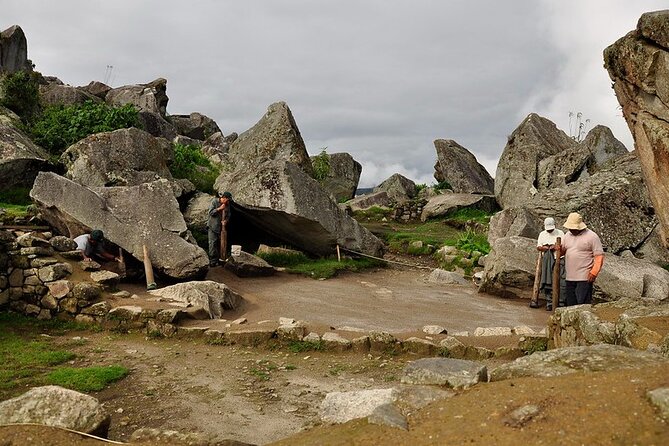
At the end of the Machu Picchu visit, the itinerary includes a chance to observe Huayna Picchu from the site. That’s the steep peak often shown beside Machu Picchu in photos.
Important for your expectations: the data says you’ll get a chance to observe the mountain, not that you’ll necessarily hike up it. So think of this as view-time. If you want to actually climb Huayna Picchu, that’s usually tied to a specific ticket and route access, and this tour doesn’t explicitly claim that climb.
Still, even without hiking, seeing Huayna Picchu’s massive shape from Machu Picchu helps the whole place click. It gives you scale—why the site feels dramatic and why the Inca chose this specific setting. When weather clears, that extra mountain context can be the difference between a good visit and a memorable one.
You can also read our reviews of more private tours in Sacred Valley
Price and ticket math: bus and entry costs you must plan for
The tour price is listed as $80.75 per group, with group size described as up to 6 in the summary, and also as up to 10 in the highlights. Because those two details don’t match perfectly, treat this as a confirm-at-booking item: ask what maximum group size your specific booking includes and how the guide fee is calculated.
Either way, the bigger value story is how the costs break down:
- The guide tour fee is $80.75 per group
- Machu Picchu entry ticket is extra: $55.00 per person
- Bus tickets are extra: $24.00 per person
- Your total daily spend will be shaped more by ticket and bus prices than by the guide fee
If you’re traveling as a small group, this private guide can be a cost-smart choice because you’re sharing that $80.75 guide cost. And because it’s private, you’re paying for time and direction, not just someone walking beside you.
One more thing: the itinerary says admission ticket is not included, and that matches the separate entry ticket cost. So don’t budget only for the guide. Budget for bus + entry first, then add the guide.
Should you book this Machu Picchu private guided tour?
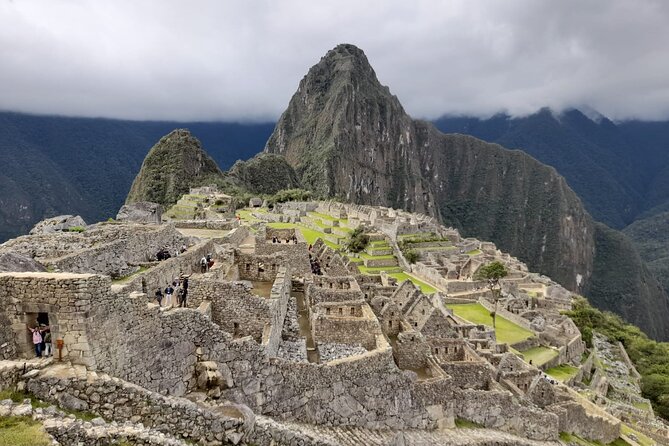
I think you should book this if you want Machu Picchu to feel guided, paced, and photo-friendly. The tour is built around a real circuit walk, with specific stops like the Intiwatana sundial, Temple of the Three Windows, and the Temple of the Condor. That structure helps you avoid the common problem of seeing lots of points but not knowing what they mean.
You’ll also like it if you care about timing and weather. The fog-waiting approach shown with guides like Eric is exactly what you want when conditions shift. And if your Spanish is limited (or your confidence in Spanish is low), having an English-speaking guide who can explain clearly makes the site feel way more accessible.
I’d reconsider if you’re trying to do Machu Picchu ultra-budget with no extras, because you still have to pay the bus and entry ticket separately. Also, you should have at least moderate physical fitness since the plan includes uphill walking to the top viewpoint and lots of moving around the citadel circuit.
If you want a first-rate, guided Machu Picchu day that balances meaning, photos, and smooth logistics, this private guide format is a strong bet.
FAQ
How long is the Machu Picchu private guided tour?
It lasts about 3 to 4 hours, with the guided tour inside Machu Picchu described as roughly 3 hours.
Where does the tour start, and is pickup included?
Pickup is included. You’ll be picked up from your hotel to start the tour, or you’ll have reception at the Aguas Calientes train station if you arrive the same day.
Are the Machu Picchu entry tickets included in the price?
No. The Machu Picchu entry ticket is not included and costs $55.00 per person.
Are bus tickets to Machu Picchu included?
No. Bus tickets are not included and cost $24.00 per person.
Will the route be the same for everyone?
The tour includes a complete circuit, and the exact circuit depends on the type of entrance ticket you have.
Is this a private tour?
Yes. It’s described as private, with only your group participating.
Is service animal access allowed?
Service animals are allowed.
What physical fitness level is needed?
You should have a moderate physical fitness level.
What is the cancellation policy?
Free cancellation is available. You can cancel up to 24 hours in advance for a full refund, and changes within 24 hours of the start time are not accepted. Cut-off times use the tour’s local time.