REVIEW · CHINCHERO
From Cusco: Moray, Maras, and Salt Mines Half-Day Tour
Book on GetYourGuide →Operated by Sierra Travel · Bookable on GetYourGuide
Terraces, dyes, and salt pools in six hours. This half-day Sacred Valley route from Cusco strings together Chinchero weaving and Salineras salt mines, plus Moray’s irrigation terraces and Maras’s preserved stonework. I especially like how the Chinchero workshop explains traditional Quechua weaving materials, and I like the way Moray’s terracing makes you understand Andean water and farming logic. The trade-off: you’re moving between several sites at high altitude, so you’ll want comfortable shoes and a slower pace.
You start from Plaza Regocijo and ride in a van with a live guide in English or Spanish. It’s a good hit of the Sacred Valley in one day, but entrance tickets for Moray and the salt mines are extra, so budget a bit beyond the headline price.
In This Review
- Key Points You’ll Care About
- A Realistic 6-Hour Sacred Valley Plan From Cusco
- Plaza Regocijo Pickup and the Van Ride into the Sacred Valley
- Chinchero: Weaving Workshop, Natural Dye Plants, and Village Color
- Moray Terraces: How the Irrigation System Works Visually
- Maras: Preserved Colonial Architecture in a Stone Village
- Salineras Salt Mines: 3,000 Pools and Ongoing Salt Production
- Price and Value: What $15 Really Gets You (Plus Tickets)
- Timing Details That Affect Your Comfort
- What to Bring (So Your Feet and Lungs Don’t Complain)
- Who Should Book This Tour, and Who Should Skip It
- Should You Book This Cusco Moray, Maras, and Salt Mines Half-Day Tour?
- FAQ
- FAQ
- How long is the Cusco Moray, Maras, and Salt Mines half-day tour?
- Where does the tour start in Cusco?
- What places are included in the tour?
- Are entrance tickets included for Moray and the salt mines?
- Is food included in the price?
- What language will the live tour guide speak?
- What should I bring for the tour?
- Is the tour suitable for wheelchair users or people with mobility impairments?
- What are the cancellation and booking options?
Key Points You’ll Care About
- Chinchero’s weaving workshop focuses on how artisans use natural plants for dye colors.
- Moray’s terraced irrigation system is the main visual lesson in Andean engineering.
- Maras village stop gives you a calmer look at preserved colonial stone buildings.
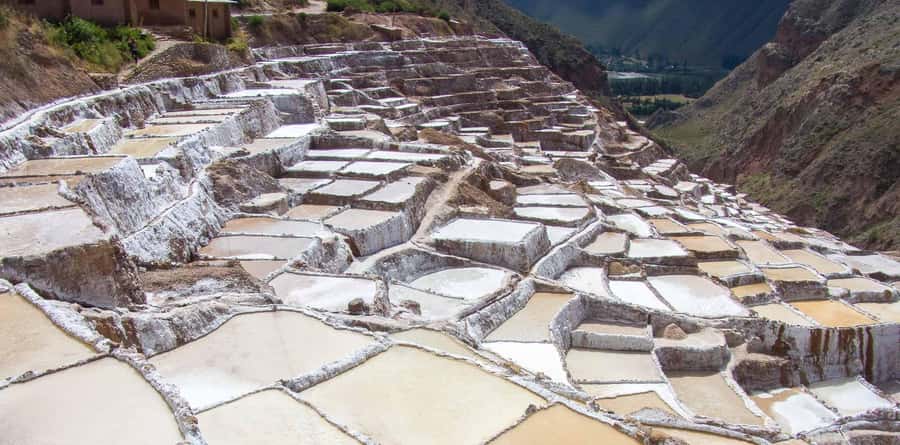
- Salineras salt mines include around 3,000 small pools that still produce salt today.
- 6 hours total means fewer long waits and a tight, efficient route from Cusco.
A Realistic 6-Hour Sacred Valley Plan From Cusco
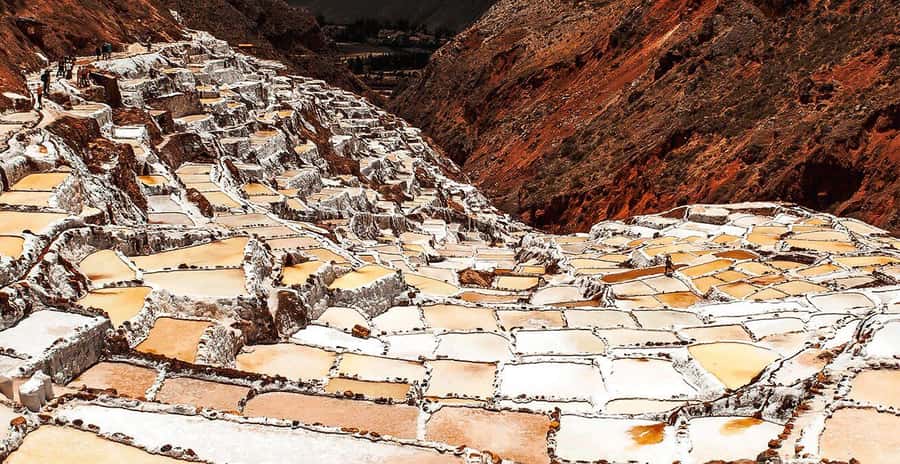
This tour is built for people who want the big Sacred Valley highlights without spending the whole day on the road. In six hours, you cover four distinct stops: Chinchero, Moray, Maras, and the Salineras salt mines. That’s not “slow travel,” but it is smart planning.
You’ll feel the pace most at the high-altitude sites. Chinchero sits at about 3,762 meters, Moray around 3,450 meters, and you’ll be outside for photo stops and short guided walks. I treat tours like this as a chance to see the essentials, not to linger for hours in one place.
Also note the style: it’s a guided experience with photo breaks and brief shopping time, then a guided look at Moray, and exploration at the salt mines. You get structure, but you still get enough time to look around and take photos.
Plaza Regocijo Pickup and the Van Ride into the Sacred Valley
The day starts right in Cusco at Plaza Regocijo, with hotel pickup and a van. The drive segments are short enough that you won’t feel trapped for hours in a bus seat, but long enough to give your body a little time to adjust to the route changes.
You’ll likely spend about:
- roughly 50 minutes between Cusco and the first major stop
- about another 50 minutes moving from Chinchero toward Moray
- about 30 minutes later to return back toward Plaza Regocijo
Why that matters: the Sacred Valley is spread out. Doing this by van is the practical way, especially in a half-day format. Bring water and use the ride time to sip, not to chug.
Chinchero: Weaving Workshop, Natural Dye Plants, and Village Color
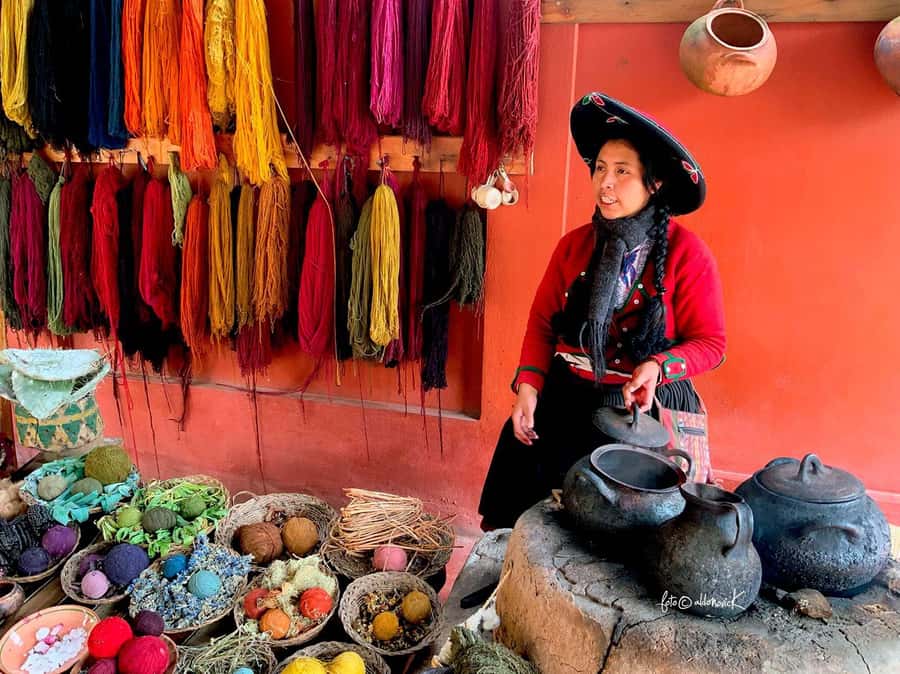
Chinchero is your first major stop, and it’s a strong one. You’ll be around the area for about 40 minutes, with a photo stop plus time to shop. The best part here isn’t the shopping aisle—it’s the workshop visit.
Inside the workshop, you’ll see local artisans continue the Quechua tradition of weaving. What I like is that you don’t just watch textiles; you learn how the colors get made. The workshop explains how natural plants are used for extracting dye colors used in Andean art. That small detail changes your shopping mindset. When you see a pattern you like, you can connect it to the actual materials process behind it.
Practical tip: if you’re tempted to buy textiles, take a moment to check what you’re getting—size, type, and what looks like the best stitching—while you still have time before moving on. The tour gives you a time window, so don’t let one stall turn into an hour.
Altitude note: Chinchero is high. If you feel breathless, slow down and focus on short bursts—look, take photos, then pause. You don’t need to force speed here.
Moray Terraces: How the Irrigation System Works Visually
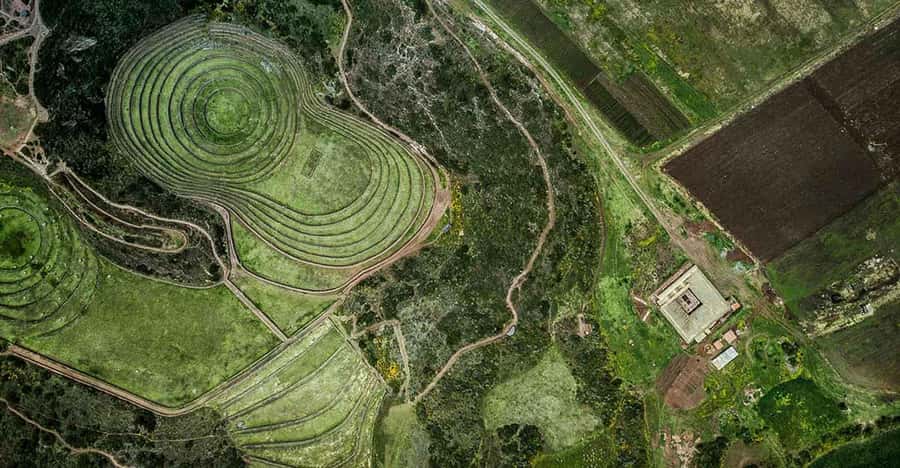
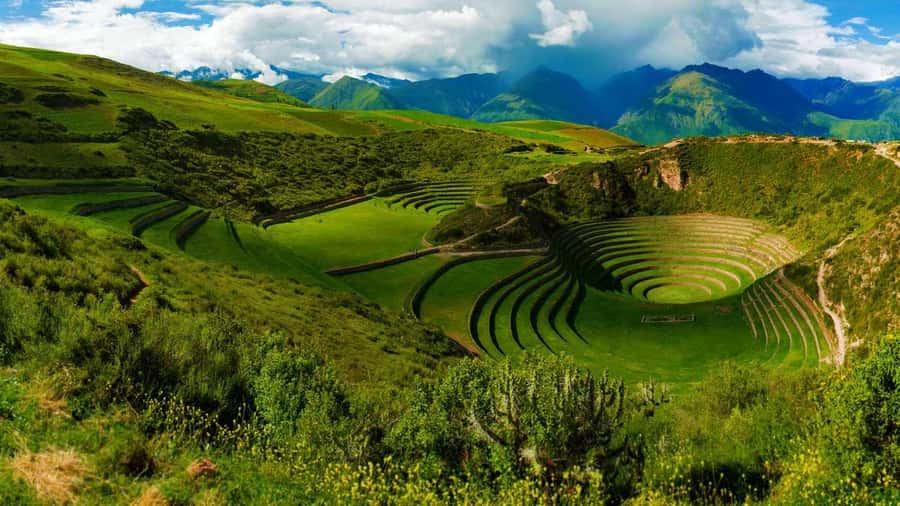
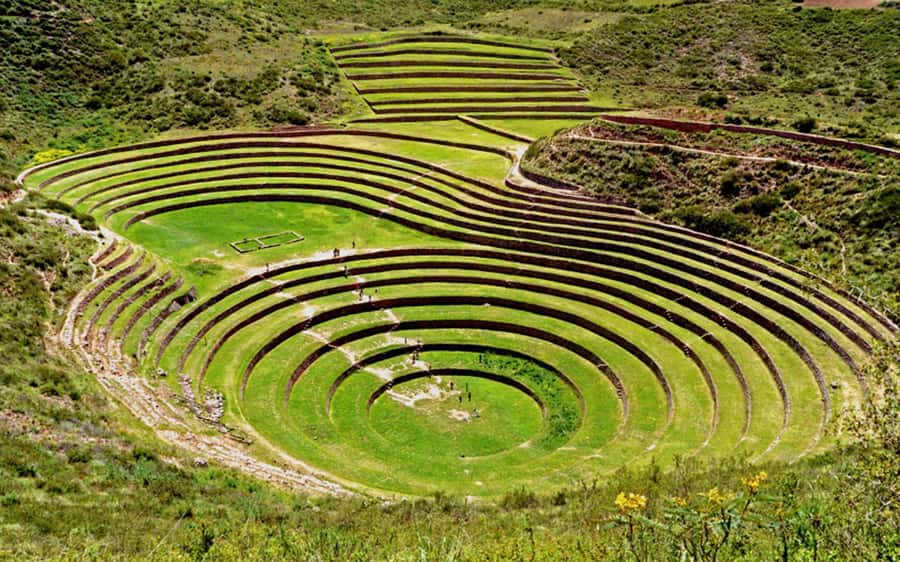
Moray is where the tour becomes more “wow” than “cute.” It’s at about 3,450 meters and includes a photo stop plus a guided tour of the terraced landscape and irrigation system. You’ll spend about 40 minutes total at this stop.
Here’s why Moray hits: the terracing isn’t random. It’s part of a system—built to manage farming conditions with a clever use of water and elevation. Even if you don’t have a science degree, the physical layout helps you understand the idea fast: shaped terraces + controlled water = a place designed for agriculture experiments and cultivation.
What to do at Moray:
- Take photos from a couple of angles. The irrigation lines and terrace shapes read differently as you move.
- Listen for the guide’s explanation of the irrigation layout, not just the “what.” It’s the “why” you’re after.
- Keep your pace slow. Uneven ground plus altitude can make your legs tired faster than you expect.
The tour includes the guide component for Moray, but you’ll still need to pay the entrance ticket separately (70 soles, purchased on site). That’s common for big archaeological or protected sites, and it’s worth planning for ahead.
Maras: Preserved Colonial Architecture in a Stone Village
Next comes the Maras village stop. This is a good break from the more technical focus of Moray. Maras is known for preserved colonial architecture and fine stone buildings, and your time here is structured more around seeing than exploring for long stretches.
You’ll also get movement time—about 50 minutes on the van between Chinchero and Moray, then later a shorter drive back toward the salt mines area. The key is that the Maras stop helps you shift your brain from “engineering systems” to “place and people,” even though you’re still on a tight schedule.
If you enjoy architectural details, Maras is a satisfying pause. Look for how the stonework is arranged and how the buildings sit within the village layout. If you’re not a “buildings” person, treat it as a chance to cool down, catch your breath, and reset your energy before heading to the salt pools.
Salineras Salt Mines: 3,000 Pools and Ongoing Salt Production
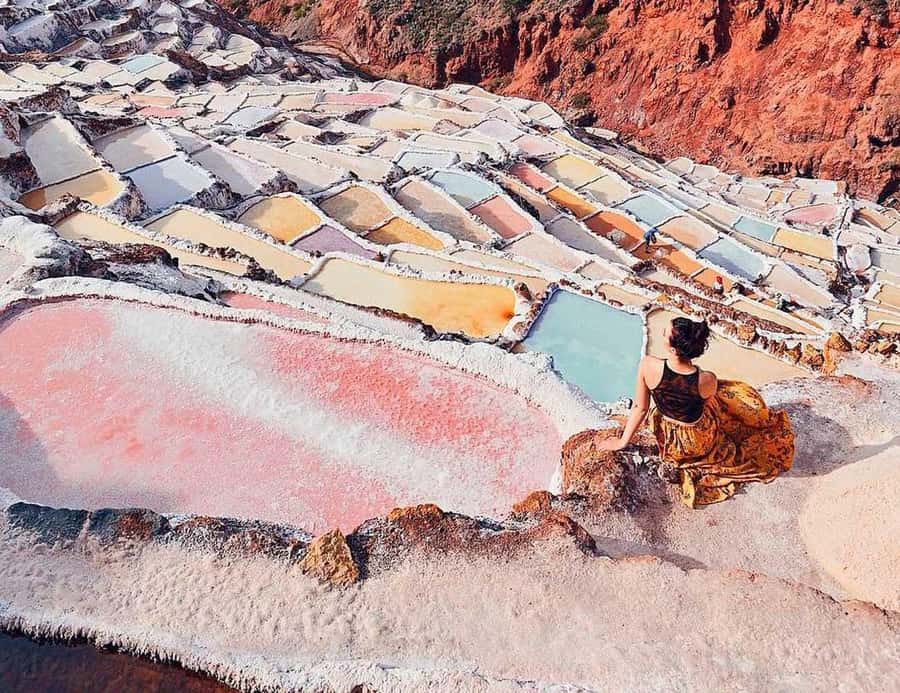
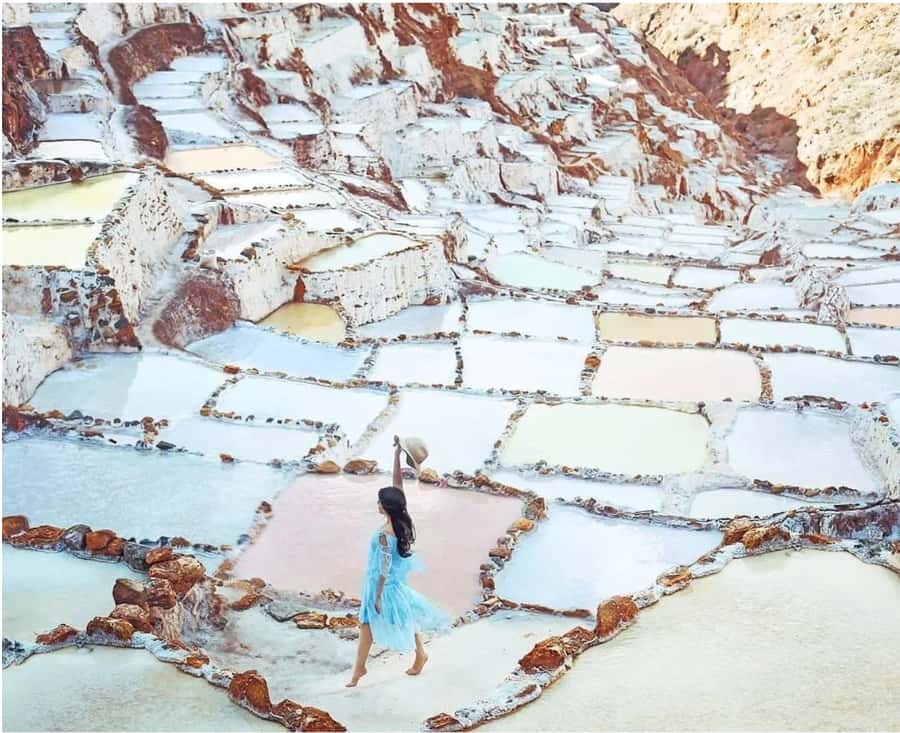
The Salineras salt mines are the showstopper. You’ll explore a historic salt site made up of about 3,000 small pools. This is not a museum display behind glass—you’re walking through an active landscape where salt production is still happening.
The tour describes the site as dating back to pre-Incan times, and that continuity is part of what makes it compelling. The salt is processed and distributed in the region. So you’re seeing a working tradition, not just a scenic ruin.
What to expect on the ground:
- Lots of visual repetition: small pools in patterns. That’s why photos are so easy here—there’s always another angle.
- Uneven footing in a working site area. Stick to shoes with grip.
- A sense of scale that hits when you realize the total number is around 3,000 pools.
Entrance ticket note: the salt mines require a separate fee (20 soles, purchased in Maras). Build that into your planning so it doesn’t feel like a surprise cost at the gate.
Price and Value: What $15 Really Gets You (Plus Tickets)
At $15 per person for a 6-hour half-day, this tour is priced for value. The included items matter because they cover the hardest parts to DIY in a short time window:
- hotel pickup in Cusco
- the Chinchero weaving workshop visit
- a guided tour at Moray
- exploration time at the salt mines
The two extra costs you must plan for are:
- Moray entrance ticket: 70 soles
- Salineras salt mines entrance ticket: 20 soles
So your total on-the-ground spend will depend on those tickets, and you’ll also want water (not included). Still, the overall structure feels efficient: you’re not paying for a full-day tour, and you’re not trying to stitch together four separate destinations on your own.
My take: if your priority is the classic Sacred Valley highlights—Chinchero, Moray, Maras, and Salineras—this is a good way to do it without turning your day into a logistics project.
Timing Details That Affect Your Comfort
This is a tight route. Photo stops are real photo stops, and “shopping” time is time-limited. That’s not a bad thing; it’s the style of a half-day tour.
To stay comfortable:
- Start hydrated before pickup, not after you arrive.
- Use van time to rest your legs and breathe.
- At each stop, pick your top 2 priorities. For example, at Chinchero: workshop first, then one pass for textiles.
- At the salt mines: take the big overview shots early, then slow down for pool-level details.
If you get hit with altitude fatigue, don’t treat it as failure. Just slow your steps. The tour doesn’t require speed.
What to Bring (So Your Feet and Lungs Don’t Complain)
This tour is simple on supplies, but high altitude and uneven ground mean you should pack like you’re going outdoors, not like you’re going to a gallery.
Bring:
- comfortable shoes (with grip)
- camera
- sunscreen
- water
Also, skip smoking. It’s listed as not allowed.
One small strategy: keep sunscreen where you can reach it fast. The sun in the Andes can feel strong even when you’re not sweating.
Who Should Book This Tour, and Who Should Skip It
This one is best for people who want a structured, highlights-focused Sacred Valley route. You’ll enjoy it if you like:
- cultural crafts (the Chinchero weaving workshop)
- agricultural engineering visuals (Moray’s irrigation terraces)
- working sites with ongoing production (Salineras pools)
It’s not suitable for people with mobility impairments or wheelchair users. That’s important: the stops involve walking on uneven terrain and moving between sites on a van route.
If you’re traveling with limited walking ability, consider a different format that matches your pace more closely. Half-day doesn’t always mean “easy day.”
Should You Book This Cusco Moray, Maras, and Salt Mines Half-Day Tour?
I’d book it if you want the classic Sacred Valley highlights in one clean block of time, and you’re excited about two things in particular: the Chinchero weaving workshop (including how natural plant dyes create colors) and the Salineras salt mines with their large set of small pools.
I’d think twice if you strongly prefer long stops, slow wandering, or you need an accessibility-friendly route. The tour is efficient, and the pacing can feel like a checklist—just know that going in.
If you’re on a budget, this still makes sense because the base price is low and the included guide components help you get value quickly. Just make sure you budget for the two entrance tickets and come prepared with solid shoes.
FAQ
FAQ
How long is the Cusco Moray, Maras, and Salt Mines half-day tour?
It lasts about 6 hours.
Where does the tour start in Cusco?
The tour starts at Plaza Regocijo, with pickup from your hotel in Cusco.
What places are included in the tour?
You’ll visit Chinchero (including a weaving workshop), Moray (terraced landscapes with a guided tour), Maras, and the Salineras salt mines.
Are entrance tickets included for Moray and the salt mines?
No. The Moray entrance ticket costs 70 soles and can be purchased on site. The salt mines entrance ticket costs 20 soles and can be purchased in Maras.
Is food included in the price?
No. Food and drinks are not included.
What language will the live tour guide speak?
The guide speaks Spanish and English.
What should I bring for the tour?
Bring comfortable shoes, a camera, sunscreen, and water.
Is the tour suitable for wheelchair users or people with mobility impairments?
No. It is not suitable for people with mobility impairments or wheelchair users.
What are the cancellation and booking options?
You can cancel up to 24 hours in advance for a full refund. You can also reserve now and pay later.