REVIEW · CHINCHERO DISTRICT
From Cusco: Chinchero, Moray, Maras, Ollantaytambo, Pisaq
Book on GetYourGuide →Operated by Midway Peru Adventures · Bookable on GetYourGuide
One day, five Inca stops. This Cusco Sacred Valley circuit hits Chinchero textiles and Moray’s terraces, then adds the working Maras salt mines, Ollantaytambo fortress, and Pisac inca enclosures. The trade-off is pace: it’s efficient, with short site visits, so you’ll likely want to return to any place that really grabs you.
What I like is the tight organization and the small-group feel. You get picked up from central Cusco, travel in a vehicle that tops out at 18 people, and spend your time with a bilingual guide (English or Spanish) plus a buffet lunch with a vegetarian option. There’s also a first-aid kit on board, and the driver handles the twists and turns that come with this region.
In This Review
- Quick takeaways before you go
- Getting picked up in central Cusco and settling into the route
- Chinchero: textiles, Tupac Yupanqui, and an Inca center that feels lived-in
- Moray’s circular terraces: how farming experiments shaped the landscape
- Maras Salt Mines: thousands of pits still working today
- Urubamba buffet lunch: a real break in the middle of stone and salt
- Ollantaytambo fortress: walking inside the defenses
- Pisac: terraces, enclosures, and an inca cemetery
- Price and tickets: what $45 really means in the real world
- What the pacing feels like in a long Sacred Valley day
- Practical tips so you enjoy every stop
- Should you book this Sacred Valley day trip from Cusco?
- FAQ
- How long is the Sacred Valley tour from Cusco?
- What sites are included on this itinerary?
- Is hotel pickup included?
- Are entrance tickets included in the price?
- Is lunch included, and is there a vegetarian option?
- What languages is the guide available in?
- What is the group size / vehicle capacity?
- Are drones allowed on the tour?
Quick takeaways before you go
- Small group (up to 18): easier conversations and less “herding” than larger coaches.
- Textiles at Chinchero: you’ll see how alpaca-fiber cloth work connects to daily life and craft tradition.
- Moray is more than a photo stop: you’ll learn how those circular terraces functioned as an experimental farming setup.
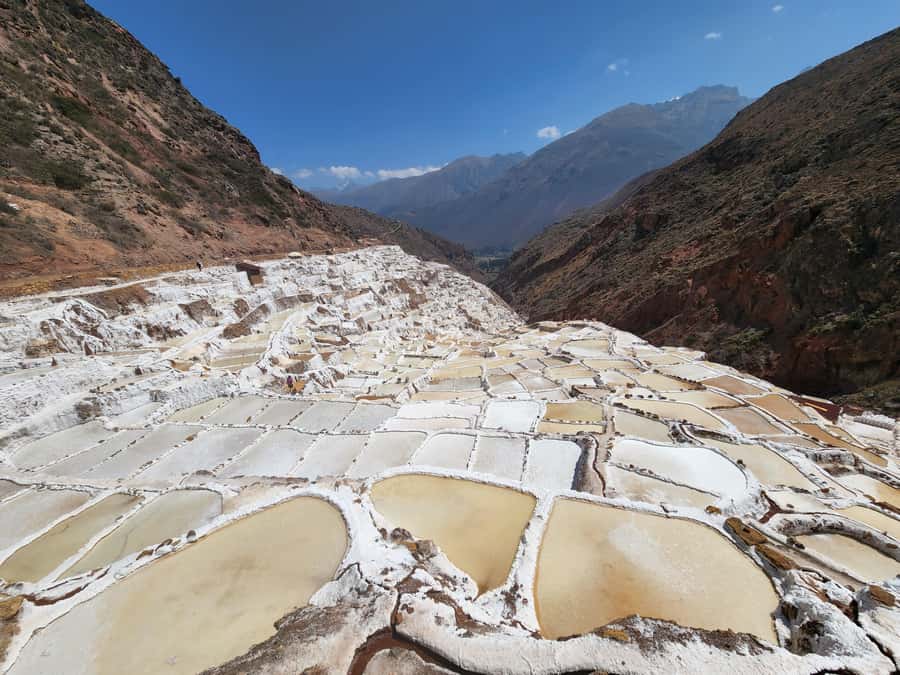
- Maras salt mines are active: thousands of evaporation pits are still worked the traditional way.
- Ollantaytambo fortress on foot: walking inside the stone defenses makes the site feel real.
- Fast day, clear priorities: you’ll sample five major sites, not linger for hours at just one.
Getting picked up in central Cusco and settling into the route
This trip starts with hotel pickup in Cusco’s historic center, and it’s designed to be simple. You’ll be collected from one of several central pickup points (depending on where you’re staying), then you’ll head out into the Sacred Valley.
The drive time matters here. You spend about 40 minutes getting to the Chinchero area, and you’ll repeat that rhythm all day with multiple short coach segments between stops. That’s why the tour works well for first-time Sacred Valley visits: you get broad coverage without needing to plan the logistics yourself.
You also get a professional bilingual guide (Spanish or English). In practice, that means you’re not just wandering; you’re getting explanations as you go—especially helpful at sites like Moray and Pisac, where it’s easy to miss what you’re looking at.
You can also read our reviews of more tours and experiences in Chinchero District.
Chinchero: textiles, Tupac Yupanqui, and an Inca center that feels lived-in
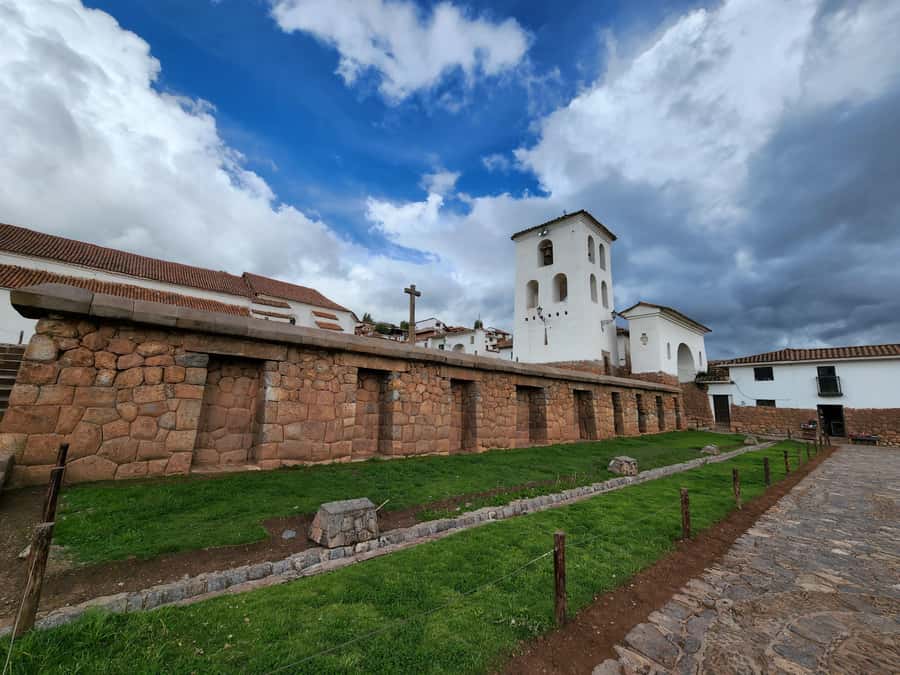
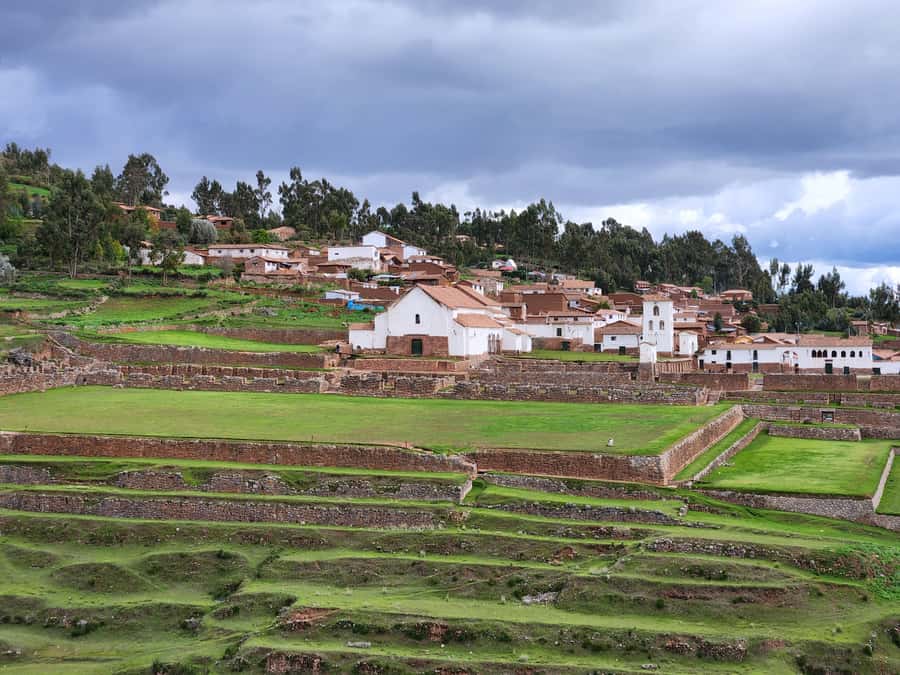
Chinchero is usually the place where the Sacred Valley story starts to feel human. The day begins with a stop at a textile center, where you’ll learn the process of making textiles from alpaca fiber. Even if you’re not shopping, this kind of introduction helps you understand why these crafts are still tied to identity and local practice.
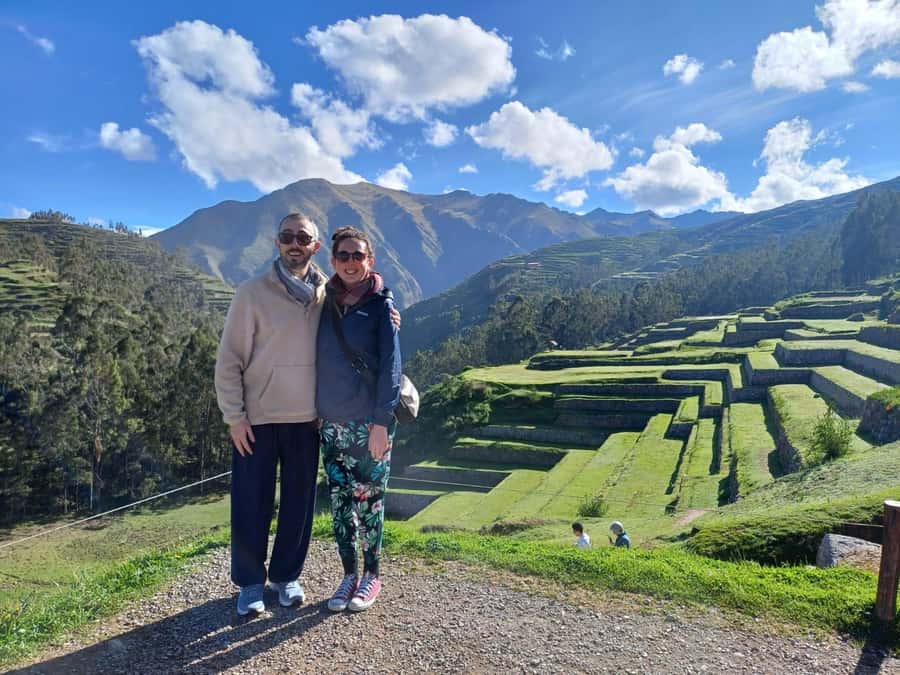
After that, you’ll move into the archaeological site of Chinchero. Expect a guided tour (about one hour) that explains the place and points out major features—especially the Inca Tupac Yupanqui enclosure.
Why this stop is worth it: Chinchero is both craft and archaeology in the same orbit. If you’ve ever wondered how the Inca world connects to modern Andean life, this is the clearest bridge on the itinerary. The only thing to watch is timing: you’ll have a guided window, not unlimited time to roam, so be ready to ask your guide questions if something sparks your curiosity.
Moray’s circular terraces: how farming experiments shaped the landscape
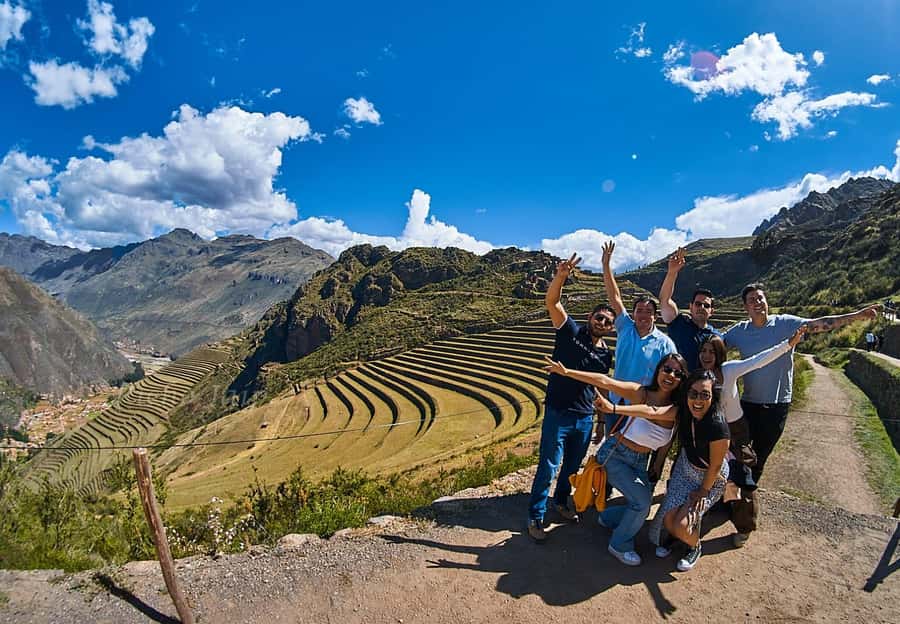
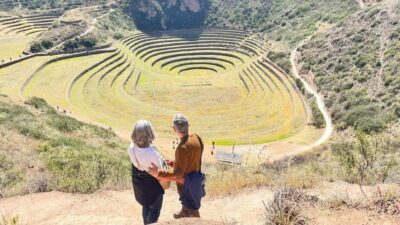
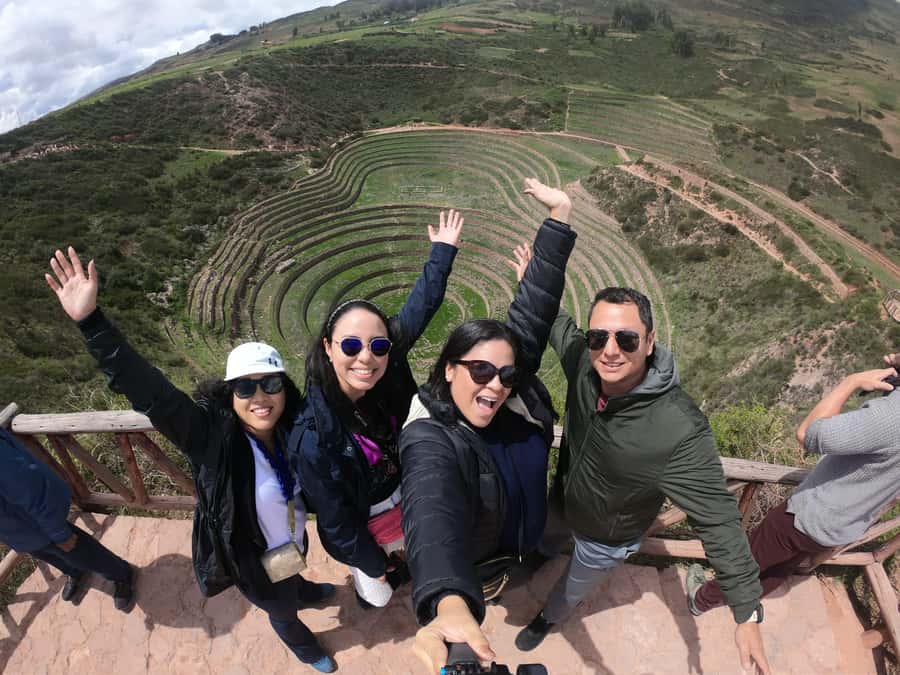
Moray is next, and it’s one of those sites that looks strange in a good way. The circular terraces feel almost engineered to control microclimates, and the guide frames Moray as an experimental agricultural laboratory.
Your visit is shorter (around 30 minutes of guided time), but that’s enough to get your bearings. You’ll be able to see the layout of the terraces and understand the idea of cultivating different crops by using the site’s natural bowl-like shape.
The practical takeaway: Moray is not a “spend the whole day” place. You come, you learn, you look closely at the terraces, and then you move on—exactly what this itinerary is built for. If you love agricultural engineering, Moray will be a standout.
Maras Salt Mines: thousands of pits still working today
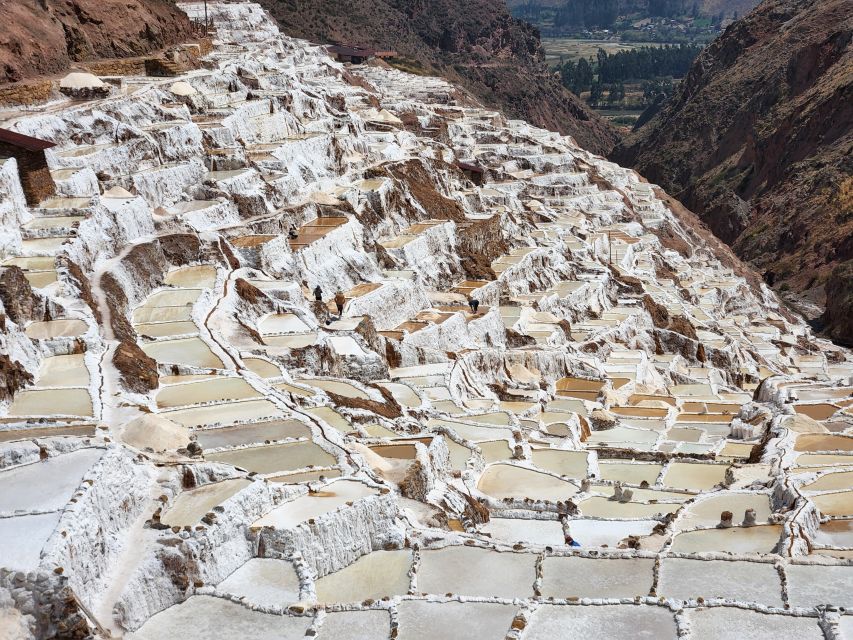
Then you go to one of Peru’s most memorable working landscapes: the Maras Salt Mines. The scale here is the point. You’re talking about more than 4,000 pits, originally used by the Incas to extract salt, and still used by local communities today.
You’ll get a guided tour (about 40 minutes). That’s important, because without context it can be hard to tell what you’re seeing beyond “salt pools.” With the guide’s explanation, it clicks as a system: the pits, the evaporation process, and the long-term continuity between past and present.
Two things to consider. First, bring shoes with solid grip—this area involves walking around uneven ground. Second, remember drinks and snacks aren’t included, so you’ll want to pace yourself and save your energy for the afternoon stone sites.
Urubamba buffet lunch: a real break in the middle of stone and salt
Around midday you arrive in Urubamba, where you’ll enjoy a delicious Andean buffet lunch with a vegetarian option. Lunch is about 40 minutes, so it’s enough time to eat without turning the whole day into a restaurant marathon.
This is the moment to fuel up. After Chinchero, Moray, and the salt mines, your legs will feel it, and your head will be full of names and terraces. A proper buffet stop helps you reset—then you’re ready for the heavier archaeological atmosphere later at Ollantaytambo and Pisac.
If you’re picky about what you eat, stick to the buffet basics that feel familiar and ask your guide where the vegetarian options are if you need clarity. The point is to avoid getting caught hungry right before the next walking portion.
Ollantaytambo fortress: walking inside the defenses
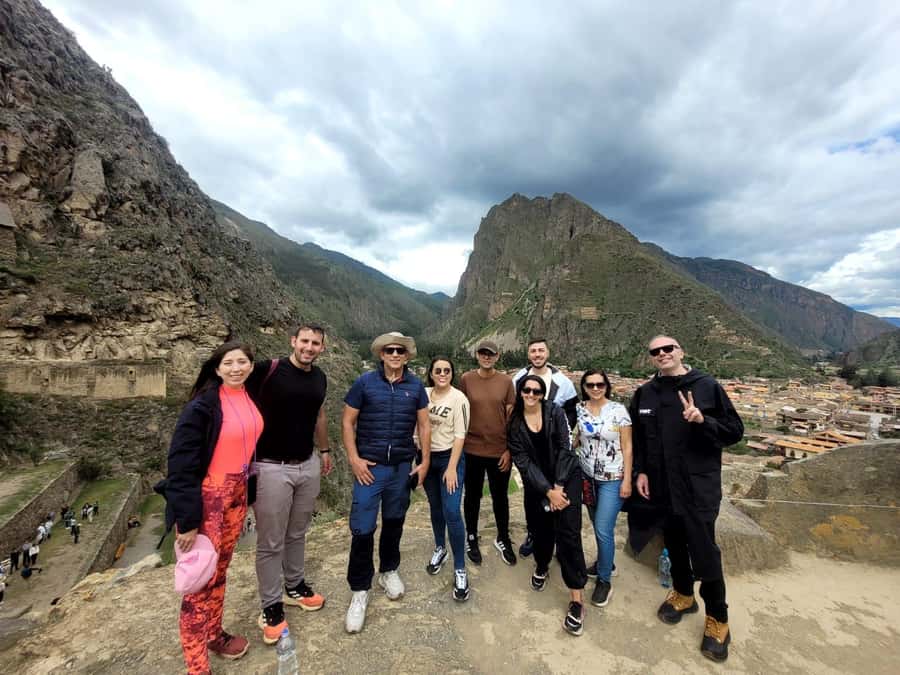
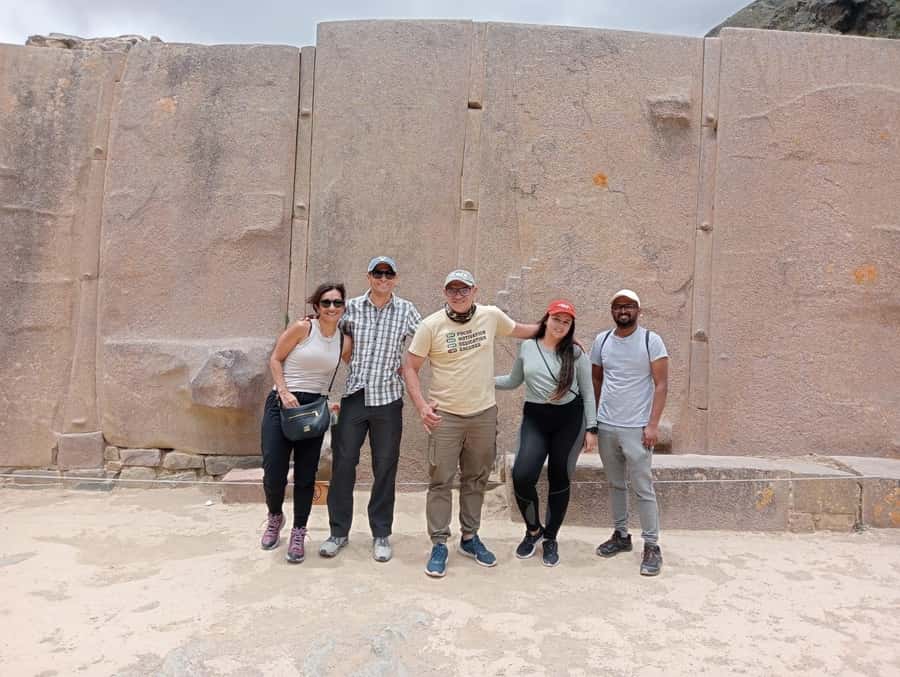
After lunch, the tour heads to Ollantaytambo, with a guided visit (about 40 minutes). This is one of the best places on the list for sheer “wow” factor, because you’re not just looking at stones—you’re walking within an Inca fortress built to defend the entrance to Machu Picchu.
You’ll be surprised by the imposing constructions and the way the site channels movement. In other words, it doesn’t feel like a museum layout; it feels like a strategic place designed for control and survival.
One practical note: this is where comfort matters. Expect more walking and steps than you might think from a map. If you come prepared—comfortable shoes, a layer for temperature changes, and water—you’ll enjoy it more. If you’re trying to keep every detail in your head, use the guide here: you’ll get the story of the enclosures and how the fortress fits into the broader Sacred Valley.
Pisac: terraces, enclosures, and an inca cemetery
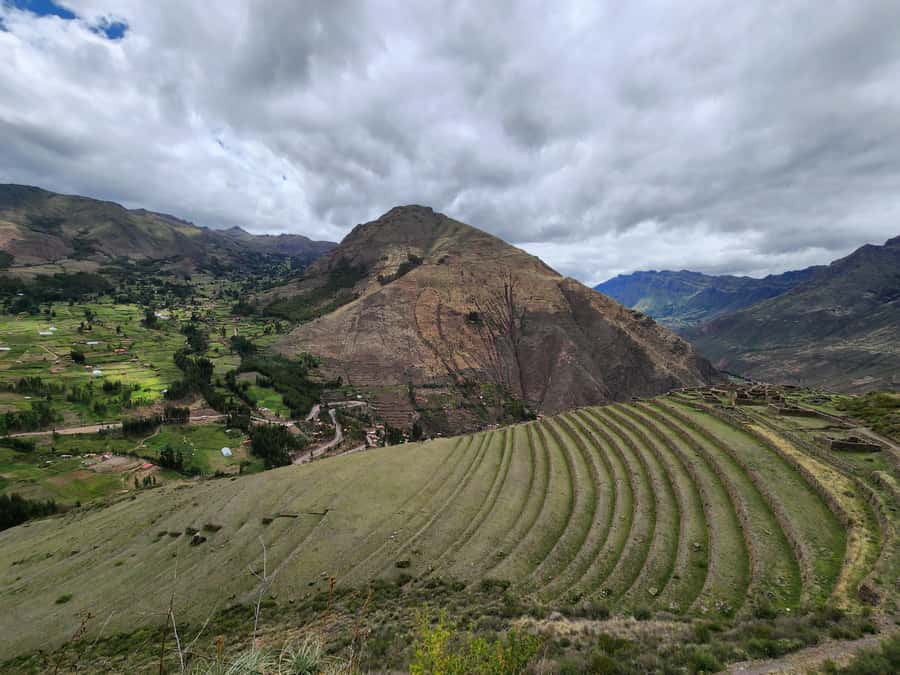
To close out the day, the itinerary brings you to Pisac for a guided tour (about 40 minutes). Pisac combines several elements: agricultural terraces, an Inca cemetery, and multiple enclosures of Inca royalty.
The mix is what makes Pisac satisfying after the morning’s intensity. You get a different side of Inca presence—less about defense and more about how people organized land and life. The terraces help you understand the “production” side of the Sacred Valley, while the cemetery and enclosures bring the social and ceremonial side into focus.
The timing is tight, but Pisac is arranged in a way that rewards focused attention. You won’t have all-day freedom here, so prioritize what you care about most: if agriculture interests you, focus on the terraces; if governance or social structure matters, listen closely to the enclosures your guide highlights.
Price and tickets: what $45 really means in the real world
The tour price is listed at $45 per person, and for a 12-hour day with multiple archaeological stops and hotel pickup, that can be good value—especially if you’d otherwise spend time coordinating transport, guides, and entrance logistics on your own.
But there are two key extras to budget for:
- A tourist ticket (70.00 Soles) is not included.
- Maras Salt Mines entrance ticket (20.00 Soles) is not included.
So when you compare value, think of $45 as the transportation + guiding + lunch package, plus you handle the main local entrance fees directly. Also note that drinks and snacks aren’t included, so it’s smart to plan for water.
On the plus side, the tour includes:
- Hotel pickup in Cusco’s historic center
- Tourist transport (up to 18 people)
- A professional bilingual guide (English or Spanish)
- Buffet lunch with vegetarian option
- First-aid kit
That combination is what makes the price feel more “fair” for most budgets. You’re not just getting a ride; you’re getting guided time at five major stops.
What the pacing feels like in a long Sacred Valley day
This itinerary is built for coverage. You’ll move from site to site with short coach segments—often 20 to 45 minutes between stops. Each major archaeological visit is typically 30 to 40 minutes, which means you’ll get a solid overview, but you won’t get the slow travel version where you linger at one terrace until you’ve run out of questions.
That’s also why you might feel it’s rushed if you love deep wandering. In practice, the guide and driver keep things moving so you can hit every highlight: Chinchero textiles and Inca enclosure, Moray terraces, Maras pits, Ollantaytambo fortress spaces, then Pisac.
My advice: treat this day as your Sacred Valley orientation. Use it to decide what you want to revisit on a slower day—maybe with a separate guide, or on your own time with fewer stops.
Practical tips so you enjoy every stop
A few small choices make a big difference on a 12-hour circuit like this:
- Wear comfortable shoes with grip. You’ll walk inside or around archaeological areas and at the salt mines.
- Bring layers. Temps can shift through the day, and you’ll be outdoors for multiple segments.
- Pack water. Drinks aren’t included, so plan ahead.
- Take quick notes or photos strategically. With guided time moving fast, having a reference helps you remember what stood out.
- If you’re sensitive to long days, plan recovery. You’ll be picked up and dropped off back near Plaza Regocijo, but the schedule is still full-on.
Also, a quick rule: drones aren’t allowed on this experience. If you travel with one, leave it behind.
Should you book this Sacred Valley day trip from Cusco?
If you want a well-run introduction to the Sacred Valley, I think this is a strong option. It strings together the biggest names—Chinchero, Moray, Maras, Ollantaytambo, and Pisac—with guided explanation and an included buffet lunch. The small group size (up to 18) also helps the experience feel calmer than larger tours.
I’d book it especially if:
- You’re short on time in Cusco and want the main sites in one shot
- You like getting context while you look around
- You want an organized day with pickup and a set route
I would hesitate if:
- You hate fast-paced itineraries and want hours at just one site
- You struggle with walking and uneven ground
- You’re over 95 years old, since it’s stated as not suitable for that age range
If you book with the right expectations—orientation, not a slow deep-dive—you’ll leave with a clear sense of what you loved most and what deserves a return visit.
FAQ
How long is the Sacred Valley tour from Cusco?
The duration is 12 hours, with starting times depending on availability.
What sites are included on this itinerary?
It includes Chinchero, Moray, the Maras Salt Mines, Ollantaytambo Fortress, and Pisac.
Is hotel pickup included?
Yes. Pickup is included from hotels (and airbnbs) in Cusco’s historic center, and the tour ends with drop-off near Plaza Regocijo.
Are entrance tickets included in the price?
No. A tourist ticket (70.00 Soles) is not included, and the Maras Salt Mines entrance ticket (20.00 Soles) is also not included.
Is lunch included, and is there a vegetarian option?
Yes. You’ll have a buffet lunch in Urubamba, and it includes a vegetarian option.
What languages is the guide available in?
The guide is available in English or Spanish.
What is the group size / vehicle capacity?
The transport vehicle has a maximum capacity of 18 people.
Are drones allowed on the tour?
No. Drones are not allowed.